I’ll start with the one that genuinely surprised me. Quokkas live on Rottnest Island off the coast of Australia, and they look like they’re perpetually smiling. It’s not an act — their facial structure just creates this permanent grin that’s ridiculously photogenic. They’re small marsupials, topping out around 19 inches and 10 pounds, and they eat leaves and grasses.
What makes quokkas unusual is they’re not scared of people. They’ll walk right up to tourists, which is how “quokka selfies” became a whole internet phenomenon. That said, don’t feed them — it’s bad for their health and you’ll get fined.
Size: Up to 19 inches long and 10 pounds in weight.
Habitat: Dry forests, scrubland, or places with dense vegetation.
Social behavior: Known to be sociable, quokkas sometimes gather in small groups.
Red Panda
Red pandas might be the single most adorable animal I’ve ever seen in person. They live in the eastern Himalayas and southwestern China, and they look like a fox-bear hybrid that someone designed specifically to win hearts. Despite the name, they’re not related to giant pandas at all.
Their thick fur keeps them warm in cold mountain climates, and that bushy tail serves double duty for balance and warmth. They’re mostly solitary and most active at dusk and dawn, which makes wild sightings feel extra special.
Diet: Bamboo makes up the bulk of their diet, complemented by fruits and small insects.
Population: Due to habitat loss, their numbers are decreasing, leading to conservation efforts.
Behavior: Crepuscular, meaning they are most active at dusk and dawn.
The Fennec Fox
Take the world’s smallest fox and give it the world’s most oversized ears, and you get the fennec fox. Those ears aren’t just for show — they detect prey underground and radiate heat to keep the fox cool in the Sahara. Their sandy-colored fur provides perfect desert camouflage. These little guys weigh under 4 pounds but pack a ton of personality.
Weight: Typically between 1.5 to 3.5 pounds.
Lifespan: In the wild, they live around 10 years.
Social structure: Live in tight-knit groups, usually consisting of a male, a female, and their offspring.
Axolotl
The axolotl is the oddball on this list, and I mean that with affection. Native to the lake system under Mexico City, these amphibians never fully grow up — they keep their larval features their whole lives, including those distinctive feathery gills. They can regenerate entire limbs, which has scientists fascinated for obvious reasons.
Appearance: Retain features like gills into adulthood, making them resemble tadpoles.
Diet: Carnivorous, eating worms, insects, and small fish.
Conservation status: Critically endangered due to urbanization and water pollution.
The Hedgehog
Literally. When threatened, they curl into a spiky ball that most predators won’t bother with. The rest of the time, they’re waddling around at night foraging for insects and snails with this focused little determination that’s hard not to love.
Social behavior: Typically solitary except during mating periods.
Adaptations: Excellent sense of smell and hearing facilitates their active night life.
Lifespan: In the wild, they live around 2-5 years.
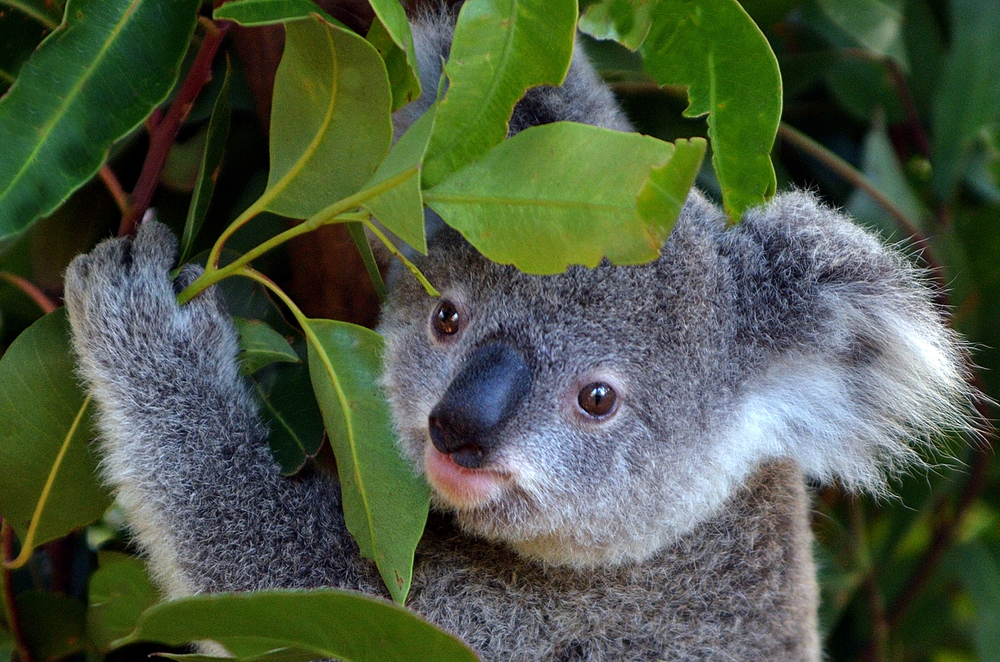
The Koala
Koalas are Australia’s other ambassador of cute, and they’re masters of doing absolutely nothing. They sleep up to 20 hours a day because eucalyptus leaves — their primary food — are so low in calories that conservation of energy is basically their whole strategy. They’re marsupials, not bears, despite what everyone calls them.
Size: Adults can grow up to 33 inches in length and weigh up to 33 pounds.
Habitat: Eucalypt woodlands in Australia.
Social structure: Solitary animals, but with occasionally overlapping territories.
The Slow Loris
Slow lorises have those massive round eyes that make them look perpetually surprised, and it works. They move through Southeast Asian rainforests at a pace that makes sloths look energetic — deliberate, careful movements designed to avoid catching a predator’s eye. Unfortunately, their cuteness has made them targets for the illegal pet trade, which is a real problem.
Diet: Primarily insects, fruit, and tree gum.
Defense: One of few venomous mammals; can deliver a painful bite.
Conservation: Facing threats from habitat loss and poaching.
The Sea Otter
Sea otters floating on their backs, cracking shellfish on rocks balanced on their bellies — if that doesn’t get you, I don’t know what will. They’re more than just cute, though. They’re a keystone species, keeping sea urchin populations in check, which protects kelp forests. Their fur is the densest of any animal, trapping air for insulation and buoyancy.
Diet: Shellfish, crabs, and fish form a significant part of their diet.
Social behavior: Often spotted floating in groups, known as rafts.
Conservation status: Once endangered due to hunting for fur, their numbers are now recovering.
The Manatee
Manatees are proof that grace doesn’t require speed. These gentle giants drift through rivers, bays, and coastal waters eating aquatic plants and basically minding their own business. They’re sometimes called sea cows, and the name fits — they’re big, slow, and herbivorous. Seeing one in the wild is one of those quietly magical wildlife experiences.
Weight: Can weigh up to 1,200 pounds.
Migration: Some species migrate in response to water temperature changes.
Threats: Boat collisions and habitat loss are significant threats to their population.
The Snowy Owl
A snowy owl standing in an Arctic landscape is one of the most striking sights in nature. That white plumage and those piercing yellow eyes are unforgettable. Unlike most owls, they hunt during the day, using sharp eyesight and hearing to locate prey in the snow. During winter, they migrate south, occasionally showing up in places that send birdwatchers into a frenzy.
Size: Wingspan can reach up to 5 feet.
Diet: Prefers small mammals, birds, and sometimes fish.
Nesting: Ground nesters, often utilizing elevated sites with good visibility.
The Japanese Macaque
Snow monkeys soaking in hot springs during Japanese winters might be the most relatable thing any animal has ever done. Japanese macaques live in troops that can number in the hundreds, and their social dynamics are endlessly fascinating. They’ve figured out that geothermal hot springs are the best way to deal with cold weather — honestly, same.
Diet: Omnivorous, feeding on fruits, plants, insects, and small animals.
Chimp-like hierarchy: Complex social structures with defined ranks.
Longevity: Can live up to 30 years in the wild.
Every one of these animals brings something different to the cuteness conversation. From desert foxes to Arctic owls, from ocean-dwelling otters to tree-hugging red pandas — the variety is staggering. And honestly, that’s the best part. There’s no single “cutest animal.” There are just a whole lot of creatures out there doing their thing and making us smile while they’re at it.
Sarah Chen
Author & Expert
Sarah Chen is a wildlife writer with a long-standing interest in animal behavior, conservation biology, and the ecological science that rarely makes it into mainstream coverage. She covers predator-prey dynamics, endangered species recovery, and habitat conservation — translating peer-reviewed research into clear, readable articles for a general audience. She has written over 180 articles for International Wildlife Research.



Stay in the loop
Get the latest international wildlife research updates delivered to your inbox.