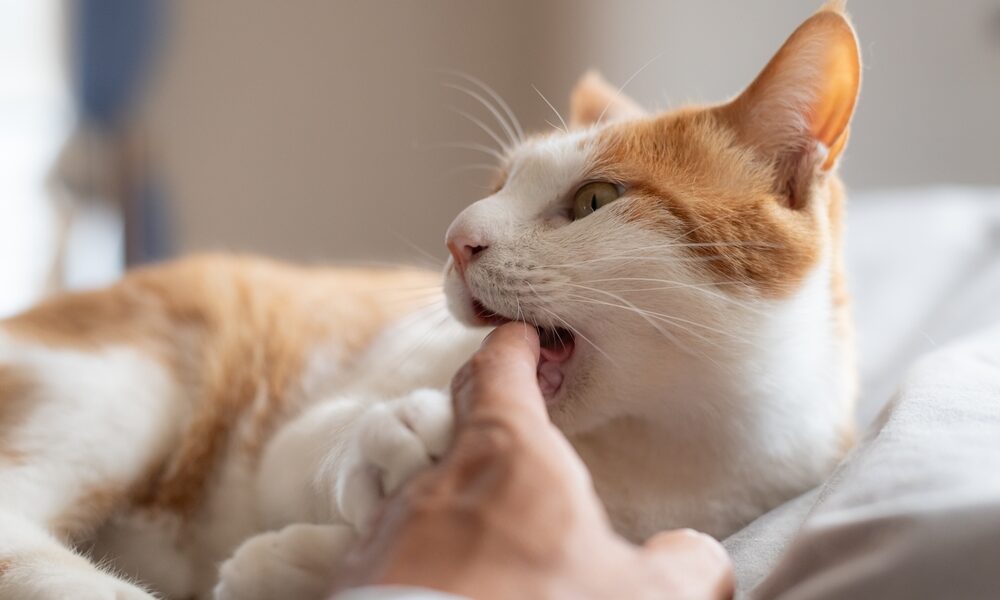
Cat love bites have gotten confusing with all the mixed signals our feline friends throw at us. Today, I will share it all with you.
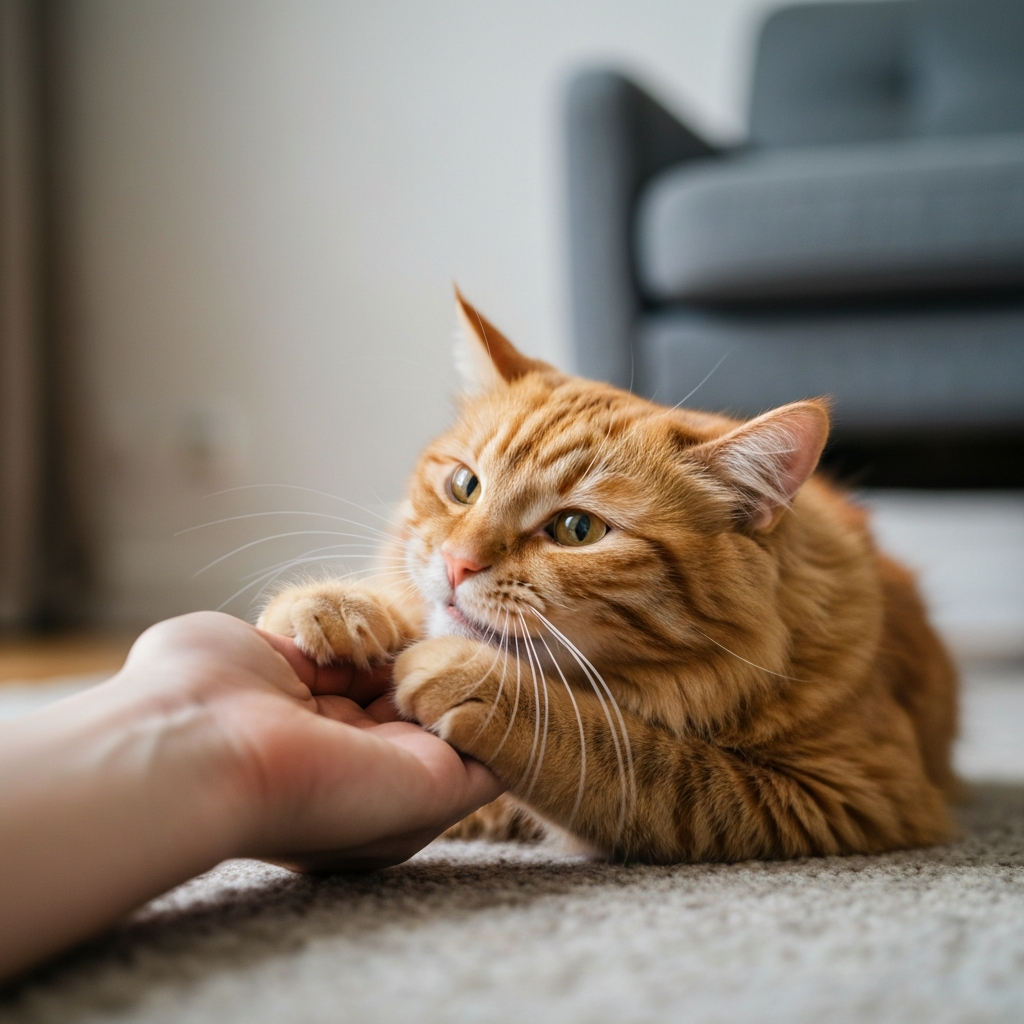
So What Exactly Are Cat Love Bites?
Here’s the scene. You’re on the couch, your cat’s curled up in your lap, you’re both having the most peaceful evening imaginable. You’re scratching behind her ears, she’s purring like a little motor, and then — out of absolutely nowhere — she clamps down on your finger with a soft but unmistakable nibble. Not hard enough to draw blood, but definitely hard enough to make you go “excuse me?”
That, my friend, is a love bite. Or at least that’s what we call them, which is a bit generous if you ask me. These gentle nips are incredibly common in domestic cats, and they’re one of the more bewildering parts of cat ownership. They don’t hurt the way a real bite does, but they catch you off guard every single time. I’ve had cats for years and I still flinch.
The truth is, cats use their mouths for communication way more than most people realize. Dogs wag their tails. Cats? They chomp on you a little. It’s their version of a strongly worded email.
The Real Reasons Behind the Nibbling
I used to think love bites were just one thing — my cat’s weird way of saying “I like you.” Turns out it’s more nuanced than that. There are actually several different triggers, and figuring out which one applies to your cat is half the battle.
Overstimulation (the big one) — This is far and away the most common reason your cat suddenly bites during a petting session. Cats have a threshold for physical touch, and once they cross it, they go from “this is lovely” to “get your hand away from me” in about half a second. There’s no warning email. No five-minute heads up. Just teeth. Even if they were purring and rolling around like a happy little burrito thirty seconds ago, something in their nervous system just flips a switch and says “that’s enough stimulation for one lifetime, thanks.”
Playtime instincts kicking in — Kittens are the worst offenders here, and I mean that with love. When kittens play with each other, they’re constantly doing little practice bites and wrestling moves. It’s how they learn boundaries, develop social skills, and generally prepare for a life of knocking things off counters. When your cat nibbles you during play, they’re basically treating you like a big, clumsy littermate. Flattering, in a way.
A calculated bid for attention — Cats are way smarter than we give them credit for. They notice patterns. They learn that a quick nip on your hand results in you looking at them, talking to them, maybe even getting up to fetch a toy or a treat. You’ve been trained, and you didn’t even notice it happening. Welcome to cat ownership.
Genuine affection (yes, really) — Despite everything I just said about overstimulation and manipulation, sometimes a love bite actually is about love. Cats do engage in gentle mouth contact as a bonding behavior. Mother cats groom their kittens with soft nibbles, and adult cats sometimes carry that behavior into their relationships with us. It’s sweet when you think about it. It’s just really hard to tell apart from the “stop touching me” bite in the moment.
Love Bite vs. Angry Bite — How to Tell Them Apart
This is actually pretty important, and it’s something new cat owners especially need to understand. A love bite and an aggressive bite are completely different animals (pun intended, sorry).
Love bites are soft. They don’t break skin. They happen during otherwise calm, pleasant interactions. Your cat’s body language is generally relaxed — maybe a little twitchy, but not aggressive.
Aggressive bites? Whole different story. They hurt. They’re fast and hard, and your cat isn’t being subtle about being upset. You’ll almost always see warning signs first: ears pinned flat against the head, tail thrashing like a whip, hissing, growling, maybe that low rumbling sound that basically means “I am two seconds from losing it.” If you see any of that, don’t wait for the bite. Just slowly back off and give them space. Your hand will thank you.
What to Do When Your Cat Gives You a Love Bite
And once you start reading the signals, you can actually manage these little nibbles pretty effectively.
If overstimulation is the culprit, your job is to learn the pre-bite warning signs. Watch for the tail starting to flick back and forth. Look for ears rotating slightly backward. Some cats get this little skin ripple along their back, almost like a shiver. Those are all your cat’s version of a yellow traffic light. Stop petting. Give them a minute. Let them come back to you when they’re ready.
For the attention-seeking bites, the trick is resisting the urge to immediately give them what they want right after the nip. I know it’s hard — they’re looking at you with those big eyes and you just want to scoop them up. But if you reward the biting, you’re teaching them that biting works. Instead, pause, redirect them to a toy, and then give them attention once they’re engaging gently.
The real key is figuring out your individual cat’s tolerance window. Some cats can handle five solid minutes of belly rubs. Others max out at about fifteen seconds before they’ve had it. You’ve just gotta learn where your cat falls on that spectrum, and honestly, trial and error is the only reliable way to do it.
Training Tips That Actually Make a Difference
Positive reinforcement works wonders — This one’s pretty straightforward but it deserves saying out loud. When your cat interacts with you gently — no teeth involved — reward them. Good treats work great for this, or just some extra chin scratches. Over time, they start to associate gentle behavior with good things happening.
Redirect the chomping energy — If the biting’s becoming a regular thing, give your cat something else to sink their teeth into. A good chew toy or a stuffed mouse does wonders. My cat has this ratty old plush toy she absolutely destroys on a nightly basis, and ever since I started offering it during play sessions, the nibbling on my hands dropped way down. Progress? I think so.
Get the whole household on the same page — Consistency matters more than people think. If you’re gently discouraging love bites but your partner thinks it’s cute and lets the cat gnaw on their fingers, you’re sending mixed signals. Cats aren’t dumb. They’ll figure out who the easy target is and adjust accordingly.
Respect their personal space — I cannot stress this one enough. Learn when your cat has had enough and stop petting them BEFORE they have to tell you with their teeth. It sounds simple, but it requires actually paying attention, which — let’s be honest — we’re not always great at when we’re zoned out watching TV.
Some Cats Just Aren’t Biters (Lucky You)
Here’s something that took me a while to figure out: not every cat does the love bite thing. Some cats show affection exclusively through purring, slow blinks, headbutts, or the classic move of sitting directly on your laptop keyboard when you’re trying to meet a deadline. Personality plays a massive role in all of this. Some cats are just naturally more “mouthy” than others, the same way some people are huggers and some people would rather not be touched at all.
Kittens tend to bite more because they’re still figuring out how the world works and everything goes in the mouth (kind of like human toddlers, honestly). Older cats have usually mellowed out and found subtler ways to communicate. So if your senior cat has never been a biter, don’t expect that to change.
Building a Better Relationship with Your Cat
At the end of the day, every single cat is different, and that’s sort of the whole point. What triggers a love bite in one cat might not register at all with another. The more attention you pay to the context around the bites — what you were doing, where exactly you were petting, how long it had been going on, what time of day it was — the better you’ll understand your specific furry friend and what makes them tick.
It all comes down to learning their language and meeting them halfway. Once you crack the code on what your cat is actually trying to say with those little nips, the whole dynamic shifts. And the trust you build in the process? That’s the real reward of being a cat person. Even if it occasionally comes with teeth marks.




Stay in the loop
Get the latest international wildlife research updates delivered to your inbox.