Why We Can’t Look Away From Wild Beauty
I’ll be honest — I didn’t start out as some kind of wildlife expert. I was the kid with a library card and a weird obsession with National Geographic. But the more Animals I encountered over the years, the more I realized the animal kingdom isn’t just diverse. It’s flat-out absurd in the best way. Nature doesn’t do subtle. She’ll slap neon colors on a frog the size of your thumbnail and make a bird’s tail longer than its entire body just because she can.
What I’ve come to appreciate is that beauty in the wild serves a purpose. It’s not decoration. Every flashy pattern, every ridiculous color — there’s a reason for it. Survival, mating, intimidation, camouflage.
Birds: Where Nature Shows Off the Most
If you want my honest opinion, birds are where the animal kingdom flexes the hardest. Take the peacock. I’ve stood in front of a male peacock mid-display, and “mesmerizing” doesn’t cover it. That iridescent tail fans out in blues and greens that seem to shift depending on the angle. It’s ridiculous. The whole performance is a mating ritual, but it looks like a Broadway opening night.
Then there’s flamingos. You probably know they’re pink, but did you know they’re born gray? Their color comes entirely from their diet — carotenoid pigments in the shrimp and algae they eat. Without that diet, they’d stay gray forever. I remember the first time I saw a flock of them in person. Those long necks, the way they stand on one leg like they’ve got nowhere to be. They move through shallow water with this effortless grace that makes you feel clumsy by comparison.
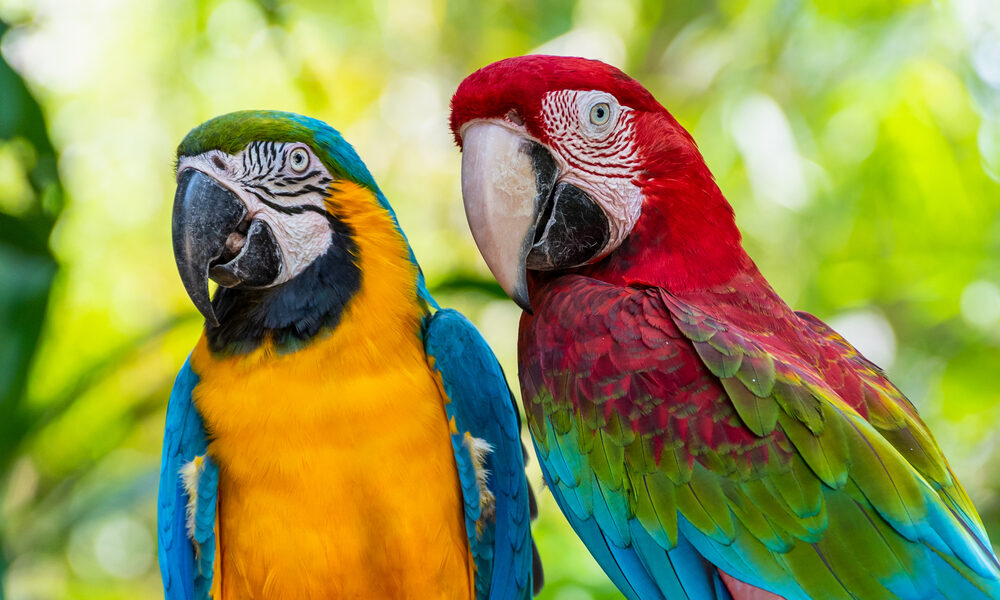
- Macaws: I’ve had the privilege of seeing scarlet macaws in Costa Rica, and the photos don’t do them justice. These large parrots from Central and South America wear feathers in reds, blues, and yellows so bright they look painted. They’re loud too. You hear them before you see them. Social and intelligent, they’ve become popular in aviculture, though I’d argue they belong in the wild.
- Mandarin Duck: This little bird from East Asia looks like somebody designed it in Photoshop. Orange “sails” on its back, intricate patterns across its body — it’s genuinely hard to believe it’s real until you see one paddling through a pond like it’s no big deal. Easily one of the most striking ducks on the planet.
Marine Life: The Ocean’s Been Hiding Its Best Work
The ocean is hiding animals so beautiful they look like they belong in a sci-fi movie. I went snorkeling in the Philippines once and saw a mandarin fish in person. Electric blue with these swirling orange patterns. It hovered near the coral like a tiny, living painting. These guys live in the Pacific, and they use that wild coloring to both blend into coral reefs and scare off anything thinking about eating them.
And jellyfish — oh man. I’m not gonna pretend I don’t have a healthy fear of them, but bioluminescent jellyfish at night? It’s something else entirely. They glow in the dark water, pulsing with this soft light, and their translucent bodies move in a way that looks almost choreographed. I saw them on a night dive off the coast of Thailand, and I genuinely forgot to breathe for a second. Which, underwater, is not ideal.
- Clownfish: You know them from the movie, but the real ones are just as charming. Bright orange bodies with bold white stripes, living snuggled up inside sea anemones. The anemone stings everything else but not the clownfish, and in return the clownfish keeps the anemone clean and brings it food. It’s a buddy system that’s been working for millions of years.
- Angelfish: These are the supermodels of the reef. Flat bodies, bold stripes and patterns, and they glide through coral like they own the place. They’re a favorite among marine aquarists for good reason — watching them drift around a tank is genuinely calming.
Mammals: Big, Furry, and Unfairly Photogenic
Mammals bring a different kind of beauty to the table. It’s less “look at my neon feathers” and more “I’m a 500-pound predator and I still look majestic.” The Siberian tiger is the poster child for this. That thick orange coat with jet-black stripes, the muscular build, the way they move through snowy forests like ghosts. I’ve never seen one in the wild, and frankly I’m okay with that. Some beauty is best appreciated from a distance.
Pandas, though? Pandas I could watch all day. There’s something about that black-and-white fur combined with their completely goofy personality that just works. They tumble, they roll, they sit there munching bamboo like they’ve got zero worries. And honestly, good for them. Conservation work has slowly been turning things around for their wild populations, which is one of the better news stories in wildlife lately.
- Snow Leopard: These cats are practically mythical. They live in the high mountain ranges of Central and South Asia, wrapped in thick spotted coats built for freezing temperatures. They’re so elusive that researchers can go years without a sighting. Every photo of a snow leopard feels like a small miracle.
- Red Panda: Not actually related to giant pandas despite the name. These guys live in the eastern Himalayas and southwestern China, and they look like a cross between a fox and a teddy bear. Reddish-brown fur, big bushy tail, a face that could sell anything. They’re ridiculously cute, and I’m not ashamed to say it.
Reptiles and Amphibians: Cold-Blooded but Hot Looking
People sleep on reptiles and amphibians when it comes to beauty, and it drives me nuts. Chameleons alone should end that argument. Their skin changes color in real time — not just for camouflage, but for communication. They’re basically mood rings with legs. And those eyes? Each one moves independently. They can look in two directions at once. That’s not just beautiful, that’s genuinely unsettling in the coolest way.
Dart frogs are another one that blows my mind every time. These tiny amphibians in Central and South America’s rainforests come in electric blues, fiery oranges, and vivid yellows. They’re absolutely gorgeous. They’re also loaded with toxins. That bright color is basically a neon sign that says “eat me and you’ll regret it.” One species, the golden poison frog, carries enough toxin to kill ten grown adults. Nature doesn’t play around.
- Green Tree Python: I saw one of these in a reptile exhibit once and couldn’t stop staring. It’s this vivid emerald green snake that coils around branches in Australia and New Guinea. Young ones are actually yellow or red and turn green as they mature. How cool is that?
- Frilled Lizard: Native to northern Australia and southern New Guinea, these lizards have a giant frill around their neck that they pop open when threatened. It makes them look three times their actual size. It’s a bluff, mostly, but it’s one of the best defensive displays in the animal kingdom. I saw a video of one running on its hind legs once and nearly fell off my chair.
Insects: Tiny Creatures, Enormous Beauty
Here’s where a lot of people check out, and I get it. Bugs aren’t everyone’s thing. But if you can set aside the “ew” factor for a second, insects are some of the most visually stunning animals alive. Butterflies are the obvious pick, and for good reason. Monarch butterflies especially — those orange, black, and white patterns are iconic. What really gets me is their migration. These little guys fly from Canada to Mexico and back. Thousands of miles on paper-thin wings. It shouldn’t be possible, and yet.
Jewel beetles are the hidden gems (pun intended) of the insect world. Their shells have this metallic sheen that shimmers like polished metal under sunlight. Greens, blues, purples — it depends on the species and the angle. They use those colors for camouflage and attracting mates, but the effect on humans is pure fascination. I spent twenty minutes photographing one in my backyard once. My neighbors thought I’d lost it.
- Luna Moth: These pale green moths with their long, elegant hindwing tails are nocturnal, so most people never see them. I found one on my porch light years ago and just stared at it. They only live about a week as adults — they don’t even have mouths. Their whole purpose is to mate and lay eggs. Fleeting but unforgettable.
- Dragonfly: Fast, iridescent, and incredibly agile. Dragonflies have been around for over 300 million years, which means they were flying around before dinosaurs existed. You’ll usually spot them near water, darting and hovering with a precision that puts most drones to shame. Their wings catch light in a way that produces flashes of color — blues, greens, even reds depending on the species.
Final Thoughts From Someone Who’s Seen a Few
Look, I could keep going. There are thousands of stunningly beautiful animals out there I haven’t even touched on — mandarinfish, arctic foxes, peacock spiders, the list doesn’t end. But what I hope you take away from this is pretty simple: the natural world is doing extraordinary things, constantly, whether we’re watching or not. Every animal on this list exists because millions of years of evolution landed on these exact designs. They weren’t trying to impress us. They were trying to survive. And they ended up being breathtaking in the process.
If any of these creatures sparked something in you, go look them up. Watch a documentary. Visit a nature reserve. The more you look, the more you see. And trust me — once you start seeing it, you won’t want to stop.

Stay in the loop
Get the latest international wildlife research updates delivered to your inbox.