As someone who’s spent years following wildlife research — reading field reports at breakfast, volunteering with local habitat restoration crews, and generally boring my friends at dinner parties — I’ve learned everything there is to know about where things stand for the world’s most threatened animals. Today, I will share it all with you.
Here’s the deal: over 44,000 species are currently threatened with extinction according to the IUCN Red List. That number is staggering. But it’s not all doom and gloom. From the critically endangered Sumatran rhino clinging on with fewer than 80 individuals to humpback whales making a genuine comeback, there are real stories of hope woven through the crisis. I want to walk you through the full picture — the scary parts, the hopeful parts, and what you and I can actually do about it.
Making Sense of Endangered Species Classifications
Before we get into specific animals, let’s talk about how scientists actually decide which species are in trouble. The IUCN Red List is basically the gold standard here — it’s the most comprehensive inventory of conservation status for species around the globe.
The IUCN Red List Categories, Broken Down
Species get slotted into one of nine categories based on things like population size, how fast they’re declining, where they live, and how fragmented those populations are. Here’s the rundown:
- Extinct (EX) – Gone. No known individuals left anywhere
- Extinct in the Wild (EW) – Only survives in captivity or as naturalized populations way outside its historic range
- Critically Endangered (CR) – Facing an extremely high risk of vanishing from the wild
- Endangered (EN) – Very high risk of extinction in the wild
- Vulnerable (VU) – High risk of extinction in the wild
- Near Threatened (NT) – Getting close to qualifying for a threatened category
- Least Concern (LC) – Lowest risk — doesn’t qualify for the scarier categories
- Data Deficient (DD) – We just don’t have enough data to say
- Not Evaluated (NE) – Hasn’t been assessed yet
As of early 2026, the IUCN has assessed more than 157,000 species. About 28% of those are classified as threatened. That’s a substantial jump from where things stood just a decade ago, and honestly, seeing that number climb year after year doesn’t get easier.
Critically Endangered Species That Need Help Right Now

These are the species teetering on the edge. Some of them could disappear within our lifetimes without serious intervention.
Sumatran Rhinoceros
Fewer than 80 left. Let that sink in. The Sumatran rhinoceros (Dicerorhinus sumatrensis) is the smallest of all rhino species, and it’s one of the most endangered large mammals on the planet. These solitary animals have declined by more than 70% over the past two decades, hammered by poaching and habitat loss across Indonesia.
The current strategy revolves around managed breeding programs at Sumatran Rhino Sanctuaries, with Indonesia’s Ministry of Environment and Forestry pulling in international help to set up additional breeding centers. It’s painstaking work, but every calf born is a genuine victory.
Amur Leopard
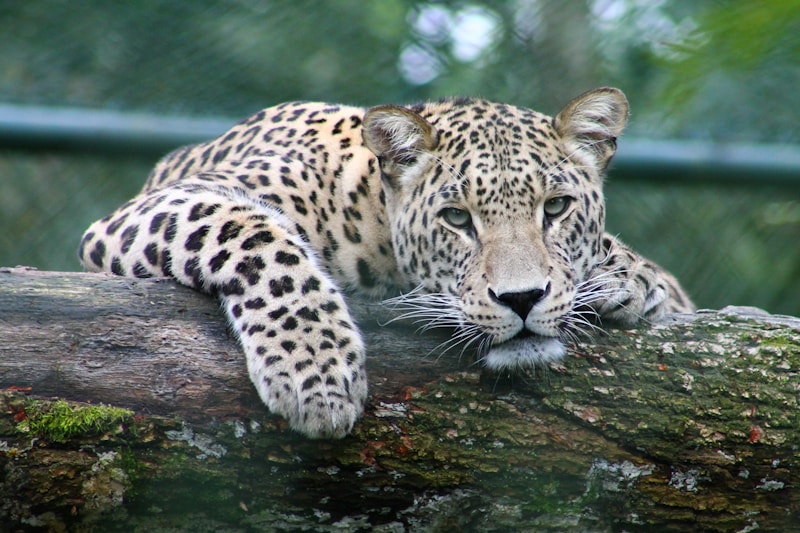
I think the Amur leopard might be the animal that breaks my heart the most. The Amur leopard (Panthera pardus orientalis) survives as a small population of about 100-120 individuals in the Russian Far East and northeastern China. That’s it. One of the world’s most beautiful cats, and there are barely enough to fill a mid-size lecture hall.
There’s some good news, though. Back in the early 2000s, there were fewer than 30. The expansion of the Land of the Leopard National Park in Russia has helped push those numbers upward. Slow progress, but real progress.
Javan Rhinoceros
The Javan rhinoceros (Rhinoceros sondaicus) lives in exactly one place on Earth: Ujung Kulon National Park in Indonesia. Approximately 76 individuals. That’s the entire global population crammed into a single national park. Disease, natural disasters, inbreeding — the risks pile up fast when you’re that concentrated and that few.
Vaquita
This one keeps me up at night. The vaquita (Phocoena sinus) is a tiny porpoise found only in the northern Gulf of California, and it’s the most critically endangered marine mammal in the world. Fewer than 10 individuals remain. Ten. The main culprit is bycatch from illegal gillnet fishing operations targeting totoaba fish.
Despite gillnet bans, surveillance programs, and international outcry, the vaquita’s future hangs by a thread. It’s a gut-punch reminder of just how fast human activity can push a species toward the point of no return.
Cross River Gorilla
The Cross River gorilla (Gorilla gorilla diehli) is the world’s rarest great ape, with roughly 300 individuals scattered across fragmented forest patches along the Nigeria-Cameroon border. Habitat loss, hunting, and human-wildlife conflict all continue to chip away at this tiny population. Conservation teams are working to connect those forest fragments, but it’s an uphill battle.
Endangered Species Under Serious Pressure
These species aren’t staring down immediate extinction, but they’re far from safe. Without sustained conservation work, they could easily slide into critical territory.
African Elephants
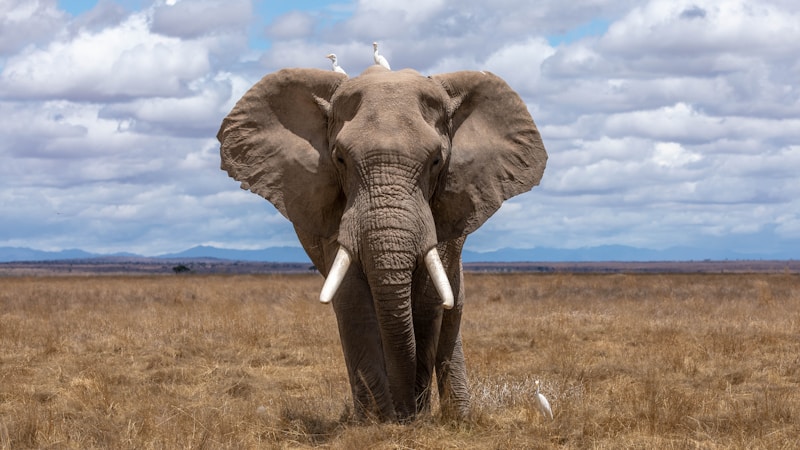
The situation with African elephants is more nuanced than most people realize. Forest elephants (Loxodonta cyclotis) are now classified as Critically Endangered, while savanna elephants (Loxodonta africana) are Endangered. We’re looking at roughly 415,000 savanna elephants and fewer than 100,000 forest elephants across the continent.
The ivory poaching crisis that peaked between 2008 and 2018 has eased somewhat thanks to international trade bans and better enforcement. But — and this is the frustrating part — habitat loss and human-elephant conflict have stepped in to fill the gap. In some regions, an estimated 8% of the population is still lost to poaching every year.
Tigers
Tigers are one of the few stories where I genuinely smile when I look at the data. Global tiger (Panthera tigris) populations are estimated at around 4,500-5,000 wild individuals across 13 countries. That’s up significantly from the 2010 low of about 3,200. India alone hosts over 3,000 tigers now.
But don’t pop the champagne yet. Subspecies like the Malayan tiger (around 150 individuals) and the Sumatran tiger (about 400) are still in dire shape. The overall trend is encouraging, but some populations are hanging by a thread.
Mountain Gorillas
Mountain gorillas (Gorilla beringei beringei) went from about 620 individuals in 1989 to over 1,000 today, thanks to incredible work in the Virunga Mountains spanning Rwanda, Uganda, and the DRC, plus Uganda’s Bwindi Impenetrable National Park.
Ecotourism has been a huge part of the equation here. The revenue generated by gorilla trekking programs funds protection efforts and gives local communities a real economic reason to keep gorilla habitat intact. It’s conservation economics at its finest.
Orangutans
All three orangutan species are in trouble. The Bornean orangutan (Pongo pygmaeus) numbers about 104,000, the Sumatran orangutan (Pongo abelii) around 14,000, and the Tapanuli orangutan (Pongo tapanuliensis) — discovered as a distinct species only in 2017 — fewer than 800. Deforestation, fires, and illegal wildlife trade are the usual suspects.
Palm oil plantation expansion remains the biggest driver of habitat loss. Certification programs like RSPO and growing consumer awareness have nudged demand toward sustainably sourced palm oil, but we’ve got a long way to go.
Conservation Wins Worth Celebrating
Because while the crisis is real, the victories are too — and they prove that extinction isn’t inevitable when we actually commit the resources.

Southern White Rhinoceros
This is the comeback story I love telling people. The southern white rhinoceros (Ceratotherium simum simum) was down to fewer than 50 individuals in a single South African reserve in the early 1900s. Fifty. Today? Approximately 16,000. That didn’t happen by accident — it took strict legal protection, careful habitat management, and creative translocation programs to establish new populations across southern Africa. If that doesn’t give you hope, I don’t know what will.
Humpback Whale
Decades of commercial whaling wiped out an estimated 90% of humpback whale (Megaptera novaeangliae) populations. Then came the International Whaling Commission moratorium in 1986, and these magnificent animals started bouncing back. Current global estimates put the population at over 80,000 individuals, and many regional populations have been removed from endangered species lists entirely. Turns out, when you stop killing them, they recover. Who knew.
Bald Eagle
The bald eagle (Haliaeetus leucocephalus) story is the one most Americans know, and it’s a good one. Fewer than 500 nesting pairs in the continental U.S. back in 1963. Today, over 300,000 individuals. The turnaround came from banning DDT, protecting habitat, and running reintroduction programs. The species came off the U.S. Endangered Species List in 2007 and hasn’t looked back.
Giant Panda
China’s giant panda (Ailuropoda melanoleuca) program is a masterclass in long-term conservation investment. Wild populations climbed from about 1,100 in the 1980s to over 1,800 today, earning a downgrade from Endangered to Vulnerable on the IUCN Red List in 2016. The network of panda reserves is extensive, and while challenges remain, the trajectory is solidly positive.
Arabian Oryx
Here’s a fun distinction: the Arabian oryx (Oryx leucoryx) was the first species ever reclassified from Extinct in the Wild back to Vulnerable. It went extinct in the wild in 1972, and through captive breeding and reintroduction programs, populations now exceed 1,200 individuals across protected areas in Saudi Arabia, the UAE, Israel, and Jordan. From zero to 1,200. That’s the kind of story that keeps conservationists going.
How Climate Change Is Making Everything Harder
As if habitat loss, poaching, and pollution weren’t enough, climate change has charged onto the scene as one of the biggest threats to global biodiversity. And it doesn’t just add a new problem — it amplifies all the existing ones.
Habitat Shifts and Range Changes
Warming temperatures are pushing species toward higher latitudes and elevations. Research shows species are moving poleward at roughly 17 kilometers per decade, while mountain-dwelling species are climbing about 11 meters per decade on average.
The problem? Not every species can pack up and move fast enough. Creatures with limited dispersal abilities or very specific habitat needs get left behind. Island species and mountaintop specialists are in an especially tough spot — there’s literally nowhere higher or farther north to go.
Timing Mismatches in Nature
Climate change is messing with the timing of biological events — when flowers bloom, when birds migrate, when insects emerge. When these events fall out of sync between interdependent species, things go sideways. A classic example: Arctic-breeding shorebirds arrive at their breeding grounds only to find that the insect populations they depend on to feed their chicks have already peaked and crashed. Bad timing with lethal consequences.
Ocean Acidification and Marine Life
The oceans have been absorbing our excess carbon dioxide, and the bill is coming due. Seawater acidity has jumped about 30% since pre-industrial times. That’s devastating for any marine species that builds shells or skeletons from calcium carbonate — corals, mollusks, and certain plankton that sit at the very base of marine food webs.
Coral reefs support roughly 25% of all marine species while covering less than 1% of the ocean floor. They’re extraordinarily efficient ecosystems, and they’re bleaching at alarming rates. Scientists estimate 70-90% of coral reefs could disappear if global temperatures rise just 1.5 degrees Celsius above pre-industrial levels. That’s a nightmare scenario for ocean biodiversity.
Polar and High-Altitude Species
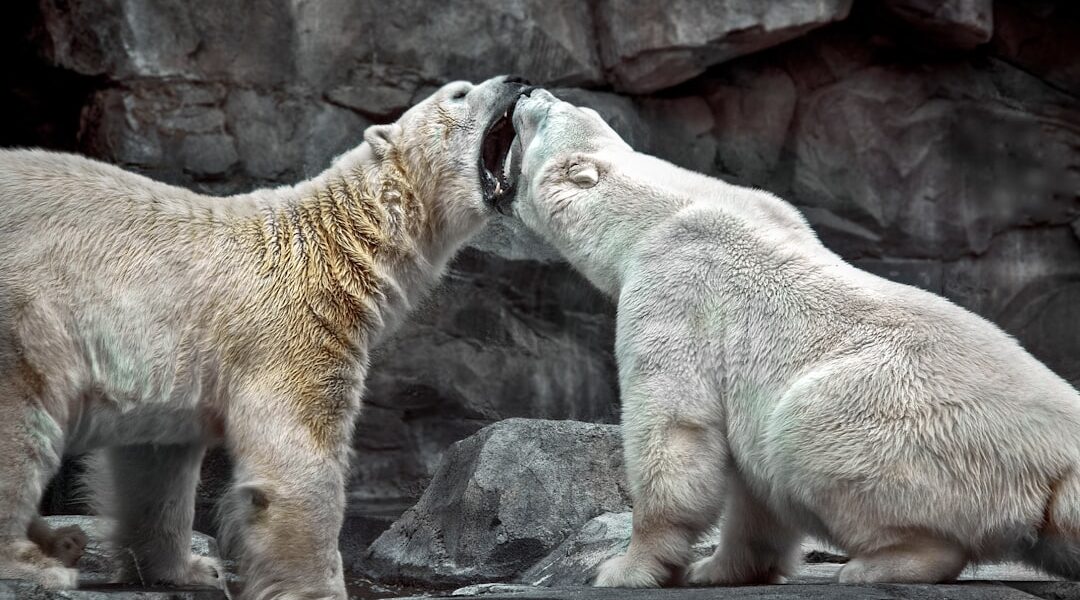
If you’re an animal that evolved for the cold, you’re in particular trouble right now. Polar bears (Ursus maritimus) need sea ice to hunt seals, but Arctic sea ice has been declining at about 13% per decade since we started tracking it by satellite in 1979. Meanwhile, mountain species like the American pika are watching their suitable habitat shrink into increasingly narrow bands at higher elevations. It’s like the floor is slowly disappearing beneath them.
What the World Is Doing About It
Saving species isn’t a solo sport. It takes coordination at every level — from international treaties all the way down to local community projects.
Protected Areas and Wildlife Corridors
Right now, about 17% of the world’s land and 8% of marine areas fall within protected zones. The Kunming-Montreal Global Biodiversity Framework, adopted in December 2022, set the ambitious target of protecting 30% of both land and sea by 2030 — the “30×30” goal you may have heard about.
But here’s something I don’t think gets talked about enough: it’s not just about creating isolated parks. Wildlife corridors that connect protected areas are absolutely critical. They let species move across landscapes as conditions change and keep populations genetically connected. Without corridors, even well-protected parks can become ecological islands.
Fighting Poaching and Wildlife Crime
The illegal wildlife trade is a multi-billion-dollar criminal enterprise, and fighting it requires serious sophistication. We’re talking ranger patrols, intelligence networks, and international cooperation through bodies like INTERPOL’s Wildlife Crime unit and monitoring organizations like TRAFFIC.
Technology has been a game-changer here — drones, AI-powered camera traps, DNA forensics. These tools have dramatically improved our ability to catch poachers and prosecute traffickers. But all the enforcement in the world won’t solve the problem if demand persists in consumer countries. You’ve got to tackle both ends.
Community-Based Conservation
This is where I get genuinely excited. Conservation programs that actually involve local communities and give them tangible benefits consistently outperform top-down approaches. Community conservancies in Kenya and Namibia are fantastic examples — local people manage wildlife on their own lands, earn income through tourism and sustainable use, and in return, human-wildlife conflict drops.
Here’s a stat that should reframe how you think about conservation: Indigenous peoples and local communities manage approximately 80% of the world’s remaining biodiversity. You simply cannot do conservation without them. Period.
Captive Breeding and Reintroduction
When a species gets critically low, captive breeding can serve as a genetic safety net while we figure out how to make the wild safe again. The California condor, black-footed ferret, and Arabian oryx are all testament to this approach.
That said, captive breeding is expensive, tricky, and generally treated as a last resort. Animals raised in captivity don’t always retain the behaviors they need to survive in the wild, and none of it matters if the original threats haven’t been addressed before you try reintroduction.
What You and I Can Actually Do
I know it’s easy to feel helpless when you read about species on the brink. But individual actions, when enough of us take them, really do add up. Here’s where to start.
Be Thoughtful About What You Buy
Your purchasing decisions have ripple effects. Some things to keep in mind:
- Sustainable Palm Oil – Look for RSPO-certified products. This directly reduces pressure on orangutan and elephant habitat in Southeast Asia
- Sustainable Seafood – Choose seafood certified by the Marine Stewardship Council (MSC) or Aquaculture Stewardship Council (ASC)
- Forest-Friendly Products – Buy FSC-certified wood and paper products when you can
- Avoid Wildlife Products – Never, ever purchase products made from endangered species. No ivory, no tortoiseshell, no exotic pets. Just don’t
Shrink Your Carbon Footprint
Every bit of climate action helps protect climate-sensitive species. Reduce energy consumption where you can, consider renewable energy sources, fly less when possible, eat more plants, and support climate-friendly policies at the ballot box. None of these are radical lifestyle changes, but collectively they matter.
Support Conservation Organizations That Do the Work
If you have the means, financial contributions to reputable conservation organizations directly fund protection on the ground. Look for groups with solid track records, financial transparency, and a high percentage of funds going to actual field programs rather than overhead.
Get Involved in Citizen Science
You don’t need a PhD to contribute real data. Programs like eBird, iNaturalist, and various butterfly and amphibian surveys let regular people collect meaningful scientific observations. It’s good for the science, and honestly, it’s a great way to develop a deeper connection to the wildlife in your own backyard.
Speak Up and Spread the Word
Contact your elected representatives about wildlife legislation. Share accurate conservation information with friends and family. Encourage others to take even small actions. Advocacy has a multiplying effect — one voice can inspire many.
Conservation Organizations Worth Knowing About
There are a lot of organizations doing incredible work out there. Here are some of the heavyweights and what makes each one distinct.
World Wildlife Fund (WWF)
WWF operates in over 100 countries and tackles conservation at every scale — from community-level projects to international policy. Their focus areas include protecting critical ecosystems, fighting climate change, and pushing markets toward sustainable production. You’ve probably seen the panda logo. Hard to miss.
Wildlife Conservation Society (WCS)
WCS runs four zoos and an aquarium in New York City while simultaneously managing field programs in 60 countries. They oversee more than 200 million acres of protected areas globally. It’s a unique model that combines public education with boots-on-the-ground conservation.
International Union for Conservation of Nature (IUCN)
The IUCN is the global authority on species conservation status. They maintain the Red List we’ve been talking about throughout this article, bring together governments and civil society organizations, and set the standards that conservation professionals worldwide rely on.
Conservation International
Operating in 30 countries across six continents, Conservation International focuses on protecting critical ecosystems and the services they provide to human communities. They pioneered debt-for-nature swaps and other creative conservation financing approaches — essentially finding clever ways to fund protection.
The Nature Conservancy
One of the world’s largest environmental organizations, The Nature Conservancy has protected more than 125 million acres of land and thousands of miles of rivers. They’re known for science-driven approaches and a willingness to partner with an unusually wide range of stakeholders, including corporations.
Panthera
If you love wild cats — and who doesn’t — Panthera is the organization to watch. They’re dedicated exclusively to protecting all 40 wild cat species, from tigers and lions to the elusive snow leopard and the Andean cat most people have never heard of. They run the world’s largest wild tiger conservation program.
Where We Go From Here
The endangered species crisis is real, and it’s urgent. I won’t sugarcoat that. But the success stories I’ve shared here prove something important: extinction isn’t inevitable when we show up with the right resources, strategies, and political will.
Looking ahead, here’s what I think the priorities need to be:
- Hit those 30×30 protected area targets from the Kunming-Montreal Global Biodiversity Framework — we committed to them, now we need to deliver
- Get serious about decarbonizing the global economy to address climate change at scale
- Crack down harder on wildlife trafficking while working to reduce consumer demand for illegal wildlife products
- Expand support for Indigenous and community-led conservation — they’re the ones managing most of the world’s biodiversity already
- Pour more investment into conservation science and monitoring so we can track what’s working and course-correct what isn’t
Every species we lose isn’t just an ethical failure. It’s lost potential — scientific discoveries we’ll never make, ecosystem services we can’t replace, options we’re stealing from future generations. The choices we make right now, today, determine which species survive into the next century and beyond. I don’t know about you, but I’d rather be on the right side of that history.
Related Articles
Explore more wildlife research and conservation topics on International Wildlife Research:
- Understanding Wildlife Migration Patterns – How animals navigate changing landscapes and climates
- Marine Conservation Priorities – Protecting ocean biodiversity from reef to deep sea
- Human-Wildlife Conflict Solutions – Strategies for coexistence in shared landscapes
- The Role of Zoos in Species Preservation – Modern zoological conservation programs examined
- Rewilding Initiatives Around the World – Restoring ecosystems through species reintroduction
- Climate Adaptation Strategies for Wildlife – Helping species survive in a warming world
This article is regularly updated to reflect the latest conservation research and population assessments. Last updated January 2026.




Leave a Reply