
A landmark study from Cambridge University has identified artificial intelligence as one of the most transformative forces reshaping wildlife conservation efforts worldwide. Published in the prestigious journal Trends in Ecology and Evolution, the comprehensive analysis examined 15 emerging technologies poised to revolutionize how scientists monitor, protect, and restore biodiversity across the planet.
The findings arrive at a critical moment for global conservation. With species extinction rates accelerating and habitat loss continuing at alarming levels, researchers and conservation organizations are increasingly turning to technological solutions to address challenges that traditional methods alone cannot solve. From the dense rainforests of Borneo to the vast savannas of Africa, AI-powered tools are fundamentally changing what is possible in wildlife protection.

The Cambridge Study and Its Implications
The Cambridge research team, led by conservation scientists from the Department of Zoology, conducted an extensive horizon-scanning exercise involving over 400 experts from 50 countries. Their goal was to identify which emerging technologies would have the greatest impact on biodiversity conservation over the next decade. Artificial intelligence emerged as the dominant theme, appearing in various forms across multiple categories of technological innovation.
Dr. William Sherwin, a co-author of the study, noted that the convergence of AI with other technologies such as satellite imaging, genomics, and sensor networks creates possibilities that were unimaginable just a few years ago. The study emphasizes that while AI offers tremendous promise, its successful implementation requires careful consideration of ethical implications, access equity, and environmental costs.
Revolutionizing Species Identification Through Camera Traps
Perhaps nowhere is AI making a more immediate impact than in the analysis of camera trap data. Conservation researchers deploy millions of camera traps worldwide, generating billions of images annually. Traditionally, teams of researchers and volunteers spent countless hours manually reviewing these images to identify species, count individuals, and record behaviors. This process was not only time-consuming but also prone to human error and fatigue.
AI-powered image recognition systems have transformed this workflow dramatically. Platforms like Wildlife Insights, developed through a partnership between Google and conservation organizations including WWF and the Wildlife Conservation Society, can now automatically identify species in camera trap images with accuracy rates exceeding 95 percent for many common species. The system has processed over 20 million images since its launch, enabling researchers to focus their expertise on analysis and conservation action rather than routine image classification.
In the Serengeti, AI systems trained on decades of camera trap data can now distinguish between individual lions based on whisker patterns and facial scars, automatically tracking population dynamics across the ecosystem. Similar systems are being deployed to monitor endangered species from snow leopards in the Himalayas to jaguars in the Amazon, providing real-time population data that would have taken years to compile using traditional methods.
Machine Learning Takes Aim at Poaching Networks
The illegal wildlife trade, estimated at $23 billion annually, represents one of the most significant threats to endangered species. Conservation organizations are now deploying sophisticated machine learning systems to predict and prevent poaching activities before they occur.
The Protection Assistant for Wildlife Security, known as PAWS, developed by researchers at Harvard University, uses game theory and machine learning to predict where poachers are most likely to strike. The system analyzes historical data on poaching incidents, patrol routes, terrain, and numerous other variables to generate optimized patrol strategies. Field trials in Uganda, Malaysia, and Cambodia have shown that PAWS-guided patrols are significantly more effective at detecting snares and deterring poachers than traditional patrol methods.
Beyond ground-level protection, AI systems are being used to monitor online marketplaces and social media platforms for illegal wildlife trade. Natural language processing algorithms scan millions of posts daily, identifying suspicious listings and alerting enforcement agencies. These systems can recognize coded language and evolving terminology that human monitors might miss, helping to disrupt trafficking networks before animals enter the supply chain.
Satellite Imagery Analysis Opens New Frontiers in Habitat Monitoring
The combination of satellite imagery and AI represents a quantum leap in our ability to monitor habitat change at scale. Traditional ground-based surveys could assess only tiny fractions of vast ecosystems, leaving enormous gaps in our understanding of habitat dynamics. Today, AI algorithms can analyze satellite images covering entire continents, detecting changes in forest cover, wetland extent, and land use patterns with unprecedented precision.
Global Forest Watch, powered by machine learning algorithms developed in partnership with Google, provides near-real-time alerts when deforestation is detected anywhere on Earth. The system processes data from multiple satellite sources, identifying forest loss down to individual tree stands. In 2024 alone, the platform sent over 4 million alerts to conservation organizations, government agencies, and indigenous communities, enabling rapid response to illegal logging and land clearing.
More sophisticated AI systems are now being trained to assess habitat quality rather than simply detecting presence or absence of vegetation. These algorithms can identify signs of forest degradation, invasive species establishment, and early indicators of ecosystem stress that might not be visible to human analysts. This capability is particularly valuable for monitoring remote or conflict-affected areas where ground-based surveys are impossible.
DNA Sequencing Advances and Environmental Monitoring
The field of environmental DNA, commonly known as eDNA, has been revolutionized by AI-powered analysis tools. Every organism sheds genetic material into its environment through skin cells, hair, waste, and other biological processes. By collecting water, soil, or air samples and sequencing the DNA present, researchers can detect which species inhabit an area without ever observing them directly.
Machine learning algorithms have dramatically improved our ability to process and interpret eDNA data. Modern systems can identify thousands of species from a single water sample, detecting rare and elusive species that might be missed by traditional surveys. In rivers and lakes, eDNA monitoring has proven particularly valuable for tracking endangered fish species and detecting invasive species before they become established.
The Cambridge study highlighted emerging techniques that combine eDNA with real-time sequencing devices and AI analysis, enabling field researchers to identify species within hours rather than weeks. This capability is transforming biosecurity at ports and borders, where rapid identification of potentially invasive species in ballast water or cargo can prevent ecological disasters.
Drone Technology Expands the Conservation Toolkit
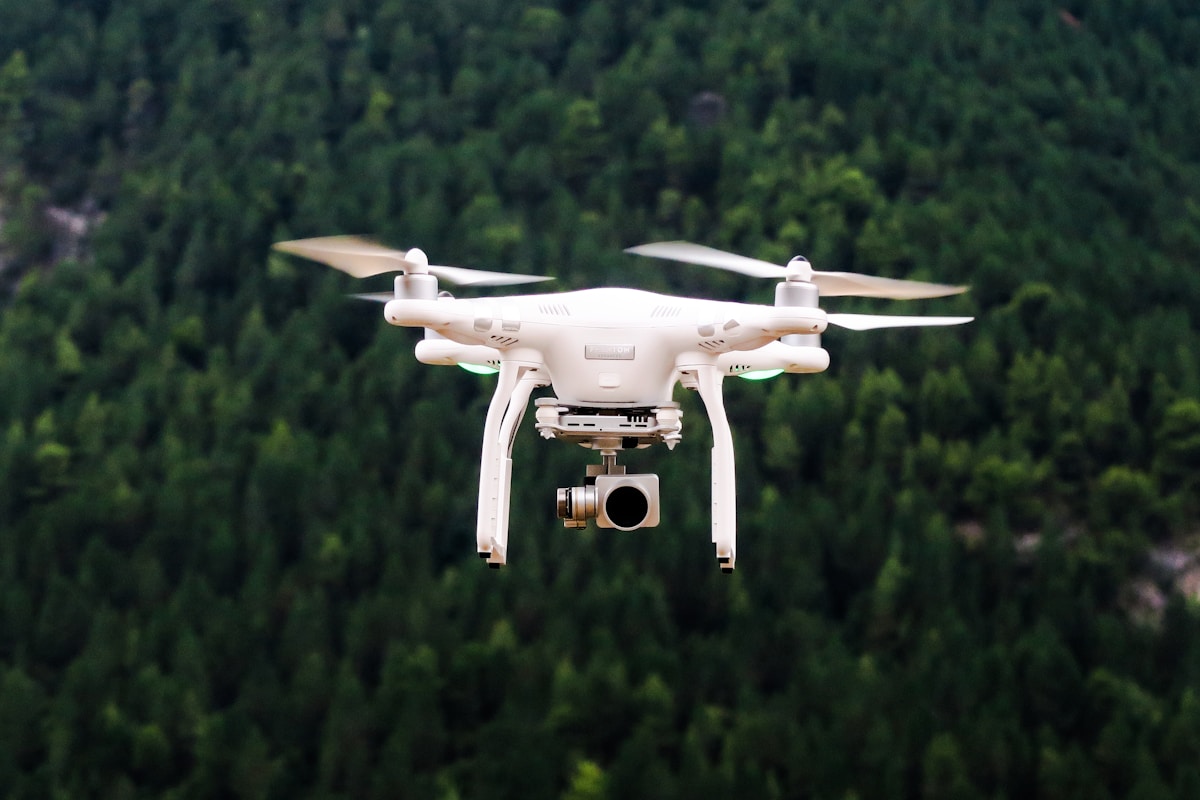
Unmanned aerial vehicles, or drones, equipped with AI-powered sensors represent another transformative technology in the conservation arsenal. Modern conservation drones can autonomously survey vast areas, identify individual animals, and even detect signs of distress or injury.
Thermal imaging drones guided by AI are proving particularly effective for anti-poaching operations. In African national parks, these systems can detect human intruders at night when most poaching occurs, alerting ranger teams and guiding response efforts. The AI systems distinguish between humans, vehicles, and wildlife, reducing false alarms and enabling more efficient deployment of limited enforcement resources.

For population monitoring, AI-equipped drones can count and identify individual animals across large areas in a fraction of the time required for ground or aerial surveys. In marine environments, drone-based AI systems are being used to identify individual whales and dolphins by their unique markings, tracking their movements across ocean basins and providing crucial data on population health and migration patterns.
Predicting Human-Wildlife Conflict Before It Happens
As human populations expand into wildlife habitat, conflicts between people and animals are increasing worldwide. Elephants raiding crops, big cats attacking livestock, and bears entering residential areas create not only economic losses but also retaliatory killings that threaten already vulnerable populations. AI systems are now being deployed to predict and prevent these conflicts before they occur.
In India, where human-elephant conflict results in hundreds of human deaths and significant crop losses annually, machine learning models analyze patterns of elephant movement, crop phenology, and human activity to predict where conflicts are most likely to occur. Early warning systems based on these predictions allow communities to take preventive measures, from harvesting crops early to deploying non-lethal deterrents.
Similar approaches are being tested for other species. In the western United States, AI systems predict where mountain lions are likely to encounter human infrastructure, informing the placement of wildlife corridors and underpasses. In East Africa, predictive models help pastoralist communities anticipate lion movements during seasonal migrations, reducing livestock losses and the retaliatory poisoning that devastates lion populations.
Concerns and Challenges Surrounding AI Adoption
The Cambridge study did not shy away from addressing significant concerns about AI deployment in conservation. Energy consumption represents a major issue, as training large AI models requires enormous computational resources with associated carbon emissions. For a field devoted to environmental protection, this irony is not lost on practitioners.
Access inequality poses another challenge. The most sophisticated AI tools are often developed in wealthy nations and may not be accessible or appropriate for conservation organizations in biodiversity-rich but resource-limited countries where most conservation work occurs. The study emphasizes the need for technology transfer, capacity building, and development of tools specifically designed for low-resource settings.
Data privacy and sovereignty concerns also require careful attention. Indigenous communities and local stakeholders must be involved in decisions about how AI systems collect and use data from their territories. The potential for surveillance technologies to be misused against vulnerable communities rather than for conservation purposes requires robust governance frameworks.
How Conservation Organizations Are Embracing AI
Major conservation organizations are rapidly integrating AI into their programs. The World Wildlife Fund has established dedicated technology teams and partnerships with tech companies to deploy AI across their global operations. Their Wildlife Crime Technology Project uses AI to strengthen enforcement at key trafficking chokepoints, while their spatial analysis teams use machine learning to optimize protected area design.
The Nature Conservancy has invested heavily in AI-powered land management tools, using machine learning to optimize restoration efforts and predict fire risk. Their Landsat-based AI systems track land use change across hundreds of millions of acres, guiding conservation priorities and measuring impact.
Smaller organizations are benefiting from increasingly accessible AI tools. Cloud-based platforms now offer pre-trained models for common conservation tasks, allowing organizations without in-house technical expertise to leverage AI capabilities. Open-source tools and training programs are democratizing access to these technologies, though significant gaps remain.
The Future of Technology in Conservation
Looking ahead, the Cambridge researchers predict continued rapid advancement in AI capabilities relevant to conservation. Edge computing will enable AI processing directly on field devices, reducing dependence on internet connectivity and enabling real-time analysis in remote locations. Advances in computer vision will allow identification of species from increasingly challenging inputs, including degraded camera trap images and partial specimens.
The integration of multiple data streams through AI-powered platforms promises to provide unprecedented ecosystem-level understanding. Imagine systems that simultaneously analyze satellite imagery, camera trap data, acoustic monitoring, and eDNA samples to provide comprehensive, real-time assessments of ecosystem health. Such integrated monitoring systems are already in development and will likely become standard tools for conservation managers within the decade.
Perhaps most significantly, AI may help bridge the gap between scientific knowledge and conservation action. Machine learning systems that can rapidly synthesize research findings, translate them into management recommendations, and adapt to local contexts could dramatically accelerate the application of conservation science.
The Cambridge study concludes with a call for proactive engagement with emerging technologies. Conservation cannot afford to be passive recipients of technological change. Instead, the field must actively shape how AI develops and deploys, ensuring these powerful tools serve biodiversity protection while addressing legitimate concerns about their impacts and governance. The decisions made today about AI in conservation will echo for decades, determining whether these technologies fulfill their promise or fall short of their potential to help stem the extinction crisis.




Leave a Reply