Today, I will share it all with you.
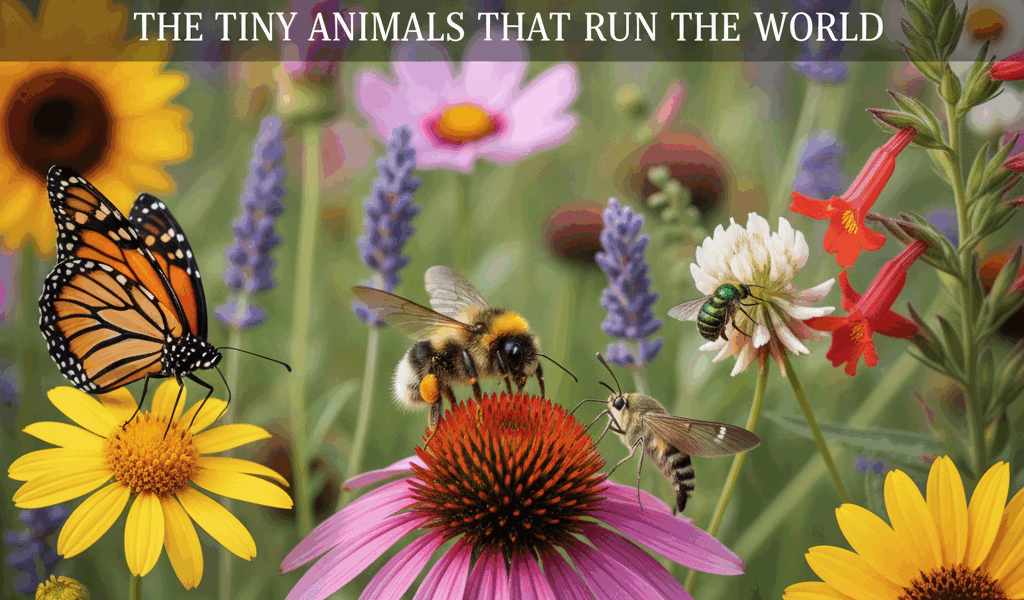
Here’s the thing most people miss: when you think “wildlife,” your brain jumps straight to elephants, wolves, whales — the big charismatic stuff. I get it. But the most consequential animals on Earth? They’re small enough to land on your finger. Insects and pollinators sustain ecosystems, make plant reproduction possible, and prop up the food systems that feed all of us. Without them, life as we know it would fall apart within a few years. That’s not hyperbole.
Just How Many Insects Are We Talking About?
The numbers are staggering. Scientists have identified roughly 1 million insect species so far, but the real total? Somewhere between 5 and 10 million. They live on every continent — yes, even Antarctica — and they’ve moved into basically every terrestrial and freshwater habitat you can think of.
The biomass of insects dwarfs that of all other land animals combined. Let that sink in for a second. A single acre of healthy meadow can hold billions of individual insects across thousands of species. I remember the first time I actually tried to count the different kinds of bugs in a patch of wildflowers near my house. I gave up after about twenty minutes and maybe forty species. And that was just a small patch. This abundance isn’t just cool trivia — it’s ecologically critical. Insects form the base of countless food webs. Birds, bats, fish, reptiles, frogs, mammals… they all depend on insects as a primary food source.
Bees — Way More Than Just Honeybees
When someone says “bee,” you probably picture a honeybee, right? Fair enough. But honeybees are just one of about 20,000 bee species worldwide. Twenty thousand! Once I started learning about the sheer diversity of bees, I couldn’t look at my garden the same way again. Different species contribute to pollination in their own unique ways, and understanding that variety matters more than most people realize.
Honeybees and Their Wild Social Lives
Honeybees (Apis mellifera) live in these incredibly organized colonies — a single queen, thousands of female workers, and male drones. Their communication system blows my mind every time I think about it. The waggle dance, where foragers basically give their nestmates GPS coordinates for the best flowers? It’s one of the most elegant things in nature. A single colony can pollinate millions of flowers in one growing season, which is why they’re so valuable to agriculture.
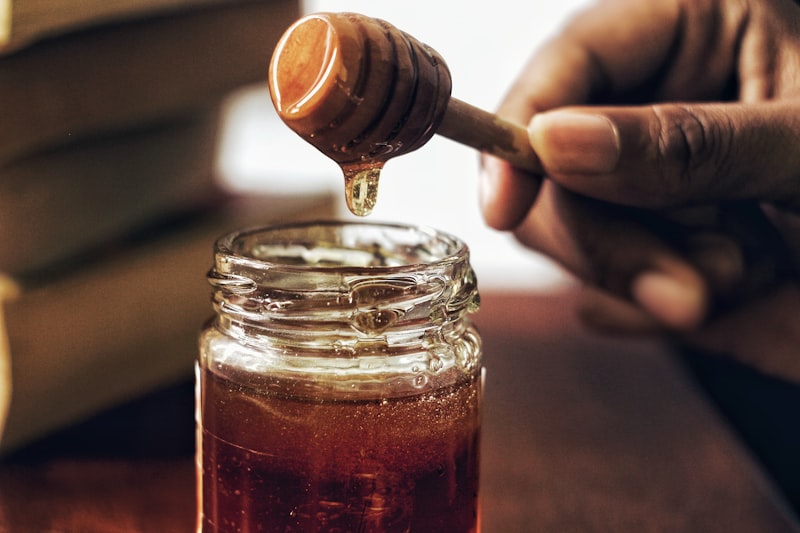
And it’s not just pollination. Honeybees produce honey, beeswax, propolis, royal jelly — the list goes on. Their colonies show this remarkable collective intelligence where thousands of individuals coordinate to regulate hive temperature, fight off predators, and even make democratic decisions about where to set up a new nest. Democratic decisions. In bees. I still find that wild.
Bumble Bees — the Cold Weather Champions
Bumble bees belong to the genus Bombus, and there are about 250 species worldwide. Here’s what makes them different from honeybees: their colonies are annual. Only the newly mated queens survive winter, then they start fresh colonies in spring. Their fuzzy bodies aren’t just adorable — they serve a purpose. Combined with their ability to generate heat by vibrating their muscles, bumble bees can fly and pollinate when it’s too cold for honeybees to even bother leaving the hive.
They also do this incredible thing called “buzz pollination.” They grab onto a flower and vibrate their flight muscles at just the right frequency to shake loose pollen that the flower holds tightly. Tomatoes, peppers, blueberries — these crops basically need bumble bees because honeybees can’t do the buzz pollination thing effectively. Next time you eat a blueberry, thank a bumble bee.
Native Solitary Bees — the Unsung Heroes
Most bee species are actually solitary. No hive, no queen, no colony. Each female builds her own nest and stocks it with provisions all by herself. Mason bees, leafcutter bees, mining bees, carpenter bees — these are just a few of the groups in this enormous category. What’s really interesting is that many native bees have coevolved with specific local plants, which makes them way more effective pollinators for those plants than generalist species like honeybees.
Where do they nest? All sorts of unexpected places. Hollow plant stems. Old beetle holes in dead wood. Tunnels they dig in bare soil. I’ve got a “bee hotel” in my backyard that took me about thirty minutes to build from scrap wood and bamboo, and it’s packed with mason bees every spring. If you want to support native bee populations, providing diverse nesting spots is honestly one of the simplest things you can do.
Butterflies and Moths — Not Just Pretty Faces

Lepidoptera — the order that includes butterflies and moths — has over 180,000 described species. Everyone loves watching butterflies float around the garden, and I don’t blame them. They’re gorgeous. But what I find even more fascinating is the pollination work they’re doing while they look so graceful.
How Butterflies Get the Job Done
Butterflies work during the day, drawn to bright colors — reds, oranges, yellows, purples. Their long, coiled proboscis (basically a drinking straw for nectar) lets them reach into tubular flowers that most other pollinators can’t access. While they’re poking around for nectar, pollen sticks to their bodies and gets ferried from flower to flower. Simple but effective.
These guys travel up to 3,000 miles between their breeding grounds in the US and Canada and their wintering spots in Mexican forests. Three thousand miles. On wings that weigh less than a paper clip. Along that entire route, they’re pollinating wildflowers and serving as living indicators of ecosystem health.
Moths and the Night Shift
Here’s something that surprised me when I first learned it: moths outnumber butterflies by a huge margin. About 160,000 moth species compared to roughly 20,000 butterfly species. Many moths are nocturnal pollinators, visiting pale or white flowers that open at night and pump out strong fragrances to attract them. Hawk moths can hover like hummingbirds, which makes them seriously effective pollinators.
Some plants depend almost entirely on moths. Take yucca plants — they’ve evolved one of the most specialized relationships in nature with yucca moths. The moths are the only creatures that pollinate yuccas, and yucca flowers are the only place yucca moth larvae can develop. If one disappears, so does the other. It’s beautiful and a little terrifying at the same time.
Beetles — the OG Pollinators
Beetles are the largest order of insects, with over 400,000 known species. And here’s a fun fact that doesn’t get enough attention: beetles were among the very first insect pollinators. They show up in the fossil record pollinating ancient flowering plants over 200 million years ago. That’s before bees existed. Before butterflies. Before most modern pollinators even showed up on the scene.
Beetle-pollinated flowers (scientists call them cantharophilous flowers, which is a mouthful) tend to be large, have strong scents — sometimes fruity, sometimes kind of fermented-smelling — and produce tons of pollen. Magnolias, pond lilies, wild roses… these all lean heavily on beetle pollination. Unlike bees, beetles tend to just eat the pollen outright rather than carefully collecting it. But they’re messy enough eaters that plenty of pollen gets transferred between flowers anyway. Accidental pollination, if you will.
Some beetle species have gone all-in on specific plants. Certain palm species are pollinated exclusively by particular weevil species that spend their entire lives within the palm’s flowers and fruit. Talk about commitment.
Ants — Tiny Engineers With Huge Impact
There are about 22,000 ant species worldwide, and their ecological roles go way beyond pollination. These little guys are legitimate ecosystem engineers. They aerate soil, spread seeds around, cycle nutrients, and serve as both predators and prey in more food webs than I can count.
How Ants Move Seeds Around
This is one of my favorite insect-plant relationships. Many plants have actually evolved to rely on ants to spread their seeds — it’s called myrmecochory (try saying that three times fast). These plants produce seeds with nutrient-rich little attachments called elaiosomes that ants find irresistible. The ants haul the seeds back to their nests, eat the elaiosomes, then toss the seeds into nutrient-rich underground chambers. And those chambers? Perfect germination spots, protected from seed predators and even fire.
Around 11,000 plant species across 334 genera use ant dispersal. Spring wildflowers like trilliums, violets, and bloodroot are great examples. Both sides benefit from the deal, and it really shows you how deeply connected insects and plants can be.
Ant Colonies as Superorganisms
I’ve spent way too many hours watching ant colonies. I can’t help it. They function as superorganisms — every individual works so seamlessly with the rest that the whole colony acts like a single entity. Division of labor, chemical signal communication, collective decision-making… it all comes together to let them pull off stuff that would be impossible for any single ant. Building elaborate underground cities. Farming fungus. Herding aphids for honeydew. Yeah, they literally herd aphids. Like tiny cattle ranchers.
Dragonflies and Damselflies — Ancient Aerial Predators

Dragonflies and their smaller cousins, damselflies — collectively called odonates — have been patrolling wetlands for over 300 million years. These are ancient insects. And they’re incredible predators, consuming massive quantities of mosquitoes, gnats, and other flying pests. Free pest control, courtesy of nature.
Their Underwater Beginnings
Something most people don’t realize: dragonflies spend most of their lives underwater as nymphs. Depending on the species, that aquatic phase lasts months to years. During that time, they’re voracious predators, eating mosquito larvae, tadpoles, even small fish. When they finally emerge as adults, they become equally fearsome aerial hunters. And get this — dragonflies catch their prey with over 95% success rate. Lions sit around 25%. Sharks maybe 50%. Dragonflies make them look amateurish. It’s honestly ridiculous how good they are at hunting.
Living Water Quality Monitors
Because dragonfly nymphs are sensitive to water pollution, finding them in a body of water is basically a thumbs-up for that ecosystem’s health. Researchers actually use dragonfly diversity and abundance as biomonitors for assessing watershed conditions. When wetland restoration projects want to know if they’re actually working, one of the first things they track is whether dragonfly populations are bouncing back.
The Pollinator Decline Crisis — Why I Lose Sleep Over This
OK so here’s where things get heavy. Insect populations around the world are declining at rates that should scare everyone. Scientists have called it an “insect apocalypse,” and while that sounds dramatic, the data backs it up. A study from Germany found a 75% decline in flying insect biomass over 27 years — and this was in protected areas. Protected. Similar drops have been documented across Europe, North America, and beyond.
What’s Driving the Decline
It’s not just one thing. Multiple factors are hammering insect populations simultaneously, and they often compound each other in ways that make everything worse.
Habitat Loss is the big one. Converting natural areas to farmland, subdivisions, parking lots… it eliminates the native plants insects need for food and the structures they need for nesting. Even swapping a wildflower meadow for a manicured lawn — which seems harmless — can devastate local insect communities. I’ve seen it happen in my own neighborhood.
Pesticide Use is another major culprit, especially neonicotinoid insecticides. These are systemic, meaning they spread throughout the entire plant — including the pollen and nectar. Even doses that don’t kill bees outright can mess up their navigation, reduce their foraging efficiency, and impair colony reproduction. And herbicides? They wipe out the wildflowers that pollinators depend on for food. It’s a one-two punch.
Climate Change is disrupting the timing of everything. When flowers bloom earlier but their pollinators don’t emerge earlier to match, you get mismatches that hurt both sides. Shifting climate zones force insects to migrate or adapt, and extreme weather events can wipe out populations in one bad storm.
Light Pollution is one people don’t think about enough. Artificial lights mess with nocturnal insect navigation and reduce pollination of night-blooming plants. Billions of insects are killed by artificial lights every single year. Billions.
Pathogens and Parasites round out the list. The Varroa mite has devastated honeybee colonies worldwide — any beekeeper will tell you horror stories about it. Various pathogens also affect bumble bees and other wild pollinators, sometimes spread through the commercial pollinator trade itself. Which is ironic and deeply frustrating.



Leave a Reply