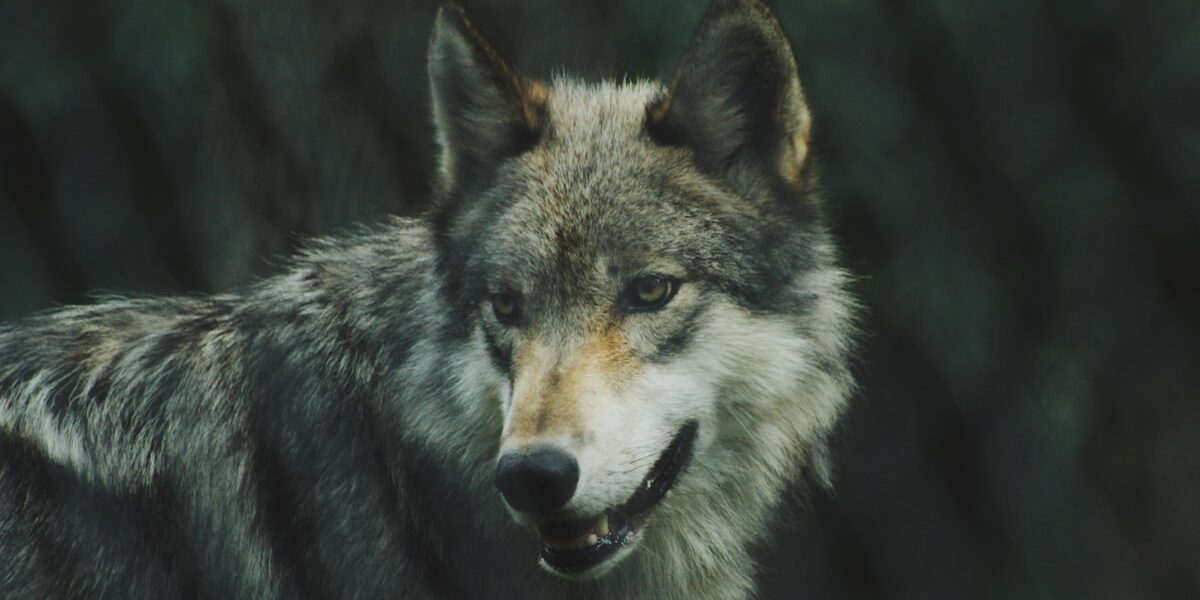
Today, I’ll break down what’s actually happening with wolf policy and why it matters.
Here’s the short version: Republicans want wolves delisted from the Endangered Species Act. Conservationists want a national recovery plan. Ranchers want management tools. Nobody’s getting everything they want, and wolves are caught in the middle of a debate that says as much about American values as it does about wildlife biology.

Gray wolves have made a remarkable comeback across the American West, sparking intense debate over their future management.
The Republican Push to Remove Federal Protections
Congressional Republicans introduced the “Trust the Science Act” in early 2026, arguing that wolf populations have exceeded recovery goals and states should take over management completely. The numbers support their case on paper: over 3,000 wolves in the Northern Rockies across Montana, Idaho, and Wyoming, another 4,500 in the Great Lakes region spanning Minnesota, Wisconsin, and Michigan. Far more than the original recovery targets set back in the 1980s.
Senator Mike Crapo of Idaho summed up the delisting argument when he said: “We set a goal, we achieved it, and now it’s time to let states manage their own wildlife. The Endangered Species Act was never meant to protect species in perpetuity once they’ve recovered.”
” Agricultural lobbying groups and hunting organizations back the delisting push enthusiastically. Rural lawmakers argue that continued federal oversight undermines state wildlife management expertise and ignores the economic impacts on ranching communities trying to make a living in wolf country.
The legislation has real momentum. Support from agricultural lobbies and hunting organizations gives it a solid political base, and the “states’ rights” framing resonates with conservatives who view federal wildlife management as government overreach.
Conservationists Want Something Bigger
Environmental groups aren’t buying the “mission accomplished” framing. The Center for Biological Diversity, Defenders of Wildlife, and Sierra Club have united behind calls for a comprehensive national wolf recovery plan that would look at the species’ role across its entire historic range.
Adrian Wydeven, who managed Wisconsin’s wolf population for decades, makes the point that population numbers alone miss the ecological picture entirely. “Wolves once ranged across virtually all of North America,” he explains. “Having them in a few scattered populations doesn’t constitute true ecological recovery.”
The proposed national plan would identify suitable habitat across the country where wolves could thrive, establish dispersal corridors between isolated populations to maintain genetic diversity, and set science-based population goals that consider ecosystem health rather than just counting heads.
Conservation groups have also filed multiple lawsuits challenging recent state hunting regulations they view as excessive and scientifically unsound. These legal battles have created a patchwork of protections that varies dramatically from state to state, making it hard for anyone — wolves included — to know what the rules actually are.
Colorado’s Ballot Box Experiment
No state demonstrates the complexity of wolf politics like Colorado. In 2020, voters narrowly approved Proposition 114 — making Colorado the first state to mandate wolf reintroduction through a ballot initiative. Urban voters supported it. Rural counties overwhelmingly opposed it. The measure passed by less than two percentage points.
The urban-rural split tells you everything about why wolf policy generates such heat. People in Denver looking at wolves as symbols of wilderness restoration voted yes. Ranchers on the Western Slope looking at wolves as threats to their livestock and livelihoods voted no. Both positions are understandable given different lived realities.
Colorado Parks and Wildlife started releasing wolves captured in Oregon in December 2023. By early 2026, at least five packs have established territories on the Western Slope, with an estimated 40-50 wolves now calling Colorado home. The first Colorado-born pups were documented in spring 2024, marking a significant milestone in the reintroduction effort.
Yellowstone National Park’s wolf reintroduction in 1995 provides a template for understanding potential ecosystem benefits in Colorado and beyond.
The reintroduction hasn’t been smooth sailing. Ranchers report livestock losses, compensation programs struggle to keep pace with claims, and a technical working group continues refining management protocols trying to balance conservation goals with agricultural concerns. Wildlife managers nationwide are watching Colorado closely as a potential model for future reintroductions in other states with suitable habitat.
Natural Expansion in California and Oregon
While Colorado actively reintroduced wolves, natural dispersal has brought the predators back to California and expanded populations in Oregon without any direct human intervention. California now hosts at least seven confirmed packs, primarily in the northeastern corner of the state near the Oregon border. The Lassen Pack, first documented in 2017, has become a flagship group, successfully raising pups for multiple consecutive years.
Oregon’s wolf population has grown steadily over the past decade, with the state now hosting approximately 200 wolves across more than 20 packs. Wolves have expanded from their initial strongholds in northeastern Oregon into the Cascade Range and are beginning to appear in southwestern portions of the state.
Both states maintain wolves on their endangered species lists, providing protections beyond federal law. This state-level protection has created conflict with neighboring states where wolves can be legally hunted, highlighting the challenge of managing a species that doesn’t recognize political boundaries.
Wildlife biologists have documented wolves traveling hundreds of miles in search of new territory and mates. One famous disperser, OR-93, traveled over 1,000 miles from Oregon into California’s Central Valley before his tracking collar stopped transmitting in 2021. Such long-distance movements demonstrate the species’ remarkable ability to recolonize former habitat when given protection and opportunity.
The Idaho-Montana-Wyoming Hunting Controversy
Nothing in wolf policy generates more heated debate than hunting regulations in the Northern Rocky Mountain states. Since wolves were removed from federal protection in the region in 2011, Idaho, Montana, and Wyoming have established hunting and trapping seasons that conservationists characterize as extreme.
Idaho’s regulations have drawn particular criticism from wildlife advocates. The state allows hunters to kill an unlimited number of wolves on a single tag, permits hunting wolves over bait, authorizes aerial hunting on private land, and has hired private contractors to reduce wolf numbers in specific areas. State wildlife managers have set a population objective of 500 wolves, down from recent highs of over 1,500 individuals.
Montana implemented controversial regulations in 2021 that allowed hunting wolves near Yellowstone National Park boundaries, night hunting with thermal scopes, and the use of snares. Several wolves that had dispersed from Yellowstone were killed, including animals that researchers had studied for years — wolves with names and documented histories that had become familiar to visitors and scientists alike.
Wyoming maintains a unique management framework where wolves are classified as predators across most of the state, allowing them to be killed on sight without a license. Only in a designated “trophy game” zone around Yellowstone do wolves receive more regulated status with hunting season restrictions.
Defenders of these aggressive policies argue that states must have tools to manage wolf populations and respond to livestock depredation quickly. Critics contend that the regulations are designed to minimize wolf numbers rather than manage sustainable populations — that the goal is elimination dressed up as management.
The Recovery Story: From 66 to 7,000
The recovery of gray wolves in the lower 48 states represents one of conservation’s most remarkable success stories by any measure. When wolves were first protected under the Endangered Species Act in 1974, only a small population survived in northeastern Minnesota, numbering fewer than 1,000 individuals. The iconic wolves of the Northern Rocky Mountains had been completely eliminated through decades of government-sponsored extermination programs.
The turning point came in 1995 when wildlife managers captured wolves in Canada and released them in Yellowstone National Park and central Idaho. Those 66 wolves formed the nucleus of a population that has since expanded across the Northern Rockies and beyond.
Today’s population of approximately 7,000 wolves across the lower 48 states demonstrates both the species’ resilience and the effectiveness of legal protections when consistently applied. Wolves have proven adaptable, surviving in landscapes ranging from wilderness areas to agricultural regions, from dense forests to high desert environments.
Yet conservationists argue that 7,000 wolves barely begins to fill the ecological role the species once played across North America. Historical estimates suggest that before European colonization, wolf populations in the lower 48 states numbered in the hundreds of thousands. From this perspective, current populations represent less than five percent of historic levels — hardly cause for declaring victory and removing protections.
Ranchers Bear Real Costs
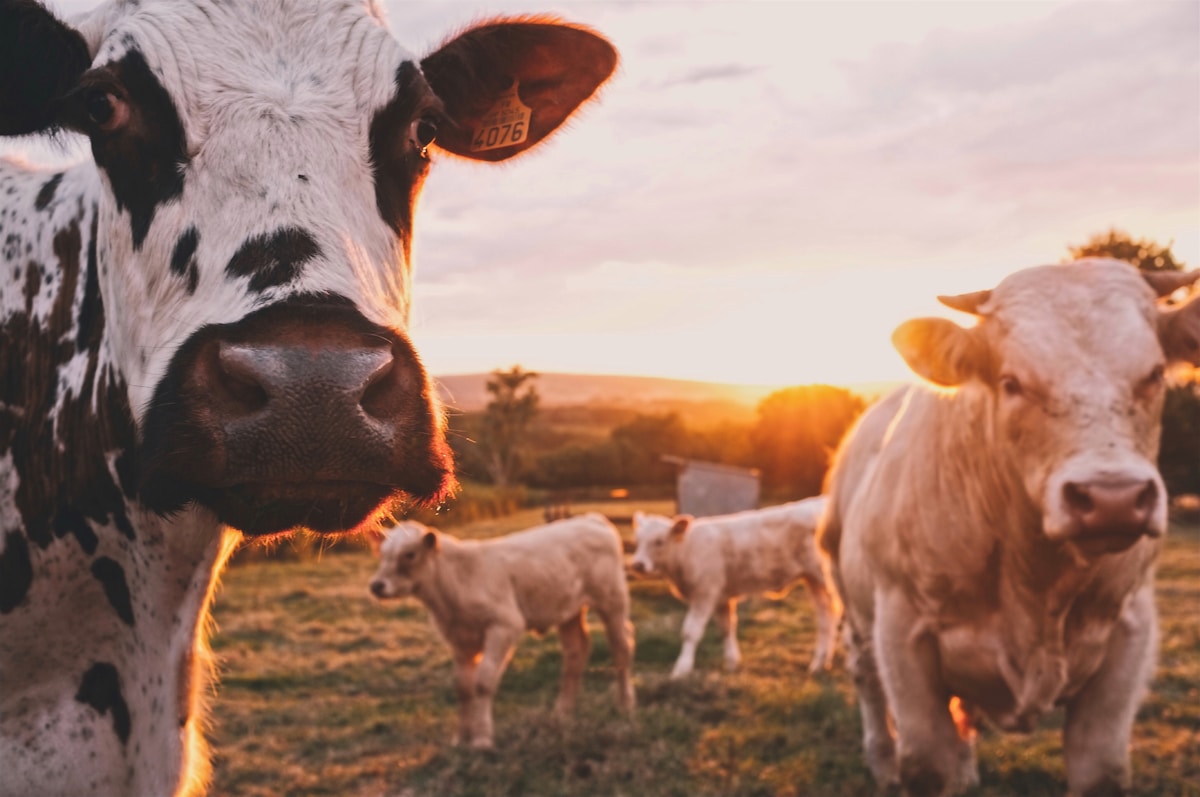
Ranching communities in wolf territory face real challenges balancing their livelihoods with wildlife conservation goals.
For ranching families in wolf country, the policy debate isn’t academic theory. The return of wolves has brought real costs in the form of livestock depredation, stress on herds, and the economic and emotional toll of losses that accumulate over time.
While overall livestock losses to wolves represent a small percentage of total mortality nationwide, the impacts aren’t evenly distributed across the landscape. Some operations in prime wolf habitat experience repeated depredation, losing animals year after year in patterns that feel relentless. A single wolf attack can kill multiple sheep, and the stress of wolf presence can cause cattle to lose weight, reduce conception rates, and change grazing patterns in ways that affect productivity.
Jim Melin runs cattle on a ranch in central Idaho that his family has operated for generations. His perspective matters because he’s living this daily: “We’re not against wolves existing,” he explains. “But we need management tools when they’re killing our livestock. It’s our livelihood, and it feels like nobody in the cities making these decisions understands that.”
Compensation programs exist in most states, paying ranchers for confirmed wolf kills. However, critics note that many losses go undocumented in remote terrain where carcasses are never found, and payments often don’t cover the full economic impact including veterinary bills, lost breeding potential, and labor costs involved in protecting remaining animals.
Innovative coexistence programs have shown genuine promise though. Range riders who patrol with herds, guard dogs trained to deter predators, fladry (flags on fencing that wolves avoid), and improved animal husbandry practices can all reduce conflicts. Organizations like the Wood River Wolf Project in Idaho have demonstrated that proactive non-lethal measures can dramatically reduce livestock losses while maintaining viable wolf populations nearby.
The Yellowstone Ecosystem Effect
The reintroduction of wolves to Yellowstone National Park has provided unprecedented opportunities to study how apex predators shape ecosystems over time. The documented changes have reshaped scientific understanding of ecological relationships and provided powerful arguments for wolf conservation that extend beyond the animals themselves.
Within years of wolves returning, elk behavior changed dramatically in observable ways. Previously, elk had gathered in large herds that overgrazed riparian areas along rivers and streams, preventing vegetation recovery. Fear of wolves caused elk to become more vigilant and mobile, reducing concentrated grazing pressure on the sensitive areas where they were most vulnerable to predation.
The vegetation responded visibly. Willows, aspens, and cottonwoods that had been suppressed for decades began to recover along stream banks. This recovery provided habitat for songbirds that had disappeared, created shade that lowered stream temperatures benefiting native trout populations, and stabilized banks against erosion that had plagued the park’s waterways.
Beaver populations, which had nearly disappeared from Yellowstone during the wolf-free decades, began to recover as willows provided the food and dam-building materials they needed. Beaver dams created wetlands that supported amphibians, waterfowl, and countless other species in expanding ripples of ecological benefit.
Scientists call these cascading effects a “trophic cascade,” where the presence of a top predator ripples through an entire ecosystem in ways that weren’t predicted. While some researchers have cautioned against oversimplifying these relationships or assuming they’ll replicate everywhere, the Yellowstone experience has become a powerful symbol of ecological restoration through predator recovery.
What Delisting Would Actually Mean
If current legislative efforts succeed and wolves are permanently removed from federal protection, management authority would transfer entirely to individual states. The implications would vary dramatically depending on geography and state politics.
In states with strong existing protections like California and Oregon, state-level endangered species designations would continue to shield wolf populations from hunting. Wolves in these states would likely continue expanding their range and numbers as they have been.
The situation would look completely different in states that have demonstrated clear intent to minimize wolf populations. Without federal oversight, Idaho could potentially reduce its wolf population to whatever level it chooses. Montana and Wyoming would have free rein to expand already aggressive hunting and trapping regulations without any check.
Perhaps most significantly, delisting would eliminate any requirement to consider wolves’ status when making federal land management decisions. Currently, agencies must consult on actions that might affect endangered species. Without that requirement, logging, mining, grazing permits, and development projects on federal lands would face fewer conservation constraints and less environmental review.
Conservationists also worry about the precedent delisting would set for other species. If Congress can override Endangered Species Act protections for politically controversial species through legislative fiat, other recovering animals could face similar threats based on politics rather than biology. The Mexican gray wolf, red wolf, and grizzly bear could all become targets of similar campaigns.
Is Common Ground Possible?
Despite the intense polarization, some observers see opportunities for compromise in specific contexts even as the broader policy debate rages on. Wildlife managers, ranchers, and conservationists have found common ground in particular projects that suggest collaboration is possible when people stop yelling and start problem-solving.
State-level working groups in several states have brought together diverse stakeholders to develop management recommendations that all parties can accept. These collaborative efforts have produced practical solutions including improved livestock depredation response protocols, refined population monitoring techniques, and creative coexistence programs that benefit both ranchers and wolves.
Some hunting advocates have expressed concern that extreme regulations could actually backfire on their cause, generating public sympathy for wolves and potentially triggering restored federal protection through the courts. They argue for sustainable harvest levels that maintain robust populations while providing hunting opportunities — management rather than extermination.
Scientific research continues to refine understanding of wolf ecology, population dynamics, and human-wolf coexistence in ways that could inform better policy. This growing knowledge base offers the potential for more informed management decisions, though translating science into policy remains challenging in an environment where political positions harden quickly.
Where This Goes From Here
As 2026 unfolds, the battle over American wolves shows no signs of resolution. Legislative efforts continue in Congress with uncertain outcomes. Legal challenges wind through federal courts on multiple fronts. State management decisions spark controversy and counter-responses in a cycle that feeds itself.
What seems clear is that wolves will remain on the American landscape in significant numbers regardless of policy outcomes in the near term. The species has demonstrated remarkable resilience over the past three decades, and even aggressive management in some states is unlikely to reverse recovery completely across the wolves’ expanded range.
The deeper questions involve values as much as science. How much space should we make for large predators in a modern landscape? Who bears the costs of conservation when those costs fall unevenly? How do we balance competing legitimate interests when people disagree fundamentally about priorities?
These questions have no easy answers, but the decisions made in the coming years will shape wolf populations and the ecosystems they inhabit for generations to come.
For now, wolves continue to howl across mountain valleys from the Canadian border to the Southern Rockies. Their future remains uncertain in terms of specific policies and numbers, but their presence has already transformed the American wilderness in ways both measurable and profound. Whether that transformation continues depends on choices humans make in legislatures, courtrooms, and communities across wolf country.




Leave a Reply