# The Prey Animals That Predators Refuse to Hunt (And Why They’re Untouchable)
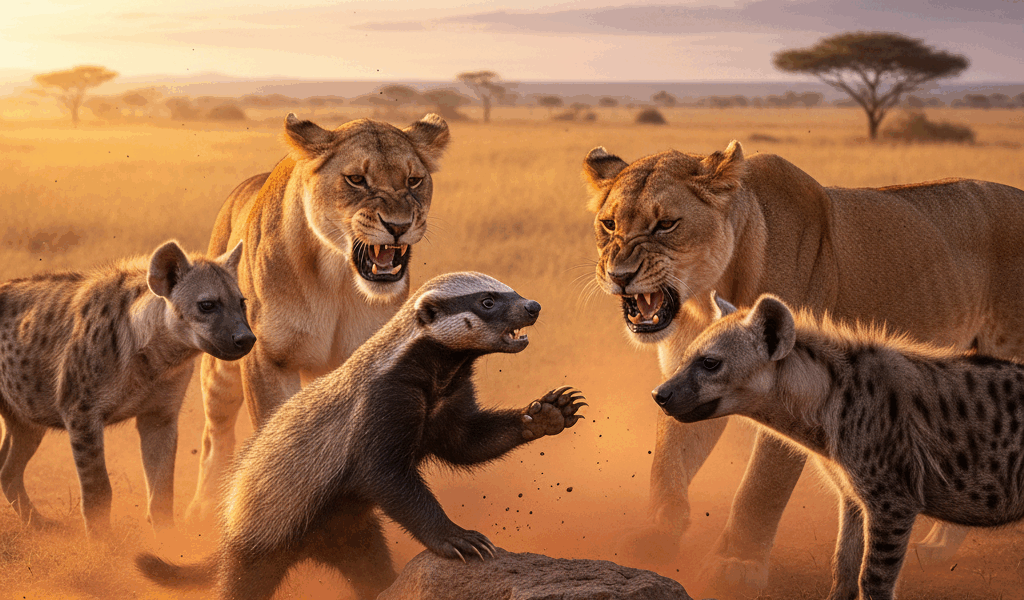
In nature’s brutal food chain, most prey animals live in constant fear of being eaten. But there’s an elite group of animals that predators simply won’t touch—not because they can’t catch them, but because the cost of trying is too high. These are the untouchables: prey animals so well-defended that predators have learned through painful experience to leave them alone.
## The Ultimate Paradox: Prey That Predators Fear
These animals occupy a unique position in the ecosystem. They’re technically prey—they eat plants or smaller creatures and serve as potential food sources—but they’ve evolved defenses so effective that they’re essentially immune to predation. They’ve turned the predator-prey relationship on its head.
## 1. Honey Badger – The World’s Most Fearless Prey Animal
**Scientific name:** *Mellivora capensis*
**Why predators avoid them:**
The honey badger is legendary for a reason. This small carnivore (yes, it eats meat but is still vulnerable to larger predators) has a reputation that keeps lions, leopards, and even packs of hyenas at bay.
**Defense mechanisms:**
– **Loose, thick skin:** A lion’s bite can’t penetrate it, and the loose skin allows the honey badger to twist and bite back even when grabbed
– **Ferocious aggression:** Will fight to the death without hesitation, targeting eyes and genitals
– **Powerful jaws and claws:** Can tear through wood and dig through concrete
– **Stink glands:** Release a suffocating smell similar to skunks when threatened
– **Resistance to venom:** Immune to most snake venoms, even cobras
**Real-world examples:**
– Documented cases of honey badgers fighting off entire packs of African wild dogs
– Known to attack beehives fearlessly, getting stung hundreds of times without retreating
– Will chase leopards and lions away from their kills
**Predator calculus:** “This 25-pound animal could blind me, castrate me, or leave me with infected wounds. Not worth it.”
## 2. Porcupine – 30,000 Reasons to Stay Away
**Scientific name:** Various (Family Hystricidae and Erethizontidae)
**Why predators avoid them:**
With approximately 30,000 quills covering their body, porcupines are walking punishment for any predator foolish enough to attack.
**Defense mechanisms:**
– **Barbed quills:** Each quill has hundreds of backward-facing scales that make removal excruciating and nearly impossible
– **Muscular control:** Can raise quills when threatened, making themselves appear larger
– **Quill replacement:** Continuously grow new quills to replace lost ones
– **Tail club:** Can swing a quill-covered tail with surprising accuracy
– **Nocturnal habits:** Active at night when most predators rely on vision rather than caution
**What happens when predators don’t listen:**
**Fisher cats** (one of the few predators that occasionally succeeds) have developed a specialized technique:
– Must attack the face repeatedly for 30+ minutes
– Flip the porcupine to expose the unprotected belly
– Even then, fishers often end up with quills embedded in their face
– Success rate is still low, making it a desperation strategy
**Failed attempts:**
– Lions in Africa have died of starvation after porcupine quills penetrate their mouths and prevent eating
– Mountain lions in North America with faces full of quills (painful lesson learned)
– Dogs require veterinary surgery to remove embedded quills
**Predator calculus:** “Every attempt I’ve witnessed ended badly. I’ll hunt literally anything else.”
## 3. Skunk – Chemical Warfare Expert
**Scientific name:** Family Mephitidae
**Why predators avoid them:**
Skunks are small, slow, and relatively defenseless except for one thing: the most effective chemical weapon in the animal kingdom.
**Defense mechanisms:**
– **Sulfur-based spray:** Can spray accurately up to 10-15 feet
– **Temporary blindness:** Direct eye contact causes immediate burning and temporary vision loss
– **Persistent odor:** Can last for weeks, making the predator identifiable and avoided by prey
– **Warning displays:** Stomping, tail raising, and handstands give clear “back off” signals
– **Precision aiming:** Can rotate spray nozzles to hit targets behind them
**Chemical composition:**
The spray contains thiols (sulfur compounds) that:
– Trigger immediate nausea and vomiting
– Can be detected by human noses at 3.5 parts per billion
– Penetrate fur and skin, making it nearly impossible to remove
– Warn all other animals in the area
**Predators that learned the hard way:**
– Bears (will avoid skunks despite massive size advantage)
– Coyotes (young coyotes make this mistake once)
– Dogs (domestic dogs never learn, wild canines do)
**The only regular predator:** Great horned owls have a poor sense of smell and will occasionally prey on skunks
**Predator calculus:** “Getting sprayed means starvation (can’t hunt effectively while reeking) and social exile. Never worth it.”
## 4. Poison Dart Frog – Deadly Skin
**Scientific name:** Family Dendrobatidae
**Why predators avoid them:**
These tiny, brilliantly colored frogs contain some of the most potent toxins in nature.
**Defense mechanisms:**
– **Batrachotoxin:** A single golden poison dart frog (*Phyllobates terribilis*) carries 1,000 micrograms—enough to kill 10 adult humans or 20,000 mice
– **Warning coloration:** Bright blues, yellows, and reds signal “don’t eat me”
– **Toxin sequestration:** Get toxins from their diet (specific ants and mites), making them non-toxic in captivity
– **No known antidote:** Medical science has no effective treatment for batrachotoxin poisoning
**How the toxin works:**
– Interferes with sodium channels in nerve and muscle cells
– Causes immediate paralysis
– Death occurs from heart failure or respiratory paralysis
– Effects begin within minutes of contact
**Indigenous knowledge:**
The Emberá people of Colombia have used these frogs to poison blow darts for centuries, hence the name.
**Predator calculus:** “Bright colors mean certain death. Evolution has taught us well.”
## 5. Electric Eel – The Living Taser
**Scientific name:** *Electrophorus electricus*
**Why predators avoid them:**
Despite being a fish (actually a knifefish, not a true eel), the electric eel generates more electricity than a wall outlet.
**Defense mechanisms:**
– **800-volt discharge:** Can generate 860-volt shocks (a wall outlet is 120V)
– **Repeated shocks:** Can deliver multiple shocks without recharging
– **Precise targeting:** Can emit low-voltage pulses to locate threats, then unleash full power
– **Leaping attack:** Will jump out of water to shock land-based threats
– **Electroreception:** Detects other animals by electrical fields
**What happens during an attack:**
– Intense pain and muscle contractions
– Temporary paralysis
– Potential drowning for aquatic predators
– Cardiac effects in smaller animals
**Documented incidents:**
– Caiman (Amazon crocodilians) avoid adult electric eels
– Jaguars have been shocked while attempting to catch them
– Horses crossing rivers in the Amazon have been stunned
**Predator calculus:** “The shock alone could incapacitate me long enough to drown. Next prey, please.”
## 6. Bombardier Beetle – Nature’s Chemical Explosion
**Scientific name:** Family Carabidae (Subfamily Brachininae)
**Why predators avoid them:**
This small beetle produces a boiling hot chemical explosion in its abdomen and sprays it at attackers with remarkable accuracy.
**Defense mechanisms:**
– **Chemical reaction:** Mixes hydroquinone and hydrogen peroxide in a special chamber
– **Temperature:** The resulting reaction reaches 100°C (212°F)
– **Explosive release:** Fires in rapid pulses (500+ pulses per second)
– **Directional spray:** Can aim at targets in any direction, including over their own back
– **Multiple shots:** Can spray 20-30 times before depleting reserves
**How it works:**
Two separate chemical chambers prevent premature detonation. When threatened:
1. Chemicals mix in explosion chamber
2. Catalytic enzymes trigger violent reaction
3. Heat and pressure build instantly
4. Explosive spray fires through directional nozzle
**Predators affected:**
– Ants (will drop the beetle immediately)
– Spiders (abandon the attack)
– Frogs (spit them out mid-swallow)
– Birds (learn after one attempt)
**Predator calculus:** “That tiny beetle just caused chemical burns. Not making that mistake again.”
## 7. Pangolin – Impenetrable Armor
**Scientific name:** Order Pholidota
**Why predators avoid them:**
Covered in keratin scales (the same material as fingernails) that overlap like armor, pangolins are nearly impossible to bite or claw.
**Defense mechanisms:**
– **Keratin scales:** Harder than tooth enamel when closed
– **Rolling defense:** Curls into a ball, protecting all vulnerable areas
– **Sharp-edged scales:** Can cut predator mouths when trying to bite
– **Muscular strength:** Once rolled up, lions can’t unroll them
– **Stink glands:** Release foul odor when threatened
– **Strong claws:** Can inflict serious wounds if cornered
**Predators that fail:**
– Lions cannot bite through the armor or unroll them
– Leopards give up after finding no weak points
– Hyenas’ powerful jaws are ineffective
– Even crocodiles struggle with adult pangolins
**The cruel irony:**
The only predator that successfully “hunts” pangolins is humans. Pangolins are the most trafficked mammals in the world because their defense against natural predators (rolling up) makes them easy for humans to collect.
**Predator calculus:** “I’ve tried everything. There’s literally no way to access the meat inside this living fortress.”
## 8. Pufferfish – Toxic and Inedible
**Scientific name:** Family Tetraodontidae
**Why predators avoid them:**
Pufferfish contain tetrodotoxin, one of the most potent non-protein toxins known.
**Defense mechanisms:**
– **Tetrodotoxin:** Up to 1,200 times more deadly than cyanide
– **Multiple toxin locations:** Concentrated in liver, ovaries, skin, and intestines
– **Inflation defense:** Can inflate to 2-3 times normal size by swallowing water
– **Spines:** When inflated, sharp spines project outward
– **No antidote:** No known antidote exists for tetrodotoxin poisoning
**How the toxin works:**
– Blocks sodium channels in nerve cells
– Causes paralysis while victim remains conscious
– Death occurs from diaphragm paralysis (can’t breathe)
– Effects begin within 30 minutes
**Cultural significance:**
Japanese fugu (pufferfish) chefs require 2-3 years of training to safely prepare it. Even then, several people die each year from improper preparation.
**Predators that avoid them:**
– Sharks (most species have learned)
– Dolphins (some play with pufferfish to get “high” on low doses of toxin—risky behavior)
– Sea snakes (avoid them entirely)
**Predator calculus:** “My ancestors who ate these died. I won’t make the same mistake.”
## 9. Shrew – Small But Venomous
**Scientific name:** Various (especially *Blarina brevicauda*)
**Why predators avoid them:**
Despite being tiny prey animals, shrews are venomous and taste terrible.
**Defense mechanisms:**
– **Venomous saliva:** Northern short-tailed shrew produces enough venom to kill 200 mice
– **Foul taste:** Musky odor and taste makes them unpalatable
– **Hypermetabolism:** Must eat constantly, making them desperate fighters when cornered
– **Aggressive behavior:** Will attack animals much larger than themselves
– **Painful bite:** Venom causes immediate sharp pain that can last for days
**Toxin effects:**
– Blarina toxin is similar to some reptile venoms
– Causes localized pain and swelling
– Can incapacitate prey (shrews use it to hunt)
– Predators remember the painful experience
**Predators that avoid them:**
– Cats (will kill them but won’t eat them)
– Owls (some species avoid them, others tolerate the taste)
– Snakes (generally avoid shrews)
**Predator calculus:** “Tastes awful, fights viciously, and causes pain. I’ll catch a mouse instead.”
## 10. Sea Cucumber – The Intestine Weapon
**Scientific name:** Class Holothuroidea
**Why predators avoid them:**
These strange marine creatures have one of nature’s most bizarre and effective defenses: they expel their internal organs at attackers.
**Defense mechanisms:**
– **Evisceration:** Expels intestines, gonads, and respiratory organs through the anus
– **Sticky threads (Cuverian tubules):** Some species shoot sticky, toxic filaments that entangle and irritate predators
– **Toxins:** Contain holothurin, a toxic compound that’s poisonous to most fish
– **Regeneration:** Can completely regenerate expelled organs in 1-5 weeks
– **Camouflage:** Some species blend perfectly with the seafloor
**How it works:**
When threatened, the sea cucumber:
1. Contracts muscles violently
2. Ruptures the cloaca (rear opening)
3. Shoots internal organs at the predator
4. The sticky, toxic mass entangles the attacker
5. Escapes while predator deals with the mess
**Predators affected:**
– Fish become entangled in sticky threads
– Crabs get gummed up and retreat
– Even octopuses avoid sea cucumbers
**Predator calculus:** “That slow-moving blob just weaponized its own organs. I’m out.”
## The Common Thread: Cost-Benefit Analysis
All these animals share a crucial trait: **attacking them costs more energy, risk, or pain than the nutritional benefit they provide**.
### The Predator’s Decision Matrix
Every predator constantly performs calculations:
– **Energy required to catch prey** vs. **energy gained from eating it**
– **Risk of injury** vs. **hunger level**
– **Availability of alternative prey** vs. **difficulty of current target**
### When Defenses Fail
Even the best defenses have weaknesses:
**Desperation:** Starving predators take risks they normally wouldn’t
**Young predators:** Inexperienced hunters make fatal mistakes
**Human predators:** Technology bypasses natural defenses (sadly, most of these animals face human threats)
**Specialized predators:** Some animals evolve specifically to overcome “untouchable” prey
## Conservation Status: Untouchable Doesn’t Mean Safe
Many of these animals face serious threats:
**Pangolins:** Critically endangered (most trafficked mammal in the world)
**Poison dart frogs:** Threatened by habitat loss and climate change
**Porcupines:** Hunted in some regions despite their defenses
**Electric eels:** Habitat destruction in the Amazon
**Sea cucumbers:** Overharvested in Asia for food and medicine
Their evolutionary defenses protect them from lions, sharks, and bears—but not from human greed, habitat destruction, and climate change.
## Lessons from the Untouchables
These animals teach us important lessons:
1. **Defense can be more valuable than offense** – Evolution rewards animals that make themselves “not worth it”
2. **Reputation matters** – Many predators avoid these animals based on learned experience, not instinct
3. **Specialization works** – Being extremely good at one defensive strategy beats being mediocre at many
4. **Cost-benefit drives behavior** – Even apex predators won’t take unnecessary risks
## Conclusion: Nature’s Ultimate Defense
The prey animals that predators refuse to hunt have achieved something remarkable: they’ve essentially removed themselves from the food chain without becoming apex predators. They represent evolution’s most creative solutions to the predator-prey arms race.
Whether through chemical weapons (skunks, bombardier beetles), physical impossibility (porcupines, pangolins), or deadly toxins (poison dart frogs, pufferfish), these animals have earned their place as the untouchables of the natural world.
The next time you see a skunk waddling slowly across a road with no apparent fear, remember: that confidence is earned through millions of years of successful defense. Every predator in that forest knows what happens if they attack. They’ve learned the hard way that some prey simply aren’t worth the trouble.
—
**Related Articles:**
– [Prey Animals’ Secret Weapons: 15 Shocking Defense Mechanisms That Actually Work](#)
– [Why Prey Animals Have Eyes on the Sides of Their Heads: The Science Behind Survival](#)
– [Venomous Animals – Which Species Are Dangerous and How to Stay Safe](#)
**Sources:**
– Journal of Experimental Biology: Chemical Defense Mechanisms
– National Geographic: Unusual Animal Defenses
– Animal Behavior: Cost-Benefit Analysis in Predation
– Toxicology Reports: Natural Toxins in Prey Species
– Conservation Biology: Threats to Defended Species


Leave a Reply