
As someone who’s spent years following field research, reading way too many journal papers at 2 AM, and traveling to see some of these animals in person, I’ve learned pretty much everything there is to know about the world’s large wild cats. Today, I’m going to share it all with you.
So let’s get the terminology straight first. When people say “big cats,” they’re usually talking about the genus Panthera — lions, tigers, leopards, and jaguars. Those four share this cool anatomical quirk in their larynx that lets them roar. But honestly, most wildlife folks (myself included) tend to stretch the definition to include cheetahs, cougars, snow leopards, and clouded leopards too. They’re big, they’re cats, and they’re absolutely incredible. unsplash.com/photo-1614027164847-1b28cfe1df60?w=800″ alt=”Male African lion with impressive mane in savanna grassland”>
I’ll be real — there’s a reason the lion is the one everybody thinks of first. The African lion (Panthera leo) has been a symbol of strength and royalty across human cultures for thousands of years, and when you see one up close, you immediately understand why.
Here’s what makes lions truly unique among wild cats: they’re social. Like, genuinely social. They live in groups called prides that can have up to 30 members. A typical pride is made up of related females, their cubs, and a handful of adult males whose main job is defending the territory. It’s basically an extended family with a security team.
Those impressive manes on the males? They’re not just for looks. Well, okay, they partly are — females prefer males with darker, fuller manes because it signals good health and strong genetics. But manes also provide protection during fights with rival males. Think of it as a lion’s version of wearing both a tuxedo and body armor at the same time.
The range situation for lions is honestly heartbreaking. They used to roam across Africa, the Middle East, and even parts of Europe and Asia. Now? Most wild lions are confined to sub-Saharan Africa. There’s one population of Asiatic lions hanging on in India’s Gir Forest — about 700 individuals. That’s it for the entire continent of Asia.
Conservation-wise, African lions are listed as Vulnerable by the IUCN. Populations have dropped roughly 43% in the last two decades. We’re talking fewer than 25,000 wild lions left in Africa. Habitat loss, conflicts with farmers, prey depletion, and trophy hunting are the main culprits. Those numbers keep me up at night.
Bengal and Siberian Tigers – The Largest Living Cats
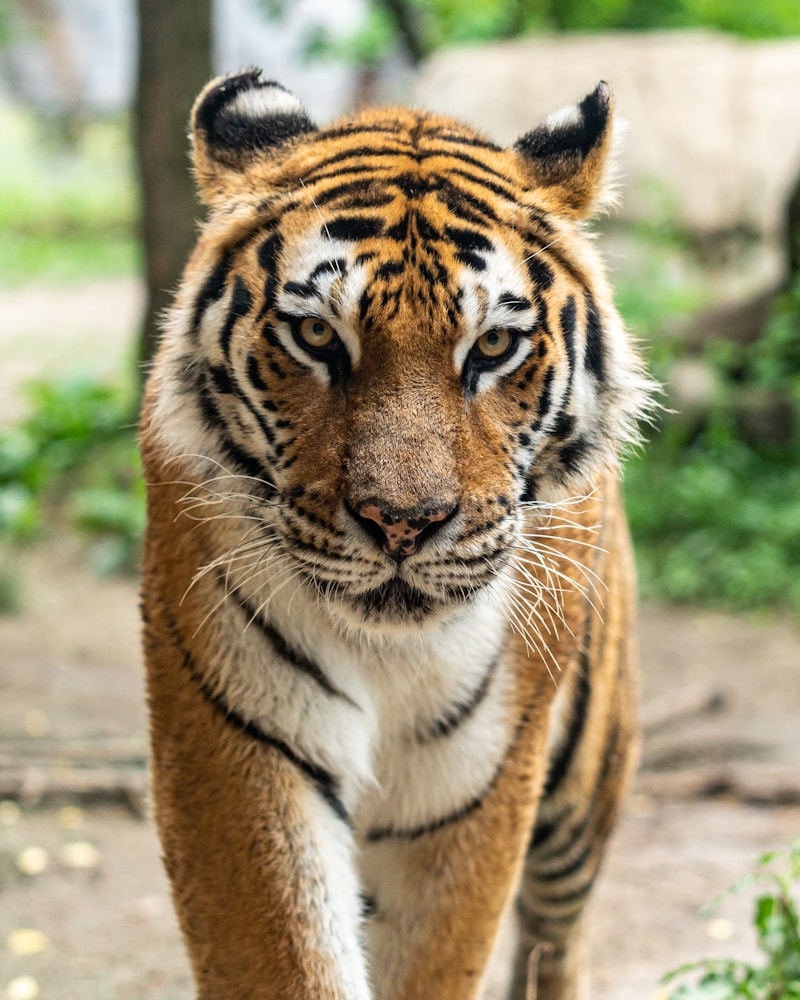
If lions are royalty, tigers are the heavyweight champions. Tigers (Panthera tigris) are the largest wild cats alive today, with males of the biggest subspecies tipping the scales at up to 660 pounds. Unlike their social cousin the lion, tigers are loners. They come together briefly for mating and then go back to patrolling territories that can stretch for hundreds of square miles, marked with scent and scratch marks that basically say “my turf, keep walking.”
The Bengal Tiger
The Bengal tiger (Panthera tigris tigris) is the most numerous subspecies, with around 3,000 individuals living mainly in India, Bangladesh, Nepal, and Bhutan. These cats are incredibly versatile — they thrive in tropical rainforests, and the ones living in the Sundarbans mangrove swamps have actually become strong swimmers. Like, we’re talking long-distance swimmers. It’s wild.
You know that classic orange coat with black stripes? That’s your Bengal tiger. Now, you’ve probably seen white tigers on the internet or at some zoo. Here’s the thing — white tigers aren’t a separate subspecies. It’s a rare genetic variation. And in the wild, that white coloring would actually be a huge disadvantage because prey would spot them way more easily. So next time someone shares a “rare white tiger” post like it’s some mystical creature, you’ll know the real story.
The Siberian Tiger
The Siberian tiger (Panthera tigris altaica), also called the Amur tiger, is the absolute unit of the cat world. These are the largest living cats, period. And they’ve adapted to survive winters in the Russian Far East where temperatures plummet to minus 40 degrees Fahrenheit. They’ve got thick fur, a solid layer of fat, and sheer body mass working in their favor.
In the 1940s, there were fewer than 40 left. Forty. Today, thanks to serious conservation work, there are between 500 and 600 roaming the birch and conifer forests of Russia’s Primorsky and Khabarovsk regions. It’s proof that dedicated effort actually works.
The overall picture for tigers is still rough, though. They’re listed as Endangered, with global populations at roughly 4,500 individuals — a 95% decline from historical numbers. Habitat destruction, poaching for traditional medicine, and the illegal wildlife trade are the biggest threats. Every time I read those stats, it hits different.
Leopards – Masters of Adaptation
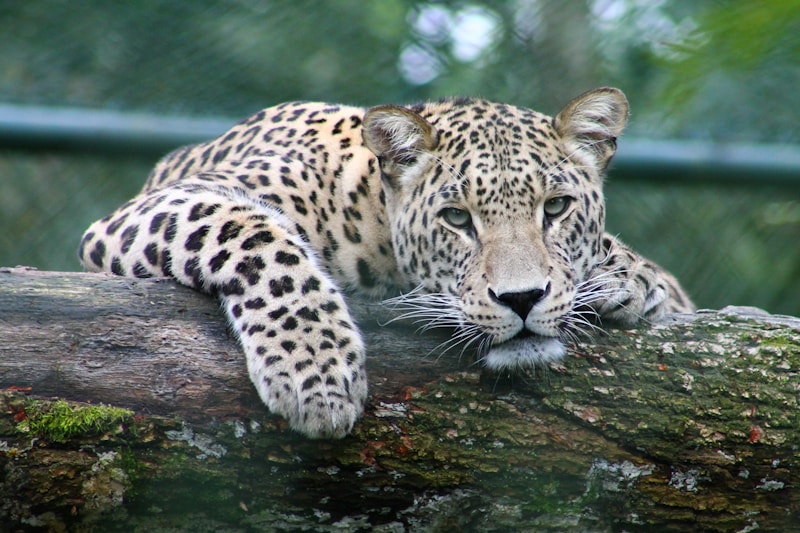
If I had to pick the big cat I respect the most, it might be the leopard. Leopards (Panthera pardus) are found across a wider range of habitats than any other wild cat species. Savannas, mountains, Central Asian highlands, even areas right next to human settlements — these cats just figure it out. They’re the ultimate survivors.
African Leopards
African leopards are ridiculously versatile. Rainforests? Sure. Mountain slopes? No problem. Semi-desert? They’ll make it work. These solitary hunters are incredibly strong too — they routinely drag kills that weigh more than they do up into trees. Think about that for a second. Imagine hauling something heavier than yourself straight up a vertical trunk. They do it to keep lions and hyenas from stealing their dinner. Smart and strong.
They’re also mostly nocturnal and extremely sneaky, which makes them a nightmare to study and count. That spotted coat isn’t just beautiful — it’s functionally perfect camouflage in dappled light. By the time prey spots a leopard, it’s usually already too late. Explosive ambush speed from close range. Game over.
Snow Leopards – Ghosts of the Mountains
The snow leopard (Panthera uncia) is the big cat that lives in my imagination rent-free. These animals inhabit the high mountain ranges of Central Asia — the Himalayas, Hindu Kush, Altai Mountains — and they can thrive at altitudes up to 18,000 feet. Eighteen thousand feet! Most humans need supplemental oxygen at that elevation.
Their adaptations are genuinely incredible. That long, thick tail? It provides balance on rocky terrain and doubles as a built-in blanket they wrap around themselves while sleeping. They’ve got oversized nasal cavities that warm frigid air before it reaches their lungs. Their paws are wide and covered in fur — natural snowshoes, basically. Evolution really went all-in on these guys.
People call them the “ghost of the mountains” and that name is absolutely earned. Their pale grey coat with dark rosettes blends perfectly against rocky slopes. They’re solitary, mostly active at dawn and dusk, and even researchers working in areas with healthy populations rarely see them. Getting a snow leopard sighting in the wild is basically winning the wildlife lottery.
Both leopards and snow leopards are classified as Vulnerable. Snow leopard populations sit somewhere between 4,000 and 6,500 individuals. The threats are the usual depressing list: habitat fragmentation, retaliatory killings by herders protecting livestock, poaching, and — increasingly — climate change messing with their high-altitude prey species.
Jaguars – The Apex Predator of the Americas

Jaguars (Panthera onca) don’t get nearly enough love in my opinion. They’re the third-largest cat on the planet and the only Panthera species native to the Americas. Stocky build, massive jaw muscles, and a coat pattern that’s similar to a leopard’s rosettes but with little central spots inside them.
Here’s the thing that blows my mind every time: jaguars have the strongest bite force of any cat relative to their size. We’re talking strong enough to crush turtle shells and caiman skulls. Their killing technique is unlike any other cat — they bite directly through the skull of their prey to pierce the brain. No suffocation, no neck bite. Just… straight through the skull. Metal as it gets in the animal kingdom.
They used to range from the southwestern United States all the way down to central Argentina. Today, they’re mostly concentrated in the Amazon Basin, with smaller populations scattered through Central America and occasional sightings in the borderlands of Arizona and New Mexico. If you want the best chance of seeing one, head to Brazil’s Pantanal wetlands. It’s the jaguar capital of the world.
And unlike most cats, jaguars genuinely love water. They’re excellent swimmers who actively hunt aquatic prey — fish, caimans, capybaras. They gravitate toward riverine habitats and dense forests where their spotted coats blend into the dappled light. Watching a jaguar launch itself off a riverbank onto a caiman is one of the most insane things you’ll ever see on a nature documentary.
Jaguars are listed as Near Threatened. Roughly 173,000 remain in the wild, but that number keeps shrinking due to habitat loss, persecution by ranchers, and range fragmentation. They need more attention than they’re getting.
Cheetahs – Built for Speed
Okay, technically cheetahs (Acinonyx jubatus) can’t roar, so the purists will tell you they’re not “real” big cats. I think that’s a silly hill to die on. They’re big, they’re cats, and they can hit 70 miles per hour. That earns them a spot on this list in my book.
Everything about a cheetah screams speed. Lightweight frame. Deep chest. Long legs. Semi-retractable claws that work like sprinter’s cleats for traction. Oversized nasal passages and lungs that can take in massive amounts of oxygen mid-sprint. They’re basically the Formula 1 car of the animal kingdom — stripped down to the essentials, optimized for one thing, and devastatingly good at it.
Cheetahs hunt during the day specifically to avoid bumping into lions and leopards, which is honestly a pretty smart strategy when you’re built for speed rather than strength. Their hunting success rate sits around 50%, which is actually impressive for a big cat. The catch? They frequently lose their kills to bigger predators and have to eat fast before someone comes to steal their meal. Life’s tough when you’re the lightweight in the neighborhood.
Here’s a fun historical tidbit: cheetahs are surprisingly docile by big cat standards, and humans have kept them as hunting companions for thousands of years. Ancient Egyptians did it. Asian royalty did it. But they’ve never been truly domesticated because they just don’t breed well in captivity. So no, you can’t have one as a pet. Please don’t try.
Conservation status is Vulnerable, with about 7,000 left in the wild. The Asiatic cheetah is in truly dire straits — fewer than 50 individuals surviving in Iran. That’s barely hanging on. Habitat loss, human conflict, and the illegal wildlife trade are the ongoing threats.
Cougars and Mountain Lions – America’s Ghost Cat
Fun fact: the cougar (Puma concolor) holds the Guinness World Record for the animal with the most names. Mountain lion, puma, panther, catamount — this cat has more aliases than a spy novel character. It’s also got the widest distribution of any large terrestrial mammal in the Western Hemisphere, ranging from the Canadian Yukon all the way to the southern tip of South America.
Like cheetahs, cougars can’t roar. Instead, they communicate through an oddly diverse repertoire of screams, purrs, whistles, and chirps. If you’ve ever heard a cougar scream in the woods at night, you know it’s the kind of sound that makes you immediately reconsider whether camping was a good idea. Adult males can hit 220 pounds and stretch 8 feet from nose to tail tip. Big animals.
They’re solitary ambush hunters. Deer is the main course, but they’re opportunistic enough to take anything from insects to elk. No long chases for these cats — it’s all about stealth, patience, and one explosive burst of power.
The good news? Cougar populations in North America have bounced back significantly since the early 1900s when they were nearly wiped out in the eastern U.S. They’re actually expanding eastward now, with confirmed sightings as far as Connecticut and Massachusetts. The cats are slowly reclaiming their old territory.
Globally, cougars are listed as Least Concern, which is a nice change of pace in a list that’s been pretty heavy on doom and gloom. The Florida panther subspecies is the exception, though — critically endangered with about 200 individuals, threatened by habitat fragmentation and, of all things, getting hit by cars.
Clouded Leopards – The Mysterious Canopy Hunters
I saved these for near the end because they might be the most underappreciated cats on this entire list. The clouded leopard (Neofelis nebulosa) and the Sunda clouded leopard (Neofelis diardi) are their own distinct genus, bridging the gap between big cats and smaller wild cats. Despite the name, they’re not actually closely related to leopards. Taxonomists love confusing people, apparently.
Their anatomy is frankly absurd. Clouded leopards have the longest canine teeth proportional to body size of any living cat. Some researchers call them “modern saber-tooths” and honestly, it’s not a stretch. Their ankle joints can rotate backward, letting them climb down trees headfirst like squirrels. Name another cat that can do that. I’ll wait.
These medium-sized cats spend most of their time up in the forest canopy, hunting monkeys, birds, deer, and small mammals. That clouded coat pattern — gorgeous swirls and blotches — gives them perfect camouflage in their Southeast Asian forest homes.
We know shockingly little about their behavior in the wild. They’re secretive, they live in dense forest, and they’re mostly active when nobody’s watching. Almost everything we know comes from captive populations and camera trap studies. They’re basically the cats that said “I’d prefer not to be studied, thanks” and stuck with it.
Clouded leopards are listed as Vulnerable, with populations declining from deforestation and hunting. The Sunda clouded leopard, found only on Borneo and Sumatra, faces the additional gut-punch of palm oil plantation expansion eating away at its habitat.
Where to See Big Cats in the Wild
Alright, enough depressing conservation stats. Let’s talk about something exciting — where you can actually go see these animals in person. Because trust me, seeing a big cat in the wild is a completely different experience from any zoo visit. Nothing prepares you for it.
African Safari Destinations for Lions and Leopards
For lions, the Masai Mara in Kenya and the Serengeti in Tanzania are the gold standard. During the great migration, the famous Mara River crossings create dramatic hunting opportunities that lions take full advantage of. It’s chaos, it’s intense, and it’s absolutely unforgettable.
For leopards, the Sabi Sands Private Game Reserve in South Africa has become legendary. The leopards there are habituated to vehicles, so you can get incredible close-up views. The Luangwa Valley in Zambia is another fantastic option, especially during night drives when leopards are most active.
India for Bengal Tigers
India is hands-down the best place to see wild tigers. Ranthambore National Park, Bandhavgarh National Park, and Kanha Tiger Reserve are the big three destinations. Some parks report sighting success rates above 80% during peak season. Eighty percent! For a wild tiger! Those are fantastic odds.
Brazil for Jaguars
The Pantanal wetlands in Brazil, particularly along the Cuiaba River, offer the most reliable jaguar sightings on Earth. During the dry season from July to October, jaguars congregate along riverbanks to hunt caimans and capybaras. You watch from boats. It’s absolutely spectacular, and it’s gone straight to the top of my travel bucket list.
Central Asia for Snow Leopards
Hemis National Park in Ladakh, India is the place for snow leopard tracking. Winter expeditions in February and March give you the best shot, but I won’t sugarcoat it — you need patience, genuine physical fitness for the altitude, and a healthy dose of luck. Most people who go don’t see one. But the ones who do say it’s the single greatest wildlife experience of their lives.
The Future of Big Cats
Look, I’m not going to pretend everything’s fine. Most big cat populations have declined dramatically over the past century, and the threats aren’t going away. But here’s what gives me hope: intensive conservation efforts are actually working in some places. Tiger numbers have ticked upward in recent years. Breeding programs are preserving genetic diversity. Community-based conservation is changing the game in parts of Africa and Asia.
The key strategies that are making a difference include establishing protected areas and wildlife corridors, reducing human-wildlife conflict through livestock compensation programs, cracking down on poaching and the illegal wildlife trade, and — this is the big one — engaging local communities as genuine partners in conservation rather than treating them as obstacles.
Climate change is the wild card nobody fully understands yet. It’s going to hit high-altitude specialists like snow leopards hardest, and species that depend on specific habitat types are going to face shifting ranges and changing prey availability. Conservation planning has to get smarter about accounting for that.
At the end of the day, whether big cats survive comes down to whether we’re willing to share the planet with them. Supporting conservation organizations, practicing responsible wildlife tourism, advocating for habitat protection — these things matter. They actually matter. I genuinely believe that if enough people care enough to act, future generations will still get to experience that jaw-dropping moment of seeing one of these incredible animals in the wild. And that’s worth fighting for.



Leave a Reply