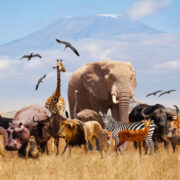
Today, I will share it all with you.
This article includes affiliate links. We may earn a commission at no extra cost to you.
I remember the first time I saw a whale breach — just completely threw itself out of the water like gravity was a suggestion. That moment changed me, honestly. Since then I’ve been reading papers, watching documentaries, tagging along on research boats when I can, and generally boring everyone at dinner parties with cetacean facts. This guide covers everything from the massive whales cruising through our oceans to the tiny reef fish darting around coral heads. Whether you’re prepping for a whale watching trip, diving into marine biology, or you just can’t stop watching ocean videos at 2 AM (no judgment), I think you’ll find something worth your time here.
Understanding Whale Species Around the World
Whales are, without question, the showstoppers of the ocean. They split into two big groups: baleen whales that filter tiny prey through specialized plates in their mouths, and toothed whales that actively hunt larger stuff. Each species has carved out its own niche over millions of years, and honestly, every single one of them is fascinating in its own right.
Humpback Whales

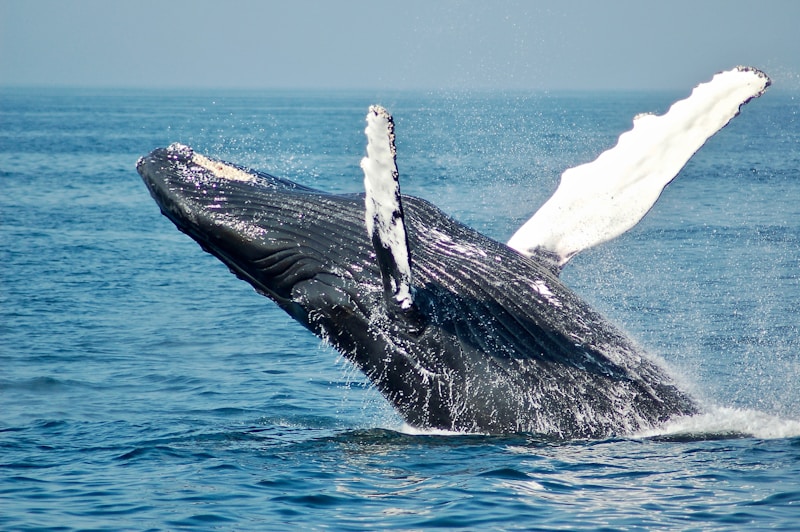
If there’s one whale that knows how to put on a show, it’s the humpback. These guys grow to about 40 to 50 feet long and weigh roughly 40 tons, which makes them one of the bigger baleen species. But what really sets them apart? The acrobatics. I’ve watched humpbacks launch their entire body out of the water, and every single time my jaw drops like it’s the first time.
Here’s something wild — the males sing. And I don’t mean little chirps. They produce these incredibly complex songs during breeding season that can last for hours. All the males in a given population sing basically the same song, but it evolves slowly over time. Kind of like how a pop song gets remixed over and over. Scientists think the songs have something to do with mating, but honestly, nobody’s cracked the full code yet. On top of that, humpbacks pull off one of the longest migrations of any mammal — up to 5,000 miles between polar feeding grounds in summer and tropical breeding waters in winter. Five thousand miles. Every year.
The good news? Conservation efforts have actually worked here. Since commercial whaling ended, humpback populations have bounced back in a big way. Several populations have been delisted from endangered species lists, though some regional groups still face threats from ship strikes, fishing gear entanglement, and habitat degradation. It’s not a perfect story, but it’s a hopeful one.
Blue Whales
Blue whales are the largest animals that have EVER existed on Earth. Not just right now — ever. We’re talking up to 100 feet long and 200 tons. Their hearts weigh as much as a small car. A human could theoretically crawl through their major blood vessels. Let that sink in for a second.
And what do they eat? Krill. Tiny, shrimp-like crustaceans. Up to four tons of them per day during peak feeding. There’s something almost comical about the biggest creature in history surviving on some of the smallest.
They’re also insanely loud. Blue whale calls have been recorded at up to 188 decibels, and these low-frequency vocalizations can travel across entire ocean basins. Researchers actually use those calls to track their movements and estimate population numbers in different regions. Pretty clever workaround when you’re studying animals spread across millions of square miles of ocean.
The sad part? Twentieth-century whaling wiped out an estimated 99 percent of the global population. Ninety-nine percent. Today maybe 10,000 to 25,000 remain worldwide, and recovery has been painfully slow because blue whales reproduce at a glacial pace. Ship collisions and ocean noise pollution continue to threaten them. Every time I read about a blue whale ship strike, it just guts me.
Orcas
Here’s a fun fact that trips people up: orcas aren’t actually whales. They’re the largest members of the dolphin family. “Killer whale” is a bit of a misnomer, though I get why it stuck — these are apex predators found in every ocean on the planet. They’re also some of the smartest animals alive, period.
What really gets me about orcas is the culture thing. Different populations have developed completely distinct hunting techniques, vocalizations, and traditions that get passed down through generations. It’s not instinct. It’s learned behavior. Resident orcas in the Pacific Northwest specialize in salmon. Transient orcas go after marine mammals — seals, sea lions, sometimes even other whales. Some populations intentionally beach themselves to snag seals off the shore. Others create coordinated waves to wash seals off ice floes. That’s not just hunting; that’s strategy.
And the social bonds? Incredible. They care for injured pod members, share food cooperatively, and maintain lifelong relationships with family. Female orcas can live past 80 and continue contributing to the pod long after they stop reproducing. That post-reproductive role is something only humans and a handful of other species share. Think about that next time someone tells you animals are simple.
Gray Whales
I’ve got a soft spot for gray whales. They hold the record for the longest documented mammal migration — up to 12,000 miles round trip between Arctic feeding grounds and breeding lagoons off Baja California, Mexico. Twelve thousand miles. And they swim close to shore for much of it, which is why they’re such a hit with whale watchers.
Their feeding style is unlike any other baleen whale’s, too. They’re bottom feeders. They literally roll onto their sides and scoop sediment off the ocean floor, then filter out tiny crustaceans called amphipods. It leaves these distinctive plow marks on the seafloor. The whales themselves end up covered in barnacles and whale lice from all the benthic foraging, giving them that mottled, crusty appearance that’s actually kind of charming once you know the story behind it.
The eastern Pacific gray whale population is genuinely one of the best conservation success stories out there. They were hunted to the brink by the early 1900s. Now? Roughly 20,000 individuals, close to pre-whaling levels. The Marine Mammal Protection Act and international whaling moratoriums made that happen. When someone tells me conservation doesn’t work, I point them right here.
Dolphins and Porpoises Explained
I can’t tell you how many times people have asked me “what’s the difference between a dolphin and a porpoise?” It’s one of those questions that seems simple but has a surprisingly satisfying answer. They look similar at a glance, sure, but they belong to different families with distinct physical traits and behaviors.
Physical Differences Between Dolphins and Porpoises
The easiest way to tell them apart? Look at the face. Dolphins have those longer, pointed snouts — called rostrums — while porpoises have shorter, blunter faces without the pronounced beak. Teeth are different too: dolphin teeth are cone-shaped and pointy, great for grabbing slippery fish. Porpoise teeth? Flat and spade-shaped, built for crushing. It’s like the difference between chopsticks and a nutcracker.
Dolphins also tend to be bigger, with sleeker bodies and those graceful curved dorsal fins. Porpoises are more compact and stocky, with smaller triangular dorsal fins. These physical differences actually tell you a lot about how they live — dolphins are the extroverts, always showing off at the surface, while porpoises keep a lower profile. Literally.
Behavioral Characteristics
Dolphins are the golden retrievers of the sea. Playful, social, always coming up to boats to say hello. Bottlenose dolphins — the ones most people picture when they hear “dolphin” — have demonstrated some genuinely mind-blowing intelligence. Mirror self-recognition. Understanding symbolic language. Tool use. They communicate with this elaborate system of clicks, whistles, and body language, and they cooperate in hunting strategies that require real coordination.
Porpoises? They’re the introverts. Harbor porpoises, which are actually super common in a lot of coastal areas, rarely approach boats and generally avoid people altogether. Most folks don’t even realize they’re out there, because porpoises surface briefly and don’t make a big production of it. Acoustic monitoring has shown they produce high-frequency clicks for echolocation and communication, but studying them in the wild remains a real challenge thanks to their secretive nature. Can’t say I blame them, honestly.
Shark Species and Ocean Safety
Look, I get it. Sharks freak people out. But here’s the thing — they’ve been swimming these oceans for over 400 million years. They predate dinosaurs. They’ve survived multiple mass extinction events. There are roughly 500 known species out there, from the dwarf lanternshark (less than eight inches long — adorable) to the whale shark at 40-plus feet. Sharks deserve way more respect than fear.
Common Shark Species
Great whites get all the attention, don’t they? And fair enough — growing to 20 feet and hunting seals in coastal waters worldwide makes for good television. But they’re so much more nuanced than movies would have you believe. Great whites are curious, yes, but they’re also cautious. The idea that they’re mindless man-eaters is just flat-out wrong. Most encounters with humans are investigatory, not predatory. They take a bite, realize we’re not a fat-rich seal, and move on. Cold comfort if you’re the one getting investigated, I know, but context matters.
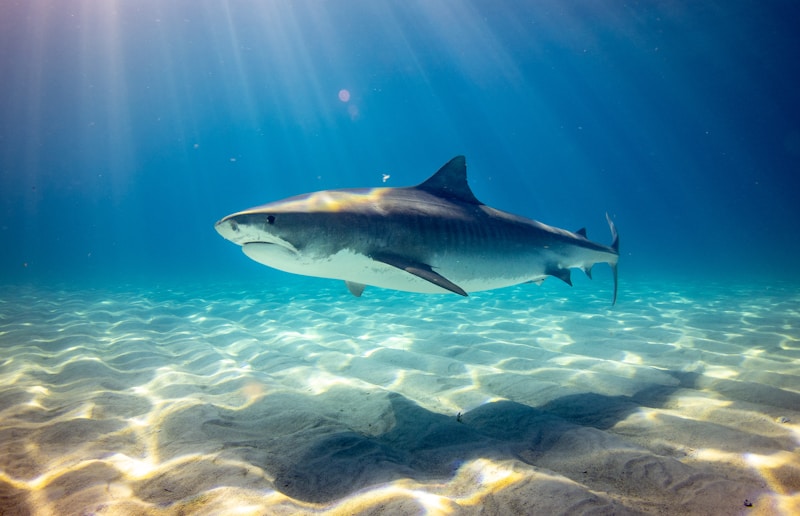
Tiger sharks are the garbage disposals of the ocean, and I mean that with genuine affection. Their diet includes fish, seals, birds, sea turtles, other sharks, and basically anything else they encounter. They’re found in tropical and temperate waters all over the world and play a huge role in keeping ecosystems balanced by removing weak and sick animals and preventing any one prey species from taking over.
Then there are hammerheads, which… I mean, just look at them. That head shape isn’t just for show — those wide-set eyes scan larger areas of seafloor when hunting rays and bottom-dwelling prey, and their heads contain extra sensory organs that detect electrical fields from hidden animals. Scalloped hammerheads school up in huge numbers during the day, which is a behavior scientists still don’t fully understand. Could be thermoregulation, could be social dynamics. Could be both. Could be something we haven’t thought of yet.
Shark Safety Guidelines
Okay, real talk. Shark attacks get massive media coverage, but they are incredibly rare. Fewer than 100 unprovoked attacks happen globally per year. Fatal attacks? Fewer than five on average. You’re statistically more likely to be struck by lightning. But since I know that stat doesn’t calm anyone down when they’re treading water, here are some practical tips.
Don’t swim at dawn, dusk, or night — those are peak feeding times for many shark species. Stay in groups, because sharks tend to approach lone swimmers more often. Avoid areas near active fishing, seal colonies, or murky water where visibility is poor. All of this is common sense once you think about it from the shark’s perspective.
Wear neutral colors instead of bright yellows or high-contrast patterns. Ditch the shiny jewelry — it can look like fish scales underwater. And if you do see a shark nearby, stay calm. Don’t thrash around. Erratic movements can trigger a predatory response in a shark that was otherwise just passing through. Most sharks genuinely want nothing to do with you.
Sea Turtles of the World
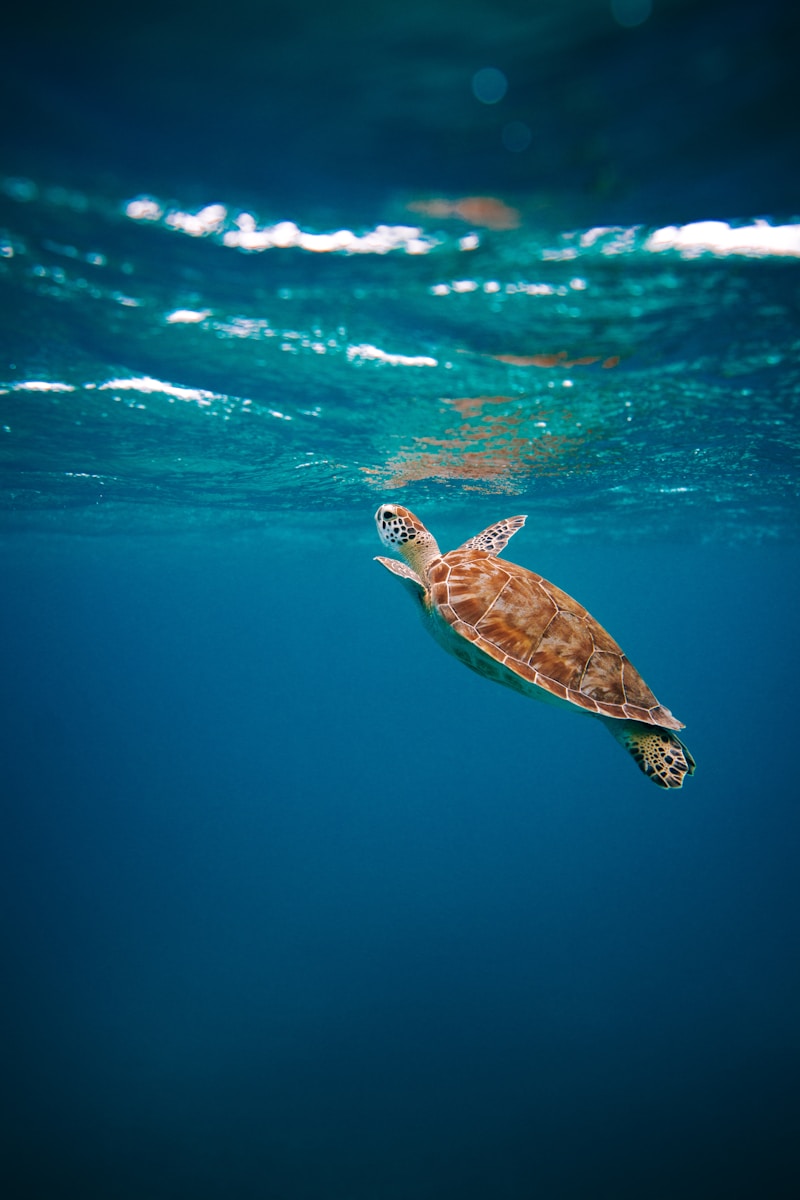
Sea turtles have been doing their thing for over 100 million years. One hundred million. Seven species are still around today, and every single one of them faces serious modern threats. But they’ve become icons of marine conservation for good reason — there’s something about watching a sea turtle glide through the water that just stops you in your tracks.
Green sea turtles always surprise people when I tell them the name comes from the color of their fat, not their shells. They’re also the only sea turtle species that’s fully herbivorous as an adult, spending their days grazing on seagrass beds. And here’s the cool part — that grazing actually keeps seagrass ecosystems healthy by preventing overgrowth and promoting new shoots. They’re basically underwater lawn mowers doing important ecological work.
Loggerheads are the ones with those massive, powerful jaws built for crushing hard-shelled prey — crabs, conchs, sea urchins, that sort of thing. Their migrations are absolutely wild. Individuals tagged in Japan have turned up in Baja California, Mexico. That’s a transoceanic commute that puts any frequent flyer to shame. They nest on beaches across the world’s temperate and tropical regions and are probably the sea turtle species you’re most likely to encounter.
And then there’s the leatherback. The biggest of them all, and the weirdest, if I’m being honest. No hard shell — just this flexible, leathery covering. They can dive past 3,000 feet and range farther from the tropics than any other sea turtle. Their diet? Almost exclusively jellyfish. Which is exactly why plastic bags in the ocean are such a nightmare for them. A floating plastic bag looks just like a jellyfish to a leatherback. It’s heartbreaking when you think about it.
Seals and Sea Lions
Pinnipeds are one of those groups that I think people underestimate. Seals, sea lions, walruses — they’ve figured out how to live in both the ocean and on land, which is no small feat. They haul out onto beaches and rocks to rest, breed, and raise pups, then head back to the water to hunt fish, squid, and whatever else they can catch.
True Seals
True seals — sometimes called earless seals because they lack external ear flaps — are the more aquatic of the bunch. Harbor seals are the most widespread species, hanging out in coastal waters throughout the Northern Hemisphere. You’ve probably seen them lounging on sandbars looking extremely unbothered. Elephant seals are on a completely different level, though. Males can hit 5,000 pounds and dive for up to two hours straight. Two hours underwater. On one breath.
Sea Lions
Sea lions are the more charismatic cousin. They’ve got visible ear flaps and can rotate their hind flippers forward, so they actually walk — and even run — on land. California sea lions are the ones you’ll see barking from harbor docks, trailing fishing boats, and generally making their presence known. They’re smart, they’re social, and they’ve got personality for days.
Steller sea lions are the big ones. Biggest of all the eared seal species, actually. Males reach 2,500 pounds and defend harems of females during breeding season. They live throughout the North Pacific from Japan to California. Unfortunately, some populations have declined pretty sharply, likely because their prey is shifting around due to warming oceans and commercial fishing pressure. It’s a situation worth watching closely.
Coral Reef Wildlife Communities
People call coral reefs the rainforests of the sea, and it’s not hyperbole. They cover less than one percent of the ocean floor but support roughly 25 percent of all marine species. That’s a staggering ratio. The whole system hinges on this partnership between coral polyps and tiny algae living inside them — the algae photosynthesize and share energy with the coral, and the coral provides structure and protection. Break that relationship, and everything unravels. Which, unfortunately, is exactly what’s been happening in a lot of places.
But when reefs are healthy? Incredible. Clownfish tucked into anemones, safe from predators thanks to that mutual defense pact. Parrotfish scraping algae off coral all day — and in the process, grinding up coral skeleton and pooping out fine sand. That white tropical beach you love? Good chance a parrotfish made it. Groupers, snappers, and moray eels play predator roles that keep the whole community in check. It’s a city, basically, with every resident filling a specific job.
The invertebrates are just as impressive. Giant clams filter seawater while hosting photosynthetic algae, kind of like having solar panels built into your body. Sea urchins keep algae in check so it doesn’t smother the coral. And octopuses and cuttlefish — don’t even get me started. Their intelligence, their camouflage abilities… I could talk about cephalopods for hours. And I have. Ask my friends.
Premier Whale Watching Destinations
Whale watching has exploded from this niche thing into a full-blown ecotourism industry, and I’m here for it. It gives coastal communities an economic reason to protect whales instead of hunt them, and it gives the rest of us memories that genuinely last a lifetime. Here are the spots I recommend most.
North America
Monterey Bay, California is the gold standard for year-round whale watching. Humpbacks and blue whales show up from spring through fall. Gray whales cruise close to shore during winter migration. The secret sauce? A deep submarine canyon right offshore that pulls nutrient-rich water up, bringing in all the prey species that attract these massive animals. It’s like a buffet, and the whales know it.
The San Juan Islands in Washington State are where I’d send anyone who wants to see orcas up close. In summer, resident pods frequent these waters, and you can actually watch them from shore at Lime Kiln Point State Park. Standing on a cliff watching an orca family cruise by below you is one of those experiences that just rewires your brain. I’m not exaggerating.
International Destinations
The Azores — that Portuguese archipelago out in the mid-Atlantic — are a hidden gem for cetacean lovers. More than 20 species pass through, including sperm whales that live in those deep waters year-round. Blue whales, fin whales, various dolphin species all make seasonal appearances. The diversity is unmatched.
And then there’s Baja California, Mexico, where something truly magical happens. Gray whale mothers bring their calves into shallow breeding lagoons, and some of them actually approach small boats on their own. They’ll swim right up, let you touch them, roll around like they’re enjoying the interaction. Scientists call them “friendlies.” I’ve seen grown men cry during these encounters, and honestly? Same.
Marine Conservation Challenges and Solutions
This is the tough section. Marine wildlife is up against threats that would have been unimaginable even a few decades ago. Climate change, ocean acidification, plastic everywhere, overfishing — it’s a lot. But I don’t think doom-and-gloom helps anyone, so let me walk through both the problems and the things that are actually working.
Climate change is probably the biggest overarching threat. Rising ocean temperatures shift current patterns and redistribute prey, which means many whale species have to travel farther to find food. For sea turtles, warming sand temperatures are skewing sex ratios — more heat produces more females, which sounds fine until you think about what happens when there aren’t enough males. Coral reefs take the hardest hit. When water temperatures spike past tolerance limits, corals bleach — they expel their symbiotic algae and basically starve. Mass bleaching events have devastated reefs across the tropics.
Plastic pollution has genuinely infiltrated every corner of the ocean. Surface to the deepest trenches. Sea turtles mistake bags for jellyfish. Seabirds and marine mammals get tangled in abandoned fishing gear. Microplastics have worked their way into food webs at every level, and we’re still learning what the long-term health effects are for wildlife. It’s not a pretty picture.
But here’s where I push back on pure pessimism: conservation has worked before and it’s working now. Marine protected areas let depleted populations recover and create spillover benefits for surrounding fisheries. International agreements stopped commercial whaling for most species. Community-based programs protect turtle nesting beaches and critical dolphin habitat. Are we where we need to be? Not even close. But the tools exist, and they work when we actually use them.
You don’t have to be a marine biologist to help, either. Choose sustainable seafood. Cut back on single-use plastics — even imperfectly, it matters. Support organizations doing real on-the-ground conservation work. Go on a responsible whale watching trip and let it change the way you see the ocean. Because honestly, the more people who care about this stuff, the better our chances of keeping these ecosystems intact for the next generation. And the one after that.
Exploring Marine Wildlife Responsibly
I’ll leave you with this: every encounter with marine wildlife is a privilege. Whether you’re on a whale watching boat with your jaw on the floor, snorkeling over a reef and trying to identify every fish you see, or just sitting on a beach watching pelicans dive — those moments matter. They remind us that we share this planet with some truly extraordinary creatures. Learn about them. Respect their space. Support their protection. And then go tell someone else about what you saw, because that’s how this whole conservation thing spreads. One awestruck person at a time.


Leave a Reply