Today, I will share it all with you.
This article includes affiliate links. We may earn a commission at no extra cost to you.
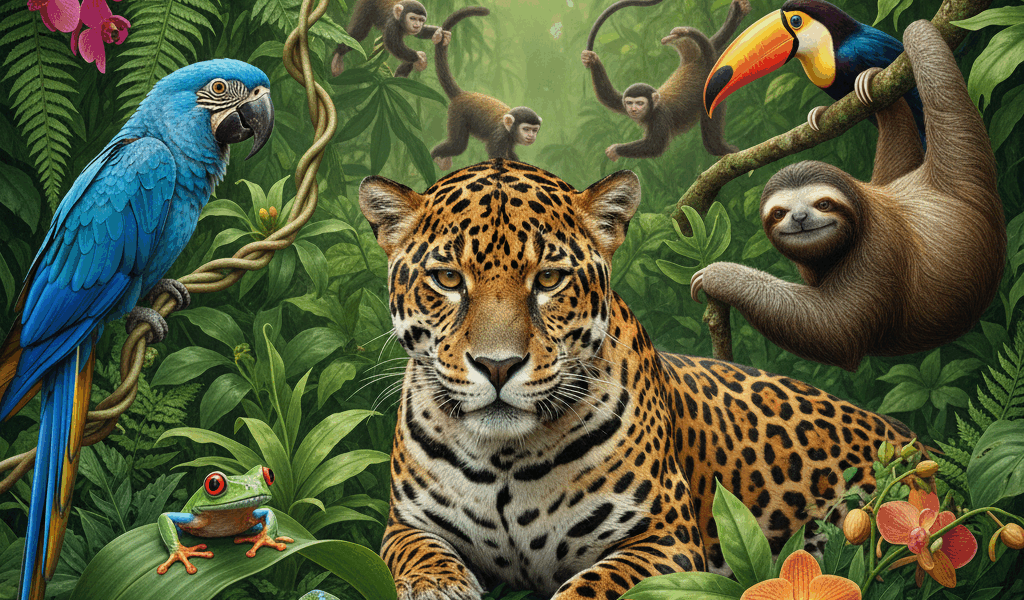
Here’s the thing most people don’t realize: rainforests cover less than six percent of Earth’s surface. Six percent! And yet they’re home to more than half of all plant and animal species on the planet. That blew my mind when I first read it, and honestly it still does. These dense, wet, absolutely buzzing ecosystems stretch across the equatorial zones of South America, Africa, Southeast Asia, and Australia — each one hosting wildlife you literally can’t find anywhere else. We’re talking millions of years of evolution producing creatures like jaguars stalking the Amazon and orangutans swinging through Borneo’s treetops.
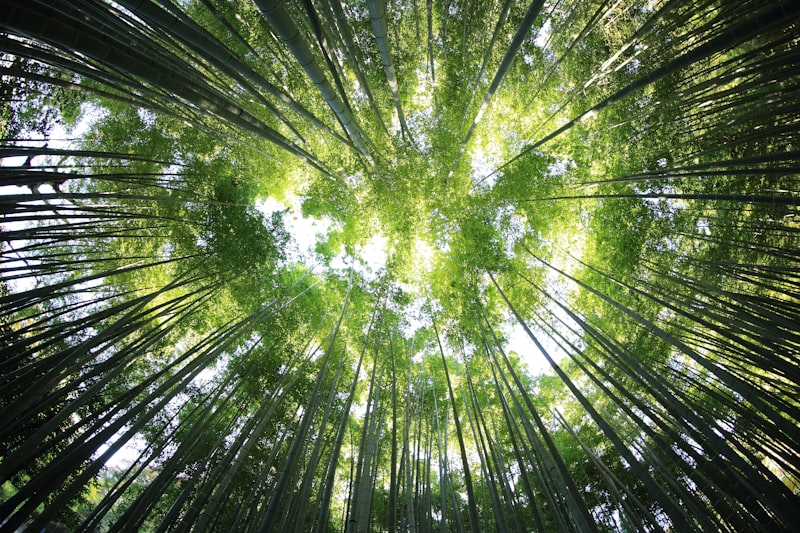
To really get your head around rainforest wildlife, you can’t just list off cool animals (though I’ll definitely do that too). You’ve got to understand how each creature fits into its environment — the relationships between animals and their forest homes are incredibly intricate. Every rainforest region has its own distinct cast of characters, shaped by geography, climate, and evolutionary history. So let’s break it all down, region by region.
The Amazon Rainforest — Basically Nature’s Greatest Hits
The Amazon. Nine countries, 5.5 million square kilometers, and roughly 10 percent of every species on this planet crammed into one enormous jungle. It’s the largest tropical rainforest on Earth, and I’m not exaggerating when I say its wildlife diversity is just staggering. Scientists are still finding new species out there in the remote parts, which is both exciting and a little humbling. We don’t even know everything that lives in there yet.
Jaguars — The Amazon’s Top Dog (Well, Cat)

If you had to pick one animal that rules the Amazon, it’s the jaguar. No contest. These cats are the largest in the Americas, with some males tipping the scales at 150 kilograms. And here’s what makes them different from basically every other big cat — they’re incredible swimmers. Like, seriously good. They regularly hunt caimans, capybaras, and giant river otters right in the water. Their spotted coats? Perfect camouflage in the dappled light filtering through the canopy. They’ll sit there, nearly invisible, then explode out of nowhere to ambush prey. Terrifying if you’re a capybara.
But jaguars aren’t just cool to look at. They’re doing real ecological work. By keeping herbivore and smaller predator populations in check, they maintain the whole balance of the ecosystem. When you see jaguars thriving in an area, that’s a strong signal the forest is healthy. Sadly — and I wish I didn’t have to write this part — habitat loss and conflicts with humans have hammered jaguar numbers. Conservation efforts are more urgent than ever across their range. It’s one of those situations where if we don’t act now, we’ll be talking about them in the past tense.
Sloths — Way Smarter Than They Look
OK so sloths. Everyone thinks they’re just lazy, right? Wrong. Two-toed and three-toed sloths have become the poster children of the Amazon, but their slow movements hide some genuinely brilliant survival strategies. These guys spend basically their entire lives up in the canopy, only coming down to the ground once a week — and that’s just to poop. Yes, really. That’s the only reason.
Their metabolism is unbelievably slow, which lets them survive on tough, nutrient-poor leaves that almost no other animal can stomach. And here’s where it gets really wild: sloth fur is basically a miniature ecosystem. Algae, fungi, insects — all living in their fur. The algae turns their coat greenish, which is actually amazing camouflage against harpy eagles and other predators. Some researchers think the fungi might even have medicinal properties. Oh, and I should mention — sloths can swim. Like, really well. When forest fragmentation forces them to travel between isolated patches of trees, they’ll just doggy-paddle (sloth-paddle?) across rivers. I did not see that coming when I first learned it.
Amazon Primates — The Noisiest Neighbors in the Jungle
The Amazon basin has the most primate species on Earth. Over 150 of them. The range is absurd — from pygmy marmosets that weigh about 100 grams (they could sit in your palm) to howler monkeys whose screaming you can hear from five kilometers away. I’ve heard recordings of howlers and it’s genuinely unsettling.
Spider monkeys use their prehensile tails like a fifth hand while zipping through the canopy. Capuchins — which are honestly some of the smartest non-ape primates out there — use stones to crack nuts and sticks to dig out insects. Squirrel monkeys form groups of up to 500 individuals (imagine that chaos) and move through the forest in waves, flushing insects as they go. Then there are uakari monkeys with their bright red faces — the redder the face, the healthier the monkey, and potential mates pay attention to that. Every single one of these primate species fills its own niche: dispersing seeds, controlling insect populations, or serving as prey for bigger predators.
What’s Swimming in the Amazon (Hint: A Lot)
The Amazon River system contains the greatest freshwater fish diversity on the planet — over 3,000 documented species. Let’s talk piranhas first because I know that’s what you’re curious about. Here’s the reality: most piranha species are primarily scavengers, not the bloodthirsty swarm-attackers movies would have you believe. Red-bellied piranhas do hunt in groups during dry season when fish get concentrated in shrinking pools, but attacks on humans? Extremely rare. You’re more likely to get struck by lightning, probably.
Amazon river dolphins — called boto by locals — are pink. Pink! The color gets more intense as they age. They navigate murky water using echolocation, which is fascinating. Giant arapaima fish can grow past three meters long and actually need to surface to breathe air, which unfortunately makes them easy targets for fishermen. And then there are electric eels. Up to 860 volts. Eight hundred and sixty. That’s one of the most remarkable biological adaptations in all of nature, and honestly it still feels like something that shouldn’t be real.
Southeast Asian Rainforest Wildlife — The Hidden Wonders
The rainforests stretching across Indonesia, Malaysia, Thailand, Myanmar, and neighboring countries don’t get as much press as the Amazon, but they absolutely should. These forests evolved in relative isolation from other tropical regions, which means the animals here went down their own unique evolutionary paths. The result? Some of the most distinctive creatures you’ll ever read about.
Orangutans — Our Ginger Cousins
They’re the only great apes found outside Africa, with separate species on Borneo and Sumatra. And they share roughly 97 percent of their DNA with us. Ninety-seven percent! These aren’t just smart animals — they manufacture tools, pass knowledge between generations culturally, and even plan for the future. In the wild, they’ve been seen using sticks to extract seeds, leaves as makeshift gloves for handling spiny stuff, and branches as umbrellas when it rains. I mean, come on.
Here’s the heartbreaking part though. Female orangutans only have babies every eight years on average — the longest birth interval of any land mammal. Young ones stick with mom for up to a decade, learning the complex survival skills they need. That incredibly slow reproduction rate means populations can’t bounce back quickly from losses. Both species are now critically endangered, mostly because of palm oil plantation expansion and illegal logging. It’s a genuinely dire situation, and one that doesn’t get nearly enough attention.
Tropical Forest Tigers — Smaller but No Less Terrifying
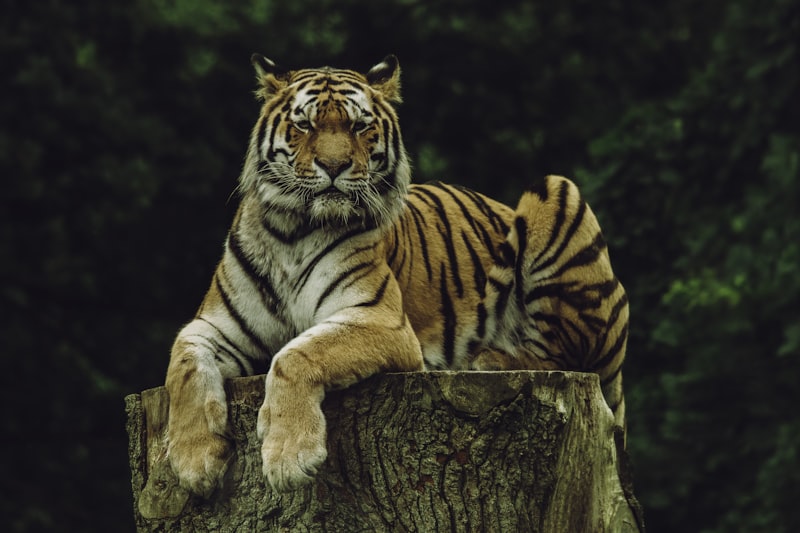
Most people picture tigers in grasslands, but the Malayan tiger and Sumatran tiger live in dense tropical forests. They’ve adapted to hunt in thick jungle rather than open terrain, and they’re generally smaller than Bengal or Siberian tigers. Their coats are darker with closer-spaced stripes — better camouflage for the shadowy understory. Makes sense when you think about it.
Sumatran tigers are actually the smallest surviving tiger subspecies. Males rarely break 120 kilograms. They hunt wild pigs, deer, and occasionally tapirs, ambushing from heavy cover. Here’s the rough part: fewer than 400 Sumatran tigers remain in the wild. Four hundred. That makes them one of the most endangered big cats on Earth. Conservation work focuses on protecting forest corridors and managing the tricky boundary zones where farming meets protected jungle. It’s slow, difficult work, and I have immense respect for the people doing it.
Asian Elephants — The Quiet Giants of the Forest
Asian elephants that live in rainforest regions are pretty different from the African savanna elephants you see in documentaries. They’re smaller, with straighter tusks that are better for navigating through thick vegetation. Which, again, is just evolution being brilliant. These incredibly smart animals follow traditional paths through the forest — paths they’ve used for generations — creating clearings and trails that end up benefiting tons of other species.
The herds are run by matriarchs who have mental maps of water sources, fruiting trees, and mineral licks spread across enormous home ranges. Young elephants learn these routes over decades of walking with their families. And as seed dispersers? They’re absolutely critical. Some tree species depend almost entirely on passing through an elephant’s digestive system to germinate. If the elephants disappear, those trees go with them. It’s all connected, and that’s something I don’t think people appreciate enough.
African Rainforest Ecosystems — The Congo and Beyond
The Congo Basin holds the world’s second-largest tropical rainforest, spanning six countries in Central Africa. It doesn’t get the headline attention the Amazon does, but it should, because it harbors extraordinary biodiversity — including our closest living relatives among the great apes. Let me walk you through the highlights.
Gorillas — Gentle Giants, Seriously
Western lowland gorillas and eastern mountain gorillas live in different parts of African rainforest and face their own distinct challenges. Lowland gorillas prefer dense forest swamps and clearings, eating mainly fruit with some leaves and stems mixed in. Mountain gorillas — the ones Dian Fossey made famous — survive only in the high-altitude cloud forests of the Virunga Mountains and Uganda’s Bwindi Impenetrable Forest. (And yes, that’s really what it’s called. It’s very on-the-nose.)
Silverback males lead family groups and can weigh over 180 kilograms. I know they look intimidating, but gorillas are predominantly peaceful vegetarians. The chest-beating thing? That’s communication, not aggression. Think of it more like loud talking than picking a fight. On the conservation front, there’s actually some good news for once: mountain gorilla populations have climbed back above 1,000 individuals thanks to dedicated conservation work. Lowland gorillas are more numerous overall but still increasingly threatened by habitat destruction and disease. It’s a mixed bag, honestly.
African Forest Elephants — The Gardeners Nobody Knew About
Here’s a fun fact: African forest elephants were only recently recognized as a completely separate species from savanna elephants. Smaller bodies, rounder ears, straighter tusks. These guys are essentially ecosystem engineers — they create clearings called “bais” where mineral-rich soils attract all sorts of other animals. They disperse seeds from over 100 tree species, and some of those seeds literally cannot germinate without going through an elephant’s digestive system first. No elephants, no trees. Simple as that.
The bad news — and I genuinely hate writing this — is that forest elephant populations have crashed by over 60 percent in recent decades because of ivory poaching. Their slow reproduction means recovery takes forever even with full protection. Current conservation efforts center on anti-poaching patrols, habitat protection, and trying to reduce ivory demand in consumer countries. It’s a long road, but people are fighting for these animals every single day.
Australia’s Tropical Rainforests — Ancient and Weird (In the Best Way)
The Daintree and Wet Tropics rainforests in northeastern Australia are among the oldest continuously surviving rainforest ecosystems on the planet. We’re talking seriously ancient. When Australia drifted away from other continents millions of years ago, the wildlife here went off on its own evolutionary tangent, and the results are… well, they’re something. You just have to see for yourself.
Cassowaries — Don’t Mess With These Birds
The southern cassowary stands nearly two meters tall and is Australia’s heaviest bird. They’re flightless, related to emus and ostriches, and they look like something from the dinosaur age — blue necks, red wattles, and this bizarre helmet-like casque on their heads. But what really matters is their role as seed dispersers. Cassowaries eat over 200 species of rainforest fruit and spread those seeds across their large home ranges. Without them, the forest composition would fundamentally change. Can you imagine?
Unfortunately, fewer than 4,000 cassowaries remain in the wild. Habitat loss, getting hit by cars, and dog attacks are the main threats. Conservation efforts include building wildlife corridors between fragmented habitat patches, installing road crossings in key areas, and public education campaigns. I’ve always thought the “be aware of cassowaries” road signs in Queensland are some of the most Australian things I’ve ever seen.
Tree Kangaroos — Yes, That’s a Real Thing
If someone told you there were kangaroos that live in trees, you’d probably think they were messing with you. But Lumholtz’s tree kangaroo and Bennett’s tree kangaroo are very real, and they’re one of evolution’s more creative experiments. Their ancestors were ground-dwellers for millions of years before heading back up into the trees. To make that work, they evolved shorter legs, stronger forelimbs, and curved claws for gripping bark and branches. They can actually leap through the canopy with surprising agility — it’s bizarre and wonderful to watch.
Tree kangaroos mostly eat leaves and fruit, spending the majority of their lives up in the canopy and only occasionally venturing to the ground. Females raise single joeys in their pouches for several months before the little ones start exploring on their own. Like so many Australian rainforest species, they’re threatened by habitat fragmentation and climate change affecting their mountain forest homes. It’s a recurring theme with these animals, unfortunately.
How Rainforest Layers Work (And Why It Matters)
OK so here’s something that really helped me understand why rainforests are so ridiculously biodiverse: they’re not just one habitat. They’re stacked habitats. Distinct vertical layers, each with its own specialized animal community adapted to specific conditions of light, temperature, and food availability. Once you understand this layering, the whole system makes so much more sense.
The Emergent Layer — Penthouse Living
Way up top, towering above everything else, emergent trees reach 60 meters or higher. It’s fully exposed up there — blazing sun, strong winds, big temperature swings. Harpy eagles build their nests in these giants, using the height advantage to spot prey moving through the canopy below. Morpho butterflies with those incredible iridescent blue wings soar between the crowns. Various bat species roost in hollow trunks. It’s an exclusive neighborhood, and you’ve got to be tough to live there.
The Canopy — Where the Action Is
The main canopy, sitting at about 25 to 45 meters, is where things really get busy. This continuous layer of treetops intercepts most of the sunlight, and it’s basically the engine driving the whole forest’s productivity. Monkeys, sloths, and insane numbers of bird species spend their entire lives in this sun-soaked zone, feasting on fruit, flowers, and insects. Epiphytic plants — orchids, bromeliads, that kind of thing — grow right on the branches, creating little microhabitats for poison dart frogs, tree snakes, and all manner of invertebrates. It’s a world unto itself up there.
The Understory — Life in the Shadows
Below the canopy, the understory exists in perpetual shade. We’re talking maybe two percent of full sunlight reaching down here. It’s dim, it’s humid, and it’s full of life perfectly adapted to these conditions. Lizards, snakes, insects — tons of them. Ground-dwelling birds like antbirds do something I find absolutely fascinating: they follow army ant swarms and pick off the insects fleeing from the ants. It’s opportunistic, clever, and a little ruthless. Classic jungle behavior, really.
So there you have it — a deep dive into the world’s rainforest animals, from the Amazon’s jaguars to Australia’s tree kangaroos. These ecosystems are irreplaceable, and the creatures in them are unlike anything else on the planet. If there’s one thing I hope you take away from all this, it’s that every single one of these animals is connected to its habitat in ways we’re still learning about. Protecting the forests means protecting everything that lives in them. And honestly? That seems like a pretty good deal to me.



Leave a Reply