Today, I will share it all with you.
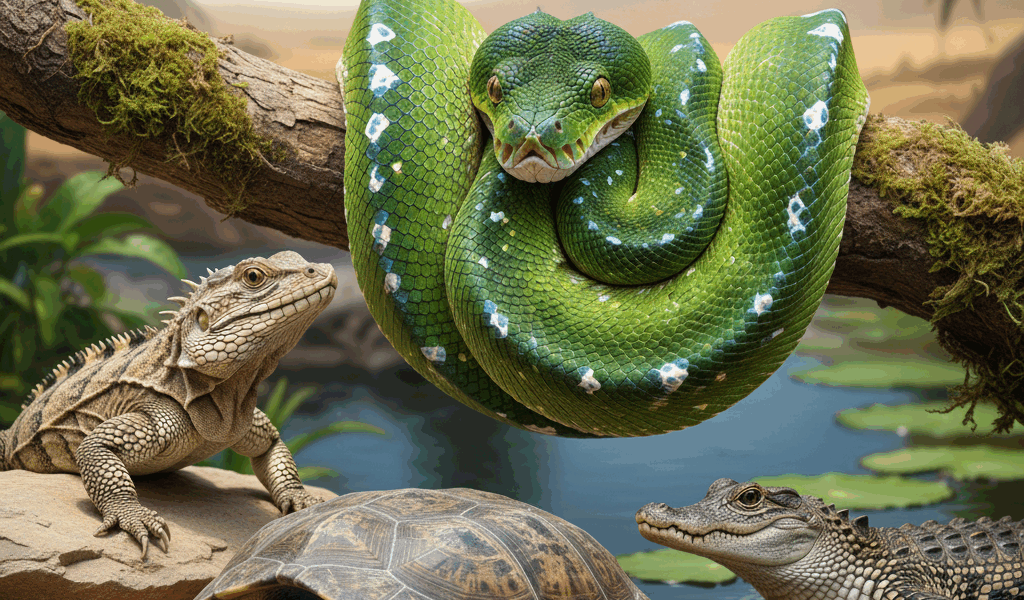
Reptiles represent one of the most successful vertebrate lineages on Earth, with a history spanning over 300 million years. From the smallest gecko to the largest crocodile, these cold-blooded creatures have adapted to virtually every habitat on the planet except the polar regions. Today, approximately 11,000 species of reptiles crawl, slither, and swim across our world, each one a testament to evolutionary innovation and resilience.
Understanding reptiles is essential for wildlife researchers and conservationists. These animals play critical roles in ecosystems as predators, prey, and seed dispersers. They control pest populations, indicate environmental health, and contribute to the complex web of life that sustains our planet. This comprehensive guide explores the major reptile groups, their remarkable adaptations, and the conservation challenges they face in the modern world.
The Serpent Kingdom – Snake Families and Notable Species
Snakes represent the most diverse group of reptiles, with over 3,900 species distributed across every continent except Antarctica. These legless predators have evolved from lizard ancestors approximately 150 million years ago, developing unique hunting strategies and sensory capabilities that make them highly effective hunters.
Colubridae – The Largest Snake Family
The Colubridae family contains roughly two-thirds of all snake species, making it the most species-rich snake family on Earth. This diverse group includes common species like the North American rat snakes, king snakes, and garter snakes. Most colubrids are non-venomous or possess mild venom that poses no threat to humans. Rat snakes, for example, are powerful constrictors that help control rodent populations in agricultural areas worldwide.
Elapidae – The Fixed-Fang Venomous Snakes
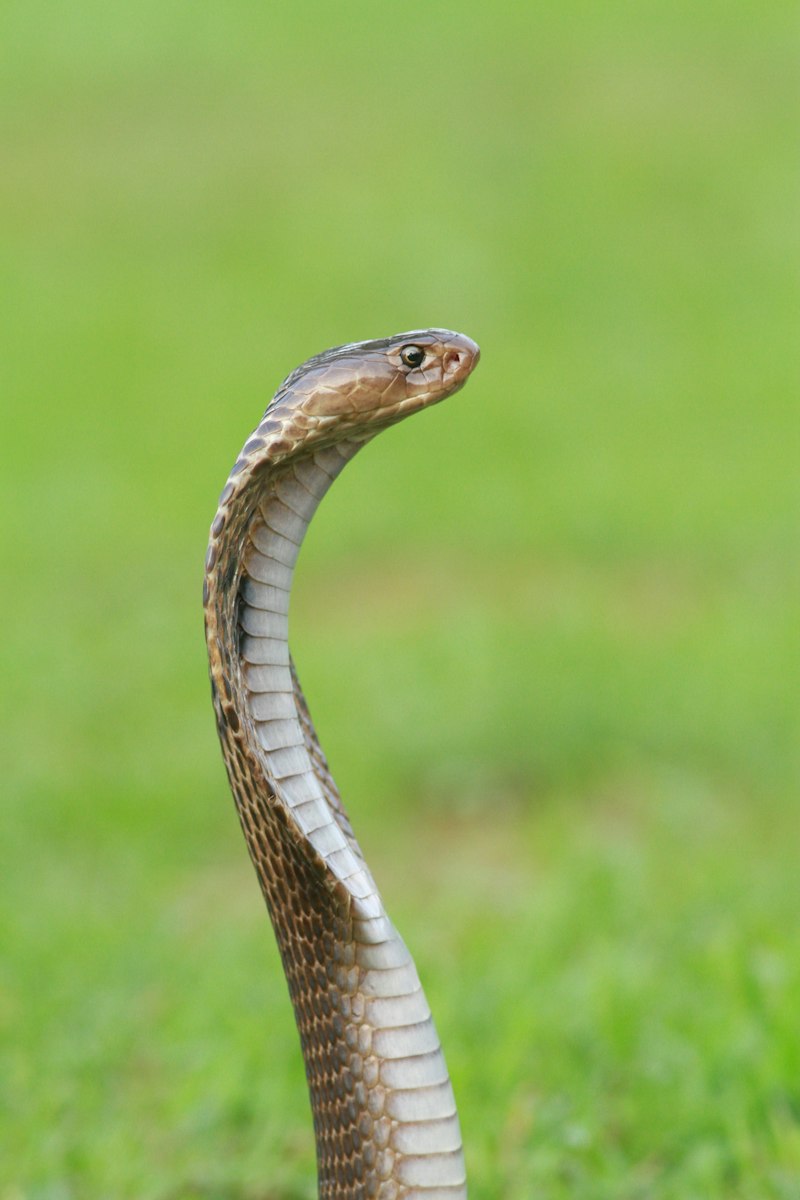
The Elapidae family includes some of the world’s most venomous snakes, characterized by their fixed front fangs that deliver potent neurotoxic venom. This family encompasses cobras, kraits, mambas, coral snakes, and all Australian venomous snakes. The king cobra stands as the longest venomous snake, reaching lengths of 18 feet, while the inland taipan of Australia possesses the most toxic venom of any land snake.
Viperidae – The Pit Vipers and True Vipers
Vipers are distinguished by their hinged, hollow fangs that fold against the roof of the mouth when not in use. This family includes rattlesnakes, copperheads, and bushmasters in the Americas, as well as puff adders and gaboon vipers in Africa. Many pit vipers possess heat-sensing pits between their eyes and nostrils, allowing them to detect warm-blooded prey in complete darkness.
Pythonidae and Boidae – The Giant Constrictors
The largest snakes on Earth belong to these two families. Pythons dominate the Old World tropics, with the reticulated python holding the record as the world’s longest snake at over 20 feet. Boas thrive in the New World, with the green anaconda claiming the title of heaviest snake, weighing over 500 pounds. These powerful constrictors kill prey through suffocation, wrapping their muscular bodies around victims until blood circulation stops.
The Diverse World of Lizards
Lizards comprise the largest group of living reptiles, with over 6,000 species ranging from tiny geckos that fit on a fingertip to the massive Komodo dragon. Their diversity in form, behavior, and ecological role is unmatched among reptile groups.
Monitor Lizards – Apex Reptile Predators
Monitor lizards include some of the most intelligent and formidable reptiles. The Komodo dragon, the world’s largest lizard at up to 10 feet and 150 pounds, is a powerful predator capable of taking down prey as large as water buffalo. Asian water monitors thrive in urban areas across Southeast Asia, while the Australian perentie dominates the outback as an apex predator.
Geckos – Nocturnal Climbers
Geckos have evolved remarkable toe pads covered in microscopic hair-like structures that allow them to climb smooth vertical surfaces and even walk upside down on ceilings. Most species are nocturnal, with large eyes adapted for hunting insects in low light. The tokay gecko of Southeast Asia produces the loud “to-kay” call that gives geckos their name.
Iguanas and Agamids
These herbivorous and omnivorous lizards fill similar ecological roles in the New World and Old World respectively. Green iguanas can reach six feet in length and are important seed dispersers in Central and South American forests. Bearded dragons in Australia and chameleons in Africa and Madagascar represent the most recognizable agamids.
Crocodilians – Living Dinosaurs
Crocodilians are the closest living relatives of dinosaurs and birds, having survived virtually unchanged for over 80 million years. This order includes 27 species of crocodiles, alligators, caimans, and gharials distributed across tropical and subtropical regions worldwide.
Saltwater crocodiles are the largest living reptiles, with males exceeding 20 feet and weighing over 2,000 pounds. These apex predators inhabit coastal waters from India to Australia and are responsible for more human fatalities than any other crocodilian. American alligators dominate freshwater habitats in the southeastern United States, while black caimans reign supreme in the Amazon basin.
Turtles and Tortoises – Shelled Survivors
Turtles and tortoises evolved their distinctive shells over 200 million years ago, and this defensive adaptation has served them well. Approximately 360 species exist today, ranging from desert tortoises to sea turtles that cross entire oceans.
Sea turtles are among the most wide-ranging reptiles, with leatherbacks diving to depths exceeding 3,000 feet and green turtles migrating thousands of miles between feeding and nesting grounds. Giant tortoises of the Galápagos and Seychelles can live well over 100 years, making them among the longest-lived vertebrates.
Conservation Priorities
Reptiles face significant conservation challenges worldwide. Habitat destruction, climate change, and the pet trade threaten numerous species. Sea turtles are particularly vulnerable, with six of seven species listed as endangered or vulnerable. Crocodilians were once hunted nearly to extinction for their skins but have recovered through protection programs and sustainable use initiatives.
Understanding and conserving reptile diversity is crucial for maintaining healthy ecosystems. These remarkable animals have survived mass extinctions and climatic upheavals across hundreds of millions of years. With appropriate conservation efforts, they can continue to thrive alongside humanity.



Leave a Reply