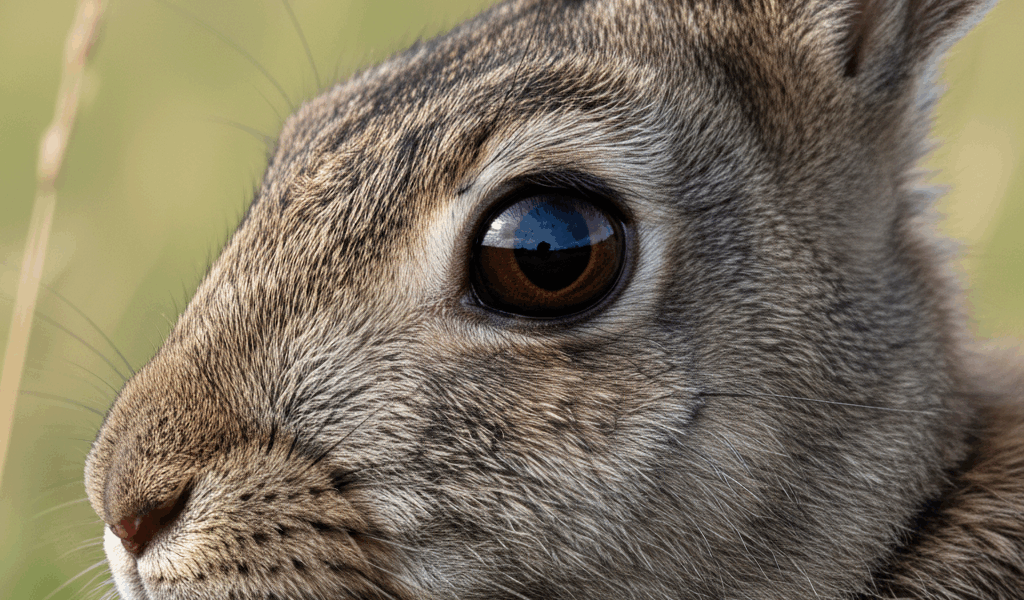
If you’ve ever wondered why rabbits, deer, and horses have eyes positioned on the sides of their heads while cats, eagles, and humans have forward-facing eyes, you’re observing one of nature’s most important survival adaptations. This seemingly simple difference represents millions of years of evolution and reveals everything about an animal’s role in the food chain.
For a definition that separates ecological roles from anatomy, see our prey animals guide with examples from land and water.
The Quick Answer: It’s All About Field of View
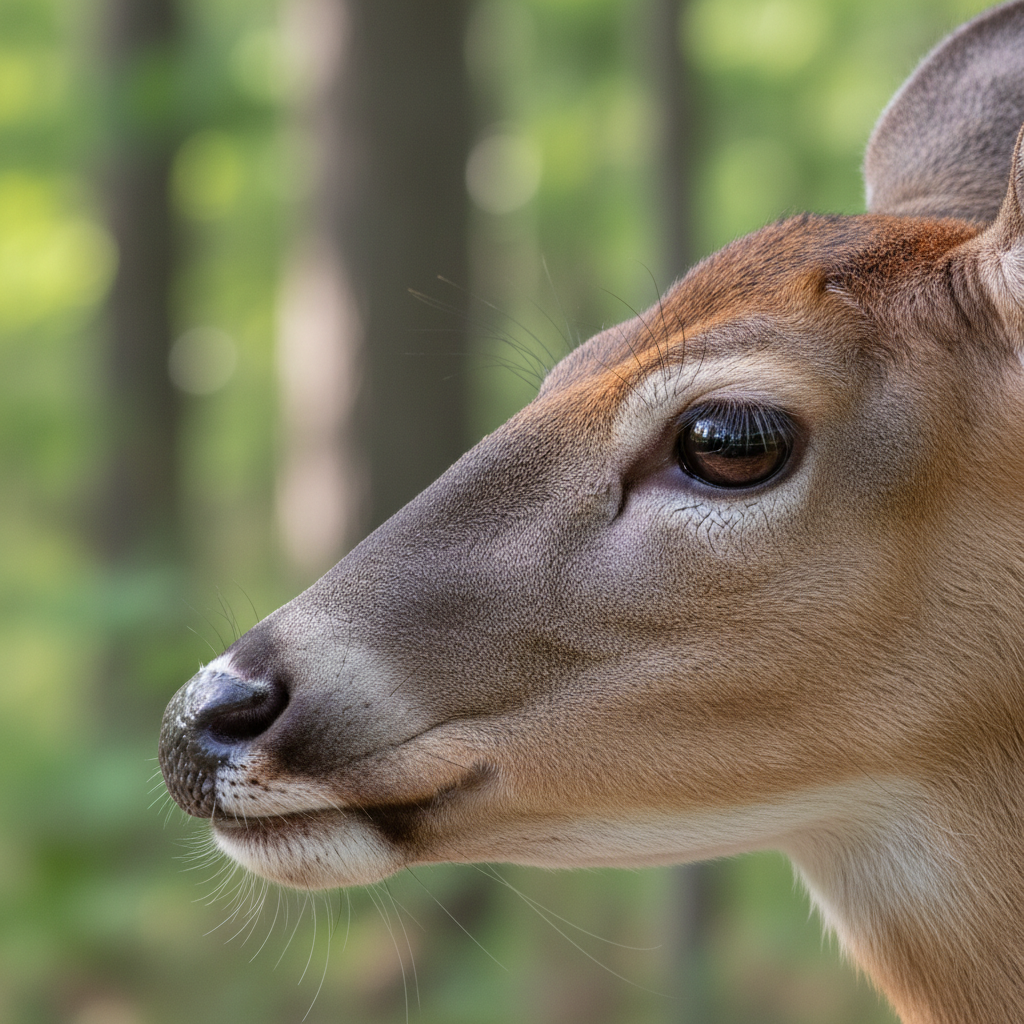
Prey animals have eyes on the sides of their heads to maximize their field of vision. This lateral placement allows them to see almost 360 degrees around them, making it extremely difficult for predators to approach undetected. The trade-off? They sacrifice depth perception and binocular vision for this wide surveillance capability.
Understanding Fields of Vision
Prey Animals: The Wide-Angle Security System
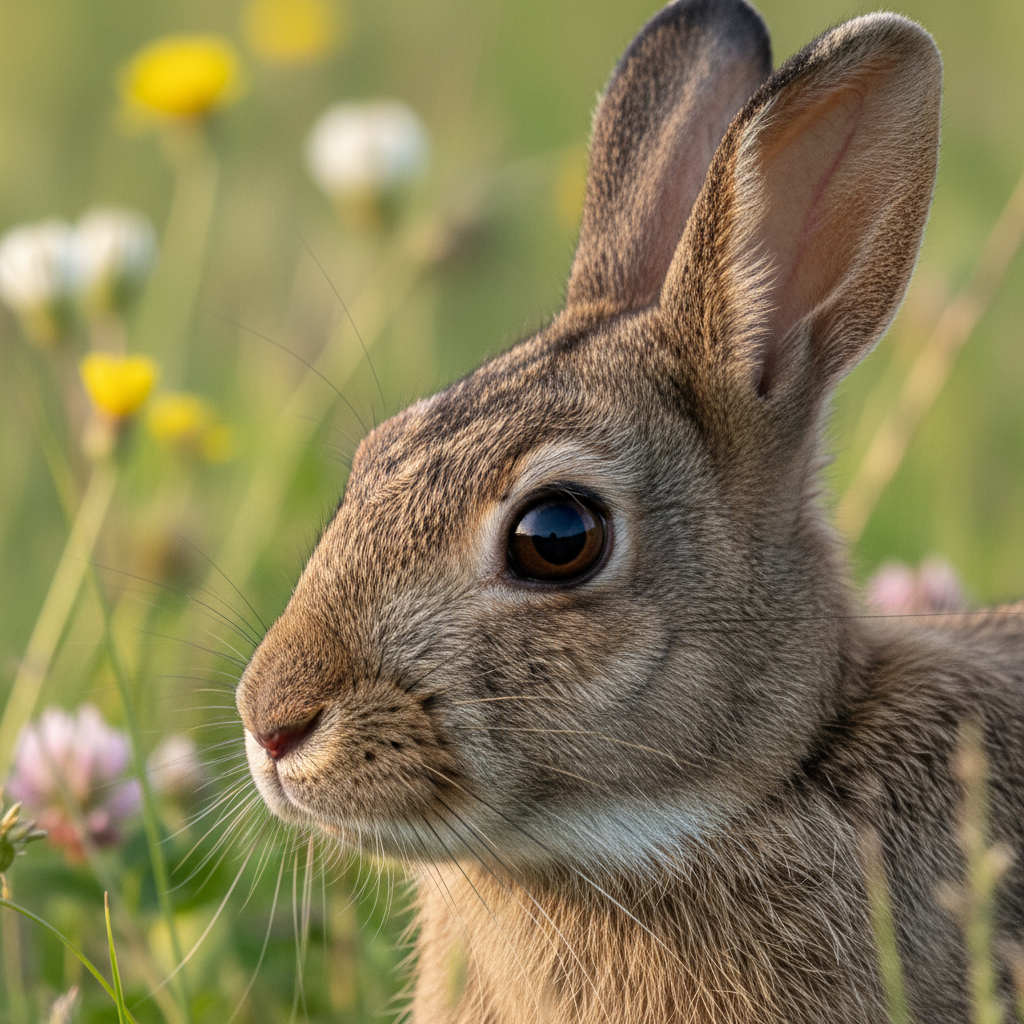
Rabbits are the perfect example of extreme lateral eye placement:
– Field of view: Nearly 360 degrees
– Blind spot: Only a small area directly in front of their nose and directly behind them
– Advantage: Can spot hawks above, foxes from the side, and snakes approaching from behind—all without turning their head
Other examples:
– Horses: 350-degree field of view (can see predators approaching from almost any direction)
– Deer: 310-degree field of view with excellent peripheral vision
– Pigeons: 340-degree field of view (can even see some area behind them)
– Fish: Some species have nearly 360-degree vision underwater
Predators: The Precision Targeting System
Owls and other predators have forward-facing eyes that create:
– Field of view: About 110 degrees (much narrower)
– Binocular overlap: Significant (both eyes see the same area)
– Advantage: Excellent depth perception for judging distances when attacking prey
The Science: Why Eye Position Matters
Binocular Vision vs. Monocular Vision
Binocular vision occurs when both eyes can focus on the same object simultaneously. This creates:
– Stereoscopic vision (3D perception)
– Accurate distance judgment
– Better motion tracking in the forward direction
Monocular vision means each eye sees a different area. This provides:
– Wider total field of view
– Better detection of movement in peripheral areas
– Reduced ability to judge distances accurately
The Trade-Off: Survival vs. Precision
Prey animals make a calculated evolutionary trade-off:
What they gain:
– Early predator detection (the most important survival factor)
– Ability to scan for threats while eating
– Multiple escape route awareness
– Better chance of group coordination (see more of the herd)
What they sacrifice:
– Depth perception (harder to judge exact distances)
– Forward blind spot (small area directly in front)
– Reduced binocular vision
For a rabbit, detecting a fox 100 yards away is more important than knowing exactly how far away it is. Speed and early warning trump precision.
How Different Prey Animals Use Their Eye Placement
Herbivores: The Ultimate Watchmen
Horses (Equus caballus)
– Can see predators while their head is down grazing
– Each eye operates somewhat independently
– Have a small blind spot directly behind and in front
– This is why you should never approach a horse from directly behind—they can’t see you and may startle
Deer (Family Cervidae)
– Positioned perfectly for detecting motion in the forest
– Can graze while maintaining 310-degree surveillance
– Their excellent night vision (tapetum lucidum) compensates for reduced depth perception
– Freeze response when they detect motion, then use head movement to triangulate distance
Rabbits (Family Leporidae)
– Among the most extreme lateral eye placement
– Can literally see predators approaching from above (hawks) and behind
– Have two small blind spots: directly behind and a small cone in front of their face
– Compensate for front blind spot by moving their head in a scanning pattern
Birds: Special Adaptations
Ground-dwelling birds (chickens, quail, pheasants)
– Eyes on sides for maximum predator detection
– Can see hawks approaching from above while pecking for food
– Have a unique ability to keep one eye on the sky while the other watches the ground
Waterfowl (ducks, geese)
– Eyes positioned high and far back on their head
– Can see above the water surface while most of their body is submerged
– Wide field of view helps detect aerial predators (raptors)
Fish: The Aquatic Perspective
Prey fish (sardines, herring, minnows)
– Nearly 360-degree vision in the water
– Can see predatory fish approaching from any direction
– Schooling behavior is enhanced by wide peripheral vision (they can see many neighbors simultaneously)
– Eyes positioned to watch above for diving birds and around for larger fish
The Fascinating Biology of Lateral Eyes
How Prey Animal Eyes Actually Work
Pupil shape matters:
– Horizontal pupils (goats, sheep, horses): Enhance the wide field of view and help judge distance to the ground
– Vertical pupils (foxes, cats): Better for ambush predators judging pounce distance
– Round pupils (humans, dogs): Balanced for varied activities
The accommodation challenge:
Prey animals with lateral eyes can’t focus both eyes on the same distant object. Instead:
– Each eye processes its own separate image
– The brain combines these into a panoramic mental map
– They use head movement to get depth perception when needed (parallax motion)
Head position strategies:
– Horses lift their heads to see distant threats (eyes work better for distance when head is up)
– Rabbits position their heads low when suspicious (maximizes view of the horizon)
– Deer turn their heads in a scanning pattern to compensate for blind spots
Evolutionary Timeline
500+ million years ago: Early fish developed lateral eye placement for all-around vision in the water
375 million years ago: First land animals retained lateral eyes to watch for predators in unfamiliar terrestrial environments
100 million years ago: Mammalian prey species refined lateral eye placement as grasslands expanded (open habitat = need for early predator detection)
Present day: The predator-prey arms race continues, with some animals developing intermediate eye positions based on their specific ecological niche
Exceptions That Prove the Rule
Animals with Eyes Between Lateral and Forward
Some animals are both predator and prey, or have omnivorous lifestyles. Their eye placement reflects this:
Primates (including humans):
– Forward-facing eyes (we’re evolutionary predators/tool users)
– Need depth perception for climbing, tool use, and hand-eye coordination
– Trade wide vision for precision
Pigs:
– Slightly lateral eyes (they’re omnivores, occasionally preyed upon as juveniles)
– Better side vision than pure predators, better depth perception than pure prey
Fruit bats:
– Forward-facing eyes despite being prey animals
– Need depth perception for flying through complex forest canopies
– Echolocation provides the “early warning system” that lateral eyes would normally offer
How Eye Position Affects Behavior
Prey Animal Behavior Adaptations
Vigilance patterns:
– Prey animals in groups take turns being vigilant
– The “many eyes” effect means each individual can spend more time eating
– Animals at the edge of the group (with less peripheral protection) show more vigilance
Approach anxiety:
– Prey animals are nervous when you approach their blind spots
– This is why veterinarians and horse trainers always approach from the side or front
– Sudden appearances in the blind spot trigger flight responses
Sleep strategies:
– Many prey animals sleep with one eye open (unihemispheric sleep)
– Ducks, dolphins, and some birds literally keep half their brain awake
– Horses sleep standing up to maintain 360-degree awareness
Predator Behavior Exploitation
Ambush predators (lions, crocodiles, leopards) specifically target prey blind spots:
– Approach from directly behind when possible
– Use cover to stay out of peripheral vision
– Time attacks for moments when prey is distracted (drinking, mating)
Pursuit predators (wolves, cheetahs) don’t rely on blind spots:
– They chase prey in open areas where vision doesn’t help
– Depend on stamina and speed rather than stealth
– Success comes from exhausting prey, not surprising them
Testing Depth Perception: The Science
Researchers Have Measured This
Studies using behavioral experiments show:
Horses:
– Can judge distances using monocular cues (motion parallax, size constancy)
– Hesitate more at jumps when approaching with limited head movement (reduced parallax)
– Use head bobbing to triangulate distances before jumping
Rabbits:
– Successful at catching tossed food despite limited binocular vision
– Use rapid head movements to calculate trajectory and distance
– Escape route selection shows sophisticated distance calculation
Deer:
– Can navigate complex forest terrain at high speed
– Use a combination of memorized paths and monocular depth cues
– Rarely miscalculate jumps despite limited depth perception
Implications for Human-Animal Interactions
Why This Matters
Understanding eye placement helps us interact more safely and humanely with prey animals:
Horse handling:
– Never approach from directly behind
– When leading, stay to the side so the horse can see you
– Sudden movements in peripheral vision cause panic
Wildlife photography:
– Deer can see you even when not looking directly at you
– Approaching from the “blind” spot isn’t as effective as you think
– Movement is detected faster than shape (their peripheral vision is motion-sensitive)
Pet rabbits:
– Don’t reach over their head suddenly (predator hawk behavior)
– Approach from the side where they can see you
– Let them see your hand before petting
The Conservation Connection
Habitat and Vision
Prey animal eye placement evolved for specific environments:
– Open grasslands: Extreme lateral placement (horses, antelope)
– Forest edges: Moderate lateral placement (deer)
– Dense cover: Less extreme (some smaller rodents)
When we destroy habitats, we eliminate the advantages these adaptations provide:
– Fragmented forests reduce sight lines
– Urban development creates too many blind spots
– Light pollution interferes with night vision adaptations
Climate Change Effects
As environments change rapidly:
– Prey animals adapted for open grasslands struggle in changing vegetation
– Seasonal camouflage timing becomes mismatched (eye placement works best with proper camouflage)
– New predators enter habitats where prey haven’t evolved appropriate vigilance behaviors
Conclusion: An Elegant Evolutionary Solution
The lateral placement of prey animal eyes is one of evolution’s most elegant solutions to the problem of survival. It’s a perfect example of how anatomy determines behavior, and how the constant pressure of predation shapes every aspect of an animal’s biology.
Next time you see a rabbit, deer, or horse, take a moment to appreciate their remarkable eyes. Those sideways-facing orbs aren’t a quirk of nature—they’re a 500-million-year-old security system, battle-tested and refined by countless generations. In the life-or-death game of predator and prey, seeing danger early is often the difference between survival and becoming someone’s meal.
Related Articles:
– Prey Animals’ Secret Weapons: 15 Shocking Defense Mechanisms That Actually Work
– 10 Prey Animals That Keep Ecosystems in Balance
– How Predators Hunt Their Prey in the Wild
Sources:
– Journal of Comparative Physiology: Visual Field Studies in Mammals
– Evolutionary Biology: Eye Placement and Predator-Prey Dynamics
– Animal Behavior Research: Depth Perception in Lateral-Eyed Species
– Vision Research: Binocular vs. Monocular Vision in Vertebrates



Leave a Reply