Animal Migration Timing Has Gotten Seriously Complicated
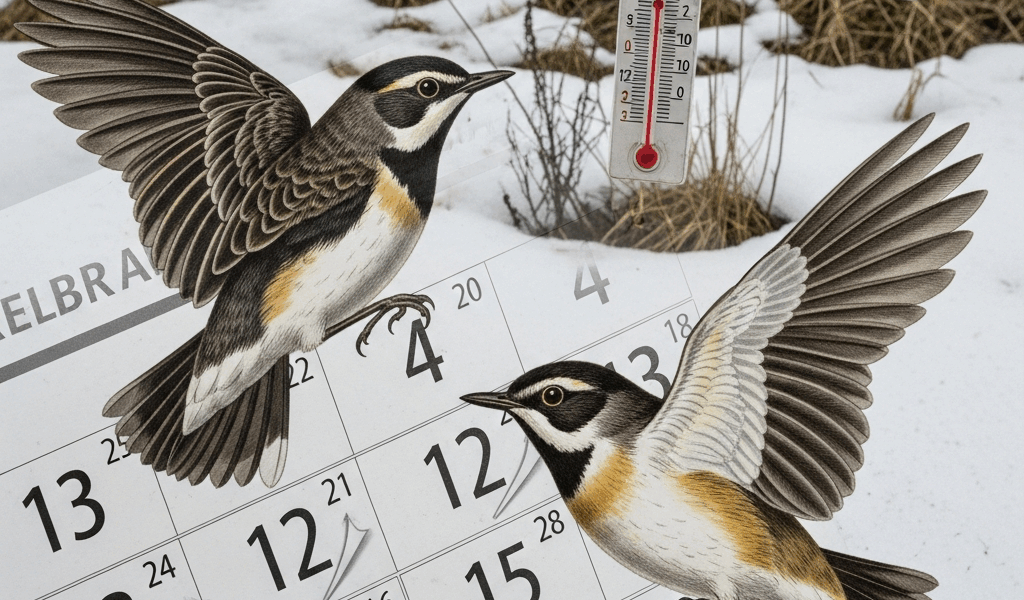
Animal migration has gotten complicated with all the climate noise flying around. Last February, robins were singing in Minneapolis — not a few stragglers, but entire populations showing up weeks ahead of schedule. Historical norm? Late March, sometimes early April. I remember my grandmother pointing this out over coffee, half-joking about “global warming” before going back to her crossword puzzle. That was maybe 2009. But this stopped being anecdotal a long time ago. Why animals migrate at the wrong time now is a question ecologists track with the same precision they once reserved for tide tables and lunar cycles.
Monarch butterflies in Mexico now peak their northward push in late March instead of mid-April. Pied flycatchers in the Netherlands arrive each spring to find caterpillar populations already crashing. Arctic shorebirds touch down after their food sources have hatched and vanished completely. These aren’t flukes. They’re documented, measured, and growing worse across every continent researchers bother to study.
The tension lives right here: animals evolved their migration cues over millions of years. Those cues worked perfectly when the world moved slowly and stayed predictable. Now it doesn’t. The gap between when animals leave and when they arrive — relative to the food they actually need — has become genuine ecological chaos.
What Animals Actually Use to Know When to Move
Animals rely on three main signals to trigger migration. Understanding the difference between them explains why climate change destroys some migrations while barely touching others. So, without further ado, let’s dive in.
Photoperiod is day length. It doesn’t change — ever. A 12-hour day in mid-March happens at the exact same moment every single year. A warbler sitting in West Africa doesn’t check a thermometer or survey local food supplies. It reads the sun’s arc across the sky. When days stretch past a specific threshold, internal circuits flip on. The bird fuels up and flies north. Simple, reliable, unchanged for millennia.
Temperature is the second signal. This one shifts. Warming springs arrive earlier now — sometimes by three or four weeks. A threshold temperature that used to trigger migration in late April might now hit in early April, or occasionally not register at all if the season stays weirdly mild. Mammals and amphibians depend heavily on temperature cues for breeding timing and movement decisions.
Food availability is the third signal, and this is where everything starts falling apart. Insect hatches, seed ripening, plankton blooms — all tied to temperature and photoperiod in their own separate ways. A caterpillar’s development cycle runs on temperature. Warmer springs mean earlier caterpillars. But that warbler reading photoperiod still leaves on the old schedule, hits the old route, arrives on the old date.
Probably should have opened with this section, honestly. Most people assume migration is straightforward — animals sense spring and move. Actually, they’re reading multiple overlapping signals simultaneously, and those signals no longer point in the same direction.
The Mismatch Problem
A songbird wintering in Africa has no idea that oak caterpillars in Europe are now peaking three weeks earlier than they did in 1980. It only knows the day length has crossed its threshold. So it leaves on the old schedule, flies the old route, burns through fat reserves crossing the Sahara. When it finally arrives hungry, the peak has already passed. Chicks starve. Breeding fails. Populations decline. That’s the core problem — stripped down to its bones.
Species That Are Getting the Timing Wrong
Real examples matter more than abstraction here. These are species we know are genuinely struggling.
Pied Flycatchers breed across the Netherlands and migrate down to West Africa each winter. Research going back to the early 1980s documented a growing gap nobody wanted to believe at first. They arrive at breeding sites around mid-April — their photoperiod cues haven’t changed. Peak caterpillar biomass, the specific food chick survival depends on, used to align with late April. Now it peaks in early April, sometimes earlier than that. The birds are arriving too late by two to three weeks. Breeding success has dropped measurably in study sites, and some regional populations have crashed 90% over four decades. That’s not a rounding error.
Arctic Shorebirds like red knots breed on tundra and winter in South America — one of the longest migrations on Earth, roughly 9,300 miles each direction. Photoperiod cues trigger their departure northward, stopover sites in May provide fuel via emerging arthropods, then they push to Arctic breeding grounds. But arthropod emergence now runs on temperature, and temperature is shifting earlier. Birds arrive to find the insect peak already declining. Chick survival drops hard. Red knot populations in certain regions have fallen 75% since the 1980s. Some of these birds are banded, tracked, and individually known to researchers. Watching them fail is not abstract.
Gray Whales migrate along the Pacific coast between Arctic feeding grounds and Mexican breeding lagoons — a round trip of about 12,000 miles. They time the journey using photoperiod and food availability signals in combination. Some populations now show delayed northbound migration and altered timing around feeding sites. This cascades into their whole breeding schedule and affects calf survival in ways researchers are still quantifying.
Monarch Butterflies overwinter in Mexican mountain forests and ride warming temperatures northward each spring. Earlier springs trigger earlier movement. Milkweed — their only larval food plant, no substitutes accepted — sometimes emerges earlier too, which sounds like good news. It isn’t always. Temperature swings can push monarchs north before milkweed is ready, or flip the other way and leave milkweed nutritionally past its peak when caterpillars hatch. The margin for error is razor thin.
What Actually Happens When Migration Timing Goes Wrong
Ecological mismatch doesn’t just mean birds are hungry for a week. The effects radiate outward in waves.
Chick starvation hits first. Parents can’t locate enough caterpillars or arthropods to keep nestlings alive. Breeding fails at the nest level. If this repeats for five or six consecutive years, the population math stops working. We measure this directly — nest cameras, banded birds, annual population counts.
Population decline follows inevitably. A species can shed 50% of its numbers in a decade when timing mismatches hit hard enough and consistently enough. The pied flycatcher data shows this plainly. Some regional populations are functionally gone.
Range contraction happens next, as southern-edge populations vanish first and species crowd into remaining viable strongholds. Genetic diversity drops. Vulnerability to the next disruption increases.
Predator-prey disruption ripples further out. A crashing bird population means its predators go hungry next season. Insects that emerge early and die off leave herbivores short of food. The whole web starts destabilizing in ways that aren’t always obvious until they’re severe.
Ecologists use the term “ecological trap” for this — and it fits. The environment still sends the same cues it always has. The animal’s instincts respond correctly to those cues. But the world waiting at the destination has fundamentally changed. The instinct that kept the species alive for a million years is now working against it.
Are Any Species Actually Adapting Fast Enough
Some species show real behavioral flexibility. Certain songbird populations have measurably shifted departure dates earlier — not dramatically, maybe five to seven days over two decades, but statistically confirmed. Natural selection drives this. Birds that leave a little earlier survive and breed a little better. Over generations, average departure timing drifts earlier. Adaptation is happening.
But it’s slow. Evolution runs on decade and century timescales. Climate change is running faster than that right now.
Genetic constraints complicate things further. A warbler’s departure date is heritable — coded into its genome, tied to photoperiod response circuits that took millions of years to wire. Changing that wiring requires the right mutations and sustained selection pressure across many generations. Not every species has the runway for that.
Flexible species — shorter generation times, broader diets, less rigid instincts — adapt faster. Specialists with deeply fixed behaviors lose. This explains why some migrants are crashing while others quietly shift their ranges northward and persist.
I’m apparently one of those people who reads migration data obsessively, and watching long-term population curves work for me while population projections based on “species will simply adapt” never quite add up. Don’t make my mistake of assuming flexibility is universal.
The honest answer right now: we don’t fully know yet. This is still playing out in real time across thousands of species and dozens of ecosystems. Some populations will adapt fast enough. Others are already gone or nearly so. The window for adaptation narrows as the pace of change accelerates. What researchers are watching is evolution happening live — some species finding the new timing, most falling behind, all because the calendar and the ecosystem stopped speaking the same language.


Leave a Reply