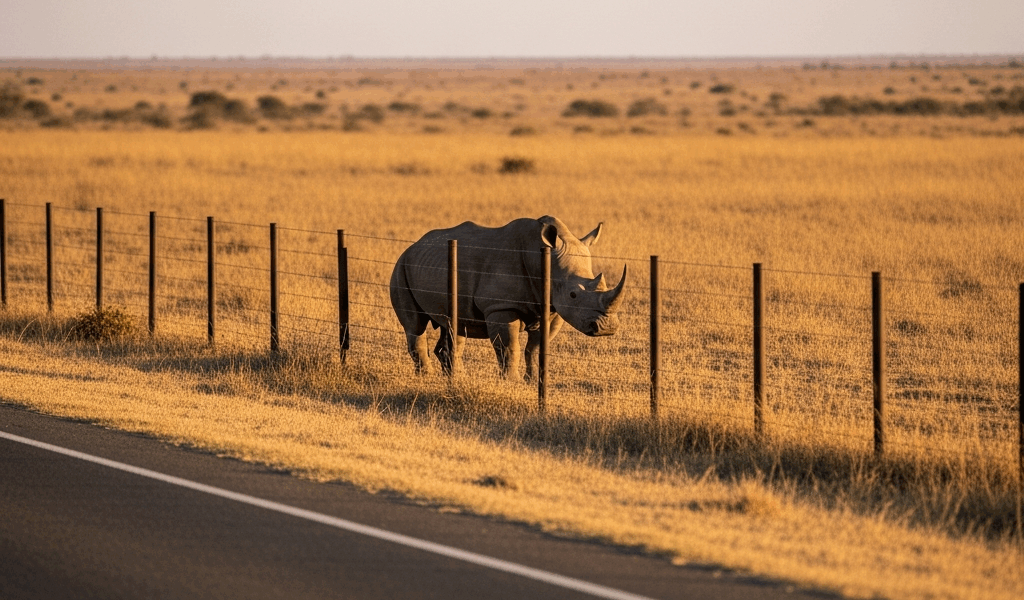
Rhino Numbers Today Look Better Than They Are
Rhino conservation has gotten complicated with all the contradictory headlines flying around. Record protection wins on one page, catastrophic decline warnings on the next. I spent months digging through population surveys from the International Rhino Foundation trying to reconcile those two stories. Today, I’ll share everything I found — including the part that genuinely unsettled me.
But what is the actual state of rhino populations? In essence, it’s a tale of one thriving species masking the collapse of four others. But it’s much more than that.
Southern white rhinos number around 18,000 individuals across South Africa and neighboring reserves. That figure climbed from a low of roughly 100 animals back in 1895 — which, honestly, does qualify as one of the most remarkable large-mammal recoveries ever documented. No exaggeration there.
Then you look at the other four species and the picture inverts entirely.
- Black rhinos: approximately 6,000 individuals, down from 65,000 in 1970
- Javan rhinos: fewer than 75 individuals, confined to a single reserve in Indonesia
- Sumatran rhinos: approximately 30-80 in the wild, possibly extinct in the wild as of 2024
- Indian rhinos: around 3,500, stabilized but not growing meaningfully
Conservation press releases trumpet the southern white rhino numbers and call it progress. They’re not lying. They’re just incomplete. International media latches onto that single species comeback and quietly sidesteps the fact that three of five rhino species are functionally extinct or close enough that the distinction barely matters. That’s what makes the narrative so frustrating to those of us who dig past the headlines.
Poaching Dropped But the Damage Is Already Done
Probably should have opened with this section, honestly. Here’s where my own understanding completely broke down: I assumed reducing poaching would automatically restart population growth. It doesn’t work that way. Not even close.
South African poaching peaked in 2015. That year, 1,342 rhinos were killed. By 2023, the annual figure had dropped to roughly 500. Real progress — anti-poaching patrols got more sophisticated, tracking technology improved, trade restrictions tightened, and some reserves relocated rhinos into fortified breeding compounds that look more like military installations than wildlife parks.
Black rhino populations still haven’t rebounded proportionally. Why? Demographic collapse — and it’s a slow, grinding kind.
Decades of selective poaching targeted dominant breeding bulls specifically, because their horns tend to be largest. That left skewed sex ratios across reserve populations. Some herds now run females to males at 3:1 or worse. Rhinos reproduce slowly — females typically deliver one calf every two to three years, and sexual maturity arrives late. Lose your breeding males to a poaching surge and you don’t get quick recovery. You get ten or more years of reproductive failure stacked on top of each other.
Behavioral trauma makes it worse. Researchers in KwaZulu-Natal reserves have documented genuine breeding suppression among poaching survivors — stressed females failing to conceive, bulls showing reduced reproductive drive, younger animals separated from mothers during translocation events struggling with reproductive success after relocation. These aren’t theoretical concerns. Behavioral ecologists recorded them across longitudinal studies spanning years.
Don’t make my mistake. Conservation biology doesn’t run on reset-button logic. Damage compounds. Recovery lags behind damage by years, sometimes decades.
Habitat Loss Is Quietly Outpacing Protection Efforts
Poaching grabs the headlines. Habitat fragmentation works silently — and it’s arguably more dangerous long-term.
Land-use surveys across rhino ranges in southern Africa, India, and Borneo tell a stark story. Even inside or immediately adjacent to protected areas, human settlement is carving rhino habitat into isolated patches that can’t support viable populations.
In KwaZulu-Natal’s flagship reserves, agricultural expansion and rural settlement have fractured the landscape into disconnected zones. Rhinos cannot move between protected areas. Genetic exchange stops. Small populations begin the slow demographic drift toward inbreeding depression — and eventually, local extinction. That’s what makes this problem so insidious to researchers watching it unfold in real time.
Assam’s Indian rhino population faces the same wall. Kaziranga National Park holds most of the world’s remaining Indian rhinos, but surrounding habitat is saturated with human settlement. There’s nowhere to expand. One serious disease outbreak, one major flood — Kaziranga floods badly almost every monsoon season — and you’re looking at catastrophic losses to a population that has no buffer elsewhere.
Sumatran and Javan rhinos occupy Borneo and Java, where palm oil cultivation, logging, and subsistence farming have fragmented their ranges past the point of functional recovery. A female Javan rhino lives 40 to 50 years and produces perhaps four to six offspring under optimal conditions. If her range holds only 15 breeding females with no access to other populations, extinction is already underway — just on a 30-year timeline instead of five.
Land corridor protection exists as a solution. It requires paying communities real money to leave certain passages between reserves undeveloped. Requires enforcement. Requires sustained funding across changing political administrations. Most rhino range countries lack the financial infrastructure to maintain that commitment past a single election cycle.
Why Relocation and Reintroduction Programs Often Fail
When habitat loss and population isolation hit critical thresholds, the conservation playbook calls for relocation — move rhinos from overcrowded reserves into suitable empty habitat, establish new populations, redistribute genetic diversity. In theory, it’s clean and elegant.
In practice, failure rates are brutal.
A 2022 translocation program moved 18 black rhinos into a Mozambique reserve where the species had been absent for two decades. Within three years, eight were dead. Stress-related mortality accounted for most losses — unfamiliar terrain, predation by lions without the evasion behaviors young rhinos acquire from watching their mothers, capture-and-transport stress hitting immune function hard. Another reintroduction effort in South Africa moved white rhinos into a reserve with inadequate water infrastructure. Chronic dehydration dropped conception rates. The program was quietly shut down after two years.
Scaling relocation is logistically ruinous. Moving a single rhino runs $5,000 to $15,000 once you factor in veterinary teams, transport equipment, holding facilities, and post-release monitoring — at minimum. A breeding female might produce one viable calf every three years. You’re putting five-figure sums into each animal and then waiting years for any reproductive return on that investment.
Capture itself creates lasting damage. Chemical sedation for transport produces neurological side effects in some animals. Social learning — how young rhinos absorb feeding patterns, water source locations, predator avoidance behaviors directly from their mothers — collapses completely when family groups get separated during capture operations. I’m apparently more bothered by this detail than most people I’ve talked to about it, but it strikes me as a genuinely underappreciated cost.
Translocations work occasionally. They stabilize populations occasionally. They fail frequently enough that they cannot carry the weight of being a primary conservation strategy — yet resources keep flowing toward them because they feel active, visible, and measurable in ways that slower interventions don’t.
What Would Actually Stabilize Rhino Populations
The evidence from populations that are genuinely growing — not just holding steady — points toward three overlapping strategies. None of them are glamorous. All of them work.
Corridor protection between existing reserves costs less than relocation programs and prevents the genetic isolation that makes small populations demographically unviable. Protecting migration passages in KwaZulu-Natal, for instance, would enable genetic exchange between reserves without expensive capture operations. It requires sustained community compensation and anti-poaching resources along those passages. It is not experimental. It works where it’s been properly funded.
Community-based anti-poaching incentive programs consistently outperform militarized fence-and-patrol models. When local communities receive genuine revenue sharing from rhino tourism or direct payments tied to rhino survival, poaching pressure drops and stays down — not just temporarily. Namibia demonstrated this. Certain Kenyan reserves demonstrated this. The barrier isn’t biological or logistical. It’s organizational. It requires shifting power away from centralized park bureaucracies toward communities who actually live next to the animals.
Coordinated genetic management across reserve networks means treating isolated populations as connected components of a single species program — sharing genetic data across borders, coordinating breeding decisions, preventing inbreeding spirals before they start. Several Indian and African programs have shown this works when political incentives align well enough for reserve managers to accept short-term breeding restrictions for long-term species benefit.
What doesn’t work: expensive fortress reserves that protect animals inside a perimeter while surrounding habitat degrades until expansion becomes impossible. What doesn’t work: relocation without serious habitat preparation. What doesn’t work — and I cannot stress this enough — is assuming that dropping poaching numbers alone triggers demographic recovery.
Rhino populations are still declining in 2025 because the interventions that produce real results are slower, less visible, and far less photogenic than capturing a rhino with a helicopter and moving it somewhere new. The recovery is possible. It requires sustaining unglamorous work across decades without losing political or financial momentum every time the cameras move on.



Leave a Reply