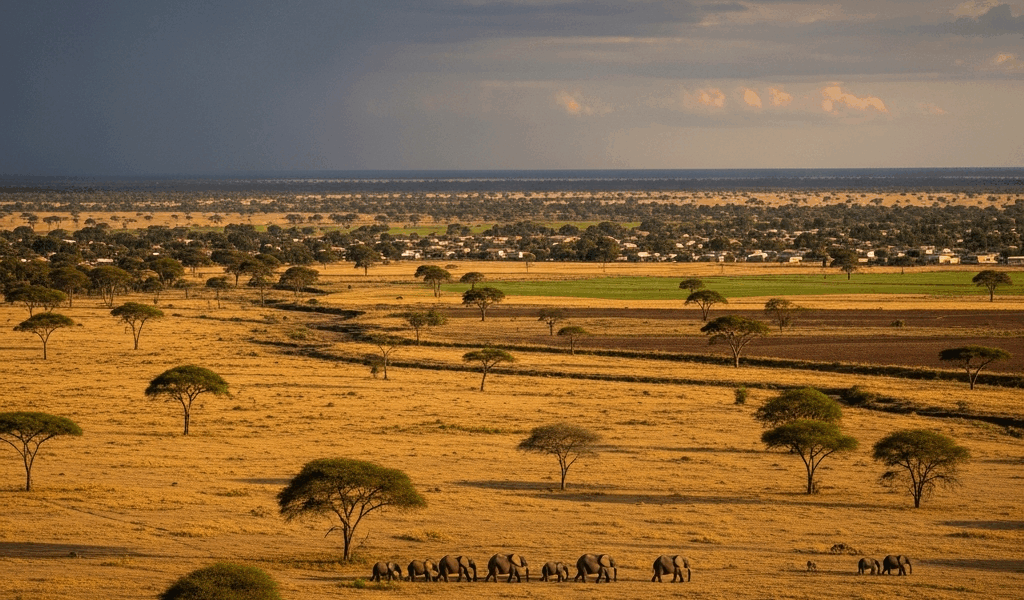
The Numbers Are Worse Than Most People Realize
Elephant conservation has gotten complicated with all the optimistic headlines flying around. I’ve spent years digging through IUCN reports, TRAFFIC seizure data, and peer-reviewed population studies — and what I found doesn’t match the story most people hear. Today, I will share it all with you.
African savanna elephants — now classified as a separate species from their forest cousins, which is itself a relatively recent distinction — have dropped from somewhere between 3 and 5 million animals in the 1930s to roughly 415,000 today. African forest elephants are in worse shape. Far worse. They’ve collapsed from a similar historical range down to approximately 24,000 remaining individuals. That’s not a gradual fade. That’s near-extinction happening inside a single human lifetime.
The IUCN Red List bumped African forest elephants to Critically Endangered back in 2010. They’ve stayed there. Savanna elephants sit at Vulnerable — which sounds almost reassuring until you realize that single classification covers populations that are genuinely stable and populations that are collapsing right now, simultaneously. The aggregate number hides horrors in specific regions.
Probably should have opened with this section, honestly. What troubles researchers most isn’t just the raw count — it’s that four decades of international conservation effort, a landmark 1989 ivory trade ban, and hundreds of millions in funding haven’t reversed the trend. The line keeps going down. Understanding why requires seeing past the conservation narrative we’ve been telling ourselves.
Poaching Never Fully Stopped — It Just Changed Shape
In 1989, CITES — the Convention on International Trade in Endangered Species — banned commercial ivory trade. Poaching dropped measurably afterward. For roughly twenty years, the story held: the ban worked.
Then 2006 happened. CITES approved “one-off” sales of stockpiled ivory from Botswana, Namibia, and Zimbabwe to Japan. Poaching surged almost immediately. By 2011, Africa was losing around 36,000 elephants annually — the highest rate in decades. TRAFFIC, the wildlife trade monitoring network, documented a single 2012 seizure in Hong Kong holding over 34 metric tons of ivory. One shipment. Thirty-four tons.
The post-2016 international ban did reduce demand in certain corridors — particularly the United States and Europe. Enforcement tightened in some ports. Consumer awareness campaigns in China actually shifted attitudes among younger urban buyers in measurable ways. Between 2015 and 2017, poaching declined across East Africa and parts of Southern Africa. Real progress.
But demand shifted geographically rather than disappearing. Smuggling networks adapted fast — rerouting through countries with weaker port security. Mozambique, Cameroon, and several West African nations became transshipment hubs almost overnight. Seizure data from 2020 through 2024 shows illegal ivory still moving globally in hundreds of tons annually. TRAFFIC’s current estimates put elephant losses to poaching at somewhere between 20,000 and 30,000 animals per year.
Here’s the structural problem. A ranger in central Africa making $150 a month faces genuine economic pressure. A poacher connected to organized smuggling networks — operating with automatic weapons and logistics that dwarf most anti-poaching budgets — operates from a completely different resource base. Enforcement gaps persist in specific regions not because nobody cares, but because effective enforcement requires funding, political will, and cross-border coordination that many governments genuinely cannot sustain. That’s not an excuse. It’s the actual terrain.
Habitat Loss Is Outpacing Any Protection Gains
Habitat fragmentation might be the harder problem — at least if we’re measuring long-term threat. It’s slower than poaching. Less visible. And it compounds everything else simultaneously.
Agricultural expansion across sub-Saharan Africa has accelerated sharply over the past three decades. Roads have cut through elephant corridors that existed for millennia. Human settlements have surrounded protected areas on multiple sides. In Tanzania — home to roughly 60,000 elephants, one of Africa’s largest remaining populations — agricultural expansion in the Tarangire-Amboseli corridor has reduced usable elephant range by an estimated 40 percent since 1995. Forty percent. In thirty years.
When populations compress into smaller areas, human-wildlife conflict becomes inevitable. It’s not malice. It’s geometry. An elephant eats roughly 300 pounds of vegetation daily. Shrink the available range by 40 percent and keep elephant density constant — or let it grow — and elephants raid crops. Farmers retaliate. Herds that once migrated across 200 kilometers of open range now move through fragmented patches separated by farmland and villages.
This creates a conflict trap that doesn’t show up cleanly in global mortality statistics. Retaliatory killings by farmers likely exceed poaching deaths in certain regions — but these deaths are dispersed, undocumented, and invisible to international monitoring. A Kenyan pastoralist who shoots a bull elephant that raided his livestock doesn’t file a CITES report. That kill disappears into local narrative. Multiply it across 10,000 farming households in a conflict zone and you’ve quietly removed significant breeding stock from the population.
The leverage point most researchers keep returning to: elephant corridors. Connecting fragmented protected areas with maintained movement routes is cheaper than expanding reserves, reduces conflict by giving herds migration paths away from dense human settlement, and demonstrably works when implemented. That was the finding in 2019 from corridor studies across East Africa. The catch — it requires cross-border coordination and decades of sustained funding. Which is why it remains rare.
Climate Pressure Is Adding a Layer Researchers Didn’t Expect
Drought cycles across East and Southern Africa have intensified since 2015. Elephants evolved with drought — that’s not the new part. The pattern itself is shifting, and that’s what’s catching researchers off guard.
GPS collar data from elephants across multiple study populations shows changes in migration timing, expanded dry-season ranges, and dangerous concentration around shrinking water sources. In the Amboseli region spanning Kenya and Tanzania, water sources that reliably held through dry seasons are now drying completely during years that previously would have seen partial recharge. The baseline has moved.
This stresses populations already compressed by habitat loss. Concentrated around fewer water points, herds face increased disease transmission, malnutrition, and social disruption. Young calves are most vulnerable. During the 2022 East African drought, documented calf mortality spiked across multiple monitored populations. Vegetation zones are shifting northward and upslope as temperatures rise — elephants are following, but the lag creates sustained periods of nutritional deficit.
A 2023 study in the Journal of Animal Ecology tracking savanna elephant herds documented altered breeding patterns, shifts in herd composition, and increased aggression around water sources. Stress hormones measured from dung samples showed sustained elevation throughout dry seasons — evidence of chronic physiological stress that persists even after water returns. That’s not just drought response. That’s the combined pressure of drought, compressed range, and population density hitting simultaneously.
Climate models project more frequent extreme droughts across elephant range through 2050. Don’t make my mistake of reading that as a future problem — it’s a present mechanism accelerating decline in populations already stressed by everything else.
What the Research Says Is Actually Working
Community-based conservation models show measurable results where implemented properly. The Maasai Wilderness Conservation Trust in Kenya pays local herding communities directly for maintaining elephant habitat on their land rather than converting it to agriculture. Elephant populations in participating areas have stabilized. The mechanism isn’t goodwill — it’s economic incentive structure. A pastoralist protecting habitat for $50 monthly per hectare is making a rational economic choice. That’s what makes this model endearing to researchers who’ve watched emotion-based conservation fail repeatedly.
Anti-poaching technology has shown real outcomes in specific regions. Drones with thermal imaging running night patrols in Mozambique’s Niassa Reserve reduced documented poaching by 65 percent between 2018 and 2023. Ranger teams using real-time GPS tracking alongside algorithmic prediction models — trained on historical kill site data — improved detection rates significantly. These aren’t universal solutions. They work in resource-rich protected areas with consistent funding and genuine political support. They fail in underfunded reserves where corruption undermines field operations. The tool matters less than the institutional context around it.
Corridor restoration in Central Africa — particularly within the Dzanga-Sangha Complex spanning the Central African Republic and Congo — has helped forest elephant populations stabilize at very small numbers. Population monitoring there shows births exceeding deaths for the first time in decades. That’s the mechanism: secured movement routes between fragmented areas reduce the pressure driving human-wildlife conflict.
But what is the actual leverage point? In essence, it’s reducing human population pressure on elephant habitat through economic development that doesn’t require clearing land. Investing in intensive production on existing farmland rather than agricultural expansion. Supporting alternative livelihoods that compete economically with subsistence farming. Funding local institutions capable of managing wildlife-human boundaries over decades. Less dramatic than drone patrols. Considerably more durable.
The hard truth that appears in peer-reviewed literature but rarely in public conservation statements: populations are still shrinking because the combined rate of habitat loss and climate stress exceeds the rate of conservation intervention. It’s not that nothing works — several things demonstrably work. It’s that what works is too small in scale, too late in many regions, and too underfunded relative to the actual problem. Stabilizing elephant populations requires simultaneous action on poaching pressure, habitat fragmentation, human-wildlife conflict, and climate adaptation. Most conservation efforts address one or two of those at a time. So, without further ado — that’s why the line keeps going down.




Leave a Reply