“`html
Why camera traps became essential for nocturnal species research
How do scientists actually study animals that come out when the sun goes down? The practical answer is deceptively simple: you let them photograph themselves. But that solution emerged from a problem I ran straight into during my early wildlife research days.
Direct observation just doesn’t work at night. You can’t follow a jaguar through dense jungle at 2 AM without crashing into trees. You can’t sit quietly enough to watch an aardvark foraging without your presence—your smell, your tiny movements, your very existence—disturbing it. Nocturnal animals evolved specifically to avoid visual predators. Including researchers. Traditional tracking methods like radio collars or scat surveys tell you where an animal *was*, but not what it was actually doing, how many individuals moved through an area, or whether it traveled alone. The data gaps were enormous.
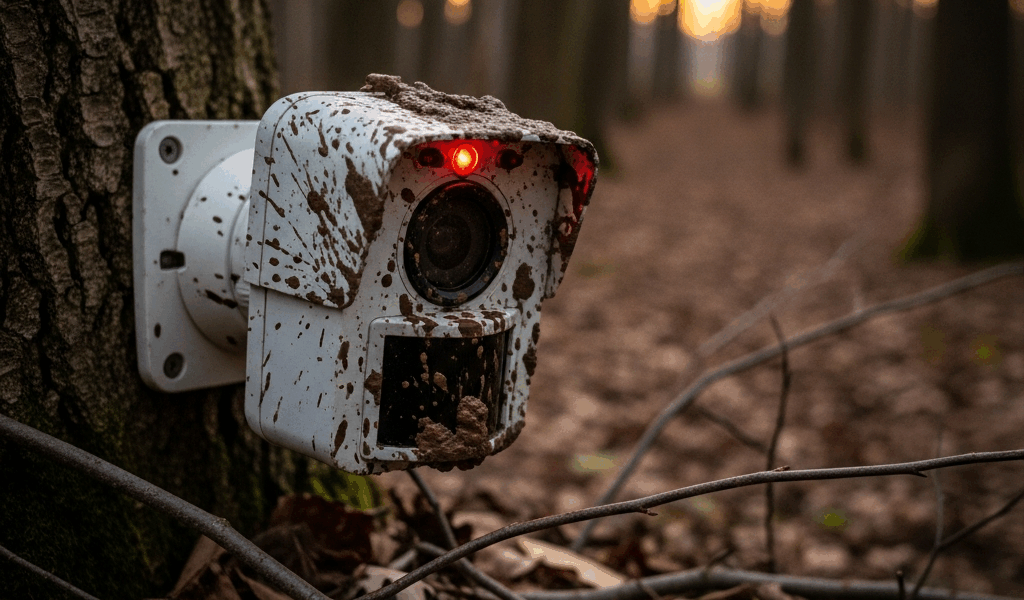
Camera traps solved that by removing the human observer entirely. A motion-triggered camera doesn’t move. Doesn’t smell. Doesn’t make noise. The animal interacts with the landscape exactly as it normally would, and the camera captures behavior that would otherwise stay invisible forever. For shy species — civets, porcupines, wild felids — this became the only practical way to study them without spending years just getting them used to your presence.
What actually makes them valuable is the continuity they provide. A researcher leaves a camera running for weeks straight. That means capturing rare events, documenting when things happen, and collecting data at scales direct observation could never touch. It’s not glamorous fieldwork, but it’s how we genuinely understand nocturnal ecology now.
Choosing the right camera trap for different habitats and species
Not all camera traps work equally well. The ones that work in a humid rainforest will fail in an arid savanna, and then some.
Trigger speed is the first decision you make. A fast-trigger camera (under 0.5 seconds from motion detection to image capture) catches small, quick animals. A slow-trigger camera (1–2 seconds) misses them entirely. I learned this deploying a budget model in a tropical forest where we were trying to document small carnivores. The camera captured *hundreds* of empty frames between trigger events — the animal was already gone. We switched to a faster model and immediately got usable footage.
Resolution matters less than people think, but not for the reasons they imagine. A 20-megapixel camera produces enormous files. In humid climates where insects constantly land on the lens, you’re paying for detail you’ll never use because half your images are obscured by a moth or spider web. A 12-megapixel camera is usually sufficient for species identification, and the files are smaller — critical when you’re collecting data from 40 cameras across multiple field sites.
Battery drain is the hidden killer nobody talks about. High-resolution plus infrared plus fast trigger speed equals cameras dead in three weeks. In a tropical forest where humidity never drops and your field supply runs only once monthly, that’s a disaster waiting to happen. We typically choose cameras with hybrid power systems: solar panels for daytime recharge, AA batteries as backup. A high-quality solar model we use (Bushnell CelluCORE 20MP) runs six months in decent sunlight. In rainforest understory, six months becomes two months. That tradeoff is real.
Weatherproofing isn’t just about waterproofing — it’s about dust, fungal growth, and salt spray. A camera rated IP65 (water-resistant) isn’t the same as a camera that survives three months of salt-laden air in a coastal marsh. We learned that lesson the hard way deploying along a mangrove estuary where cameras corroded internally despite external sealing.
For dense vegetation where you expect small animals, we prioritize trigger sensitivity and video capability (animals are identifiable by behavior, not just appearance). For open savanna with large herbivores, a standard photo trap with wider angle lens works fine. For mountain passes where you’re documenting seasonal migration, you want a camera tough enough to survive temperature swings and reliable enough to function at altitude where you can’t easily service it.
Placement strategy that actually maximizes wildlife captures
Camera scouting is detective work. Before deploying a single camera, you spend hours reading the landscape.
Animal sign doesn’t lie. Broken branches at specific heights tell you what species passed through. A deer trail shows direction and traffic frequency. Scat indicates which animals use an area and roughly when. I look for these signs, then place cameras 5–10 meters *before* the sign, not at it. Animals follow established pathways. Mount a camera directly on a trail and it catches the tail end of the movement. Place it at a junction or approach point, and you capture face-on or flanking views — much better for identification.
Height matters more than most researchers realize. Most animals walk at specific elevations. A jaguar’s face is roughly 60 centimeters off the ground. A capybara is lower. A peccary herd includes juveniles and adults at different heights. We mount cameras at multiple heights (40cm, 80cm, 120cm) on the same tree to capture the full vertical range. It doubles the number of cameras needed, but it halves the animals we miss.
Angle is counterintuitive. A camera pointed directly down a trail captures walking animals from behind — not ideal for identification. A 30-40 degree angle off the trail side-view captures faces, individual markings, and behavior (feeding, interaction, alert posture). But point a camera toward the sun, and you’ll get backlighting and washed-out faces on bright days. Point it at reflective water, and you get false triggers from light glint every time the sun moves.
Height of installation matters too. Many researchers mount cameras too high — eye level on a tree — thinking it looks less obvious. But nocturnal animals don’t look up. They look forward. A camera mounted at 60 centimeters perpendicular to a trail at a 35-degree downward angle catches far more than a camera mounted at head height pointed horizontally.
We mark potential camera locations during daytime scouting, then revisit at dusk and dawn to observe actual animal movement patterns. Probably should have opened with this section, honestly — I spent my first field season deploying cameras based on my *assumptions* about where animals would be, not where they actually moved. Don’t make my mistake.
Managing false triggers and data overload in the field
A single camera in a tropical forest can generate 2,000 images per day. Most are completely worthless.
Wind triggers false captures constantly. A swaying branch crosses the motion sensor, the camera fires, and you have 50 images of leaves doing nothing. Rain triggers false captures. Heavy rain hitting a camera pointed downward registers as motion. Insects trigger false captures — especially at night when moths swarm infrared lights. A camera with a sensitivity dial lets you reduce false triggers, but turn it down too far and you miss actual animals.
Heat shimmer is the problem nobody warns you about. In arid environments where the ground radiates stored heat after sunset, rising air creates visible distortion in the camera’s infrared view. The camera interprets this as motion. One of our Serengeti deployments generated 30,000 images in two weeks. Maybe 200 contained actual animals.
Post-processing is where efficiency actually happens. We use a tiered filtering approach. First pass: delete obviously empty frames (using image metadata timestamps). Second pass: use AI-assisted sorting tools like Timelapse or Conservation AI, which flag images likely to contain animals. This cuts data by 70 percent immediately. Third pass: human review of flagged images for species ID and behavior notes.
Some teams now use machine learning models trained on regional species to automate classification — leopard versus hyena, for example. This works reasonably well for common species (90 percent accuracy) but fails for rare animals or young individuals that don’t match training data. We treat AI sorting as a preliminary filter, not a final result.
Extracting behavior insights from camera trap sequences
Single images are data. Image sequences are stories.
Timestamp sequences reveal behavior patterns that a single photo never could. If a camera captures the same animal at 8:47 PM, then again at 8:51 PM, and again at 8:55 PM, that’s not a single sighting — it’s a 10-minute foraging session. That temporal information tells us about activity budgets: how much time animals spend feeding, moving, resting. Multiple cameras covering an area show movement direction and corridor use. If Camera A captures an animal at 9:03 PM and Camera B captures it at 9:12 PM, you know that individual moved between the two locations in nine minutes, and you can estimate territory size.
Individual recognition uses visual markers. Unique scars, broken teeth, distinctive fur patterns, or collar damage let researchers track the same individual across weeks and locations. A jaguar with a torn ear is tracked differently from one with a distinctive facial scar. This isn’t perfect — many animals lack distinctive marks — but for recognizable individuals, you build movement maps and social networks.
Seasonal patterns emerge from temporal data. A camera running year-round shows which animals are present in which seasons. A big-cat trap showing increased activity in rainy season suggests prey availability drives presence. Repeated visits from the same individual to the same location suggest territorial behavior or resource use.
Species co-occurrence data is powerful. If predator and prey both use the same area at different times, that’s temporal niche partitioning. If they overlap temporally, that suggests predator-prey interaction. If a scavenger appears within hours of predator activity, that’s behavioral evidence of a feeding chain.
Camera traps won’t replace field biology. They won’t answer every question. But for understanding nocturnal animal behavior at landscape scales, they’ve become indispensable — not because of the technology itself, but because they let animals behave naturally while we observe from a distance.
“`



Leave a Reply